Understanding number relationships Addition & Subtraction Worksheets for Ages 4-8
8 filtered results
-
From - To
Explore the world of number relationships with our engaging Addition & Subtraction Worksheets, tailored for children ages 4 to 8! These worksheets are designed to help young learners grasp fundamental math concepts through fun, interactive exercises. By focusing on number relationships, kids can develop a deeper understanding of how addition and subtraction work together. Our carefully crafted materials include visual aids and variety of challenges that make learning enjoyable. Perfect for both classroom use and at-home practice, these worksheets not only strengthen math skills but also build confidence in budding mathematicians. Start their journey towards mathematical mastery today!
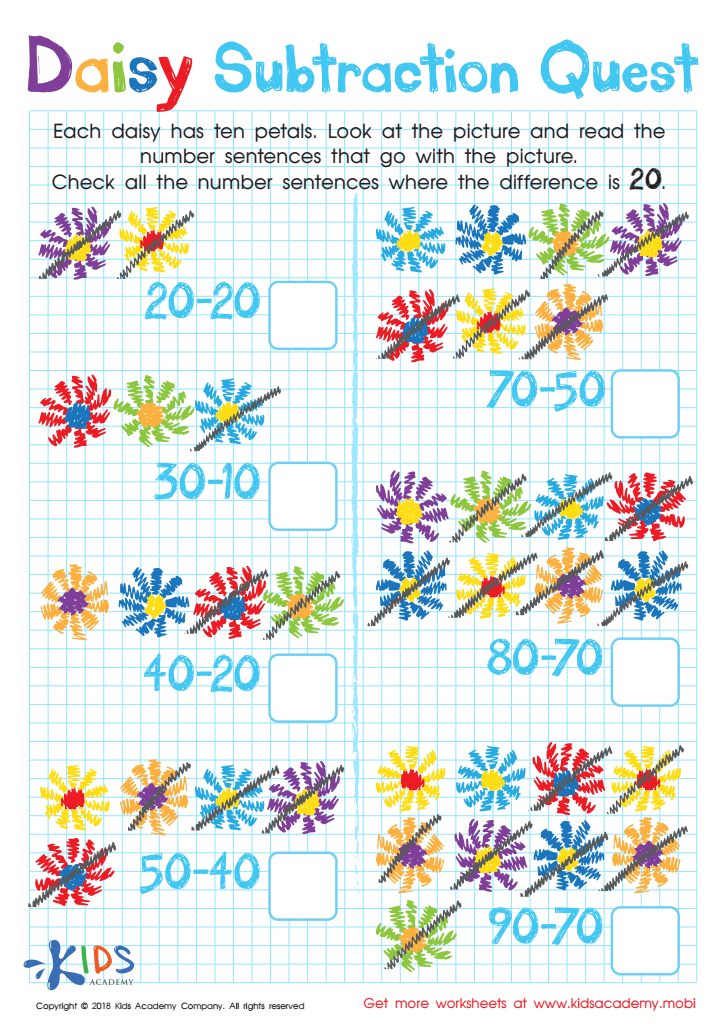
Daisy Subtraction Quest Worksheet
 Assign to My Students
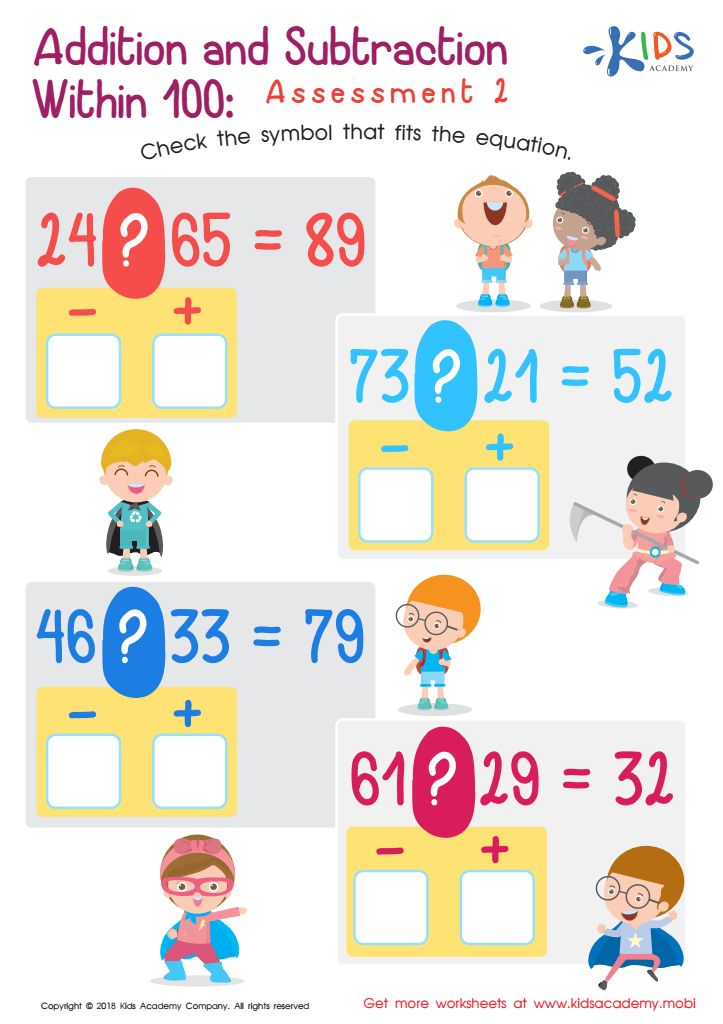
Addition and Subtraction Within 1: Assessment 2 Worksheet
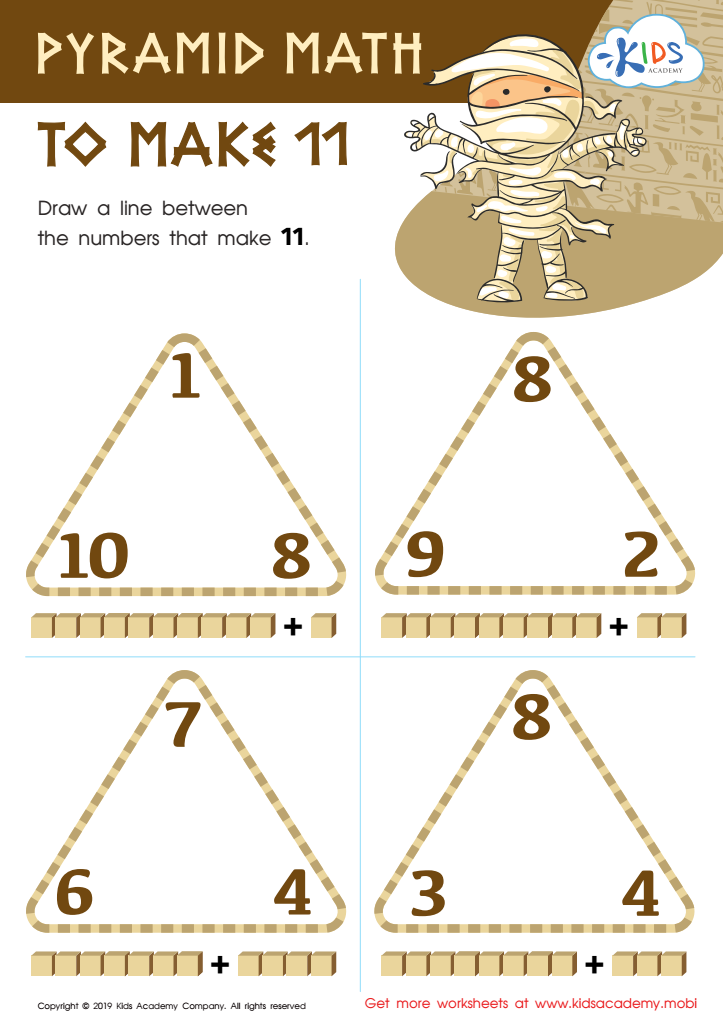
Pyramid Math to Make 11 Worksheet








Understanding number relationships in addition and subtraction is crucial for children ages 4-8, as it lays the foundation for their entire mathematical development. At this stage, children are developing their cognitive abilities and critical thinking skills, which are essential for future problem-solving. When parents and teachers emphasize number relationships, they help children grasp how numbers interact, enhancing their ability to visualize and manipulate these concepts.
This understanding aids in fostering a growth mindset, enabling children to tackle more complex mathematical ideas as they progress. Furthermore, grasping addition and subtraction opens the door to understanding patterns, sequences, and the beginnings of algebraic thinking, all of which are vital for advanced math in later years.
Engaging children in activities that highlight number relationships—like using manipulatives or real-life situations—can make learning interactive and enjoyable. This foundation promotes confidence and a positive attitude towards math, reducing anxiety in future learning. Additionally, when parents and teachers collaborate to nurture this understanding, they create a supportive environment that reinforces learning, ultimately benefiting the child in their educational journey. In sum, a strong grasp of number relationships equips children with essential skills for lifelong learning and everyday problem-solving.








