Understanding number sequence Addition & Subtraction Worksheets for Ages 4-8
4 filtered results
-
From - To
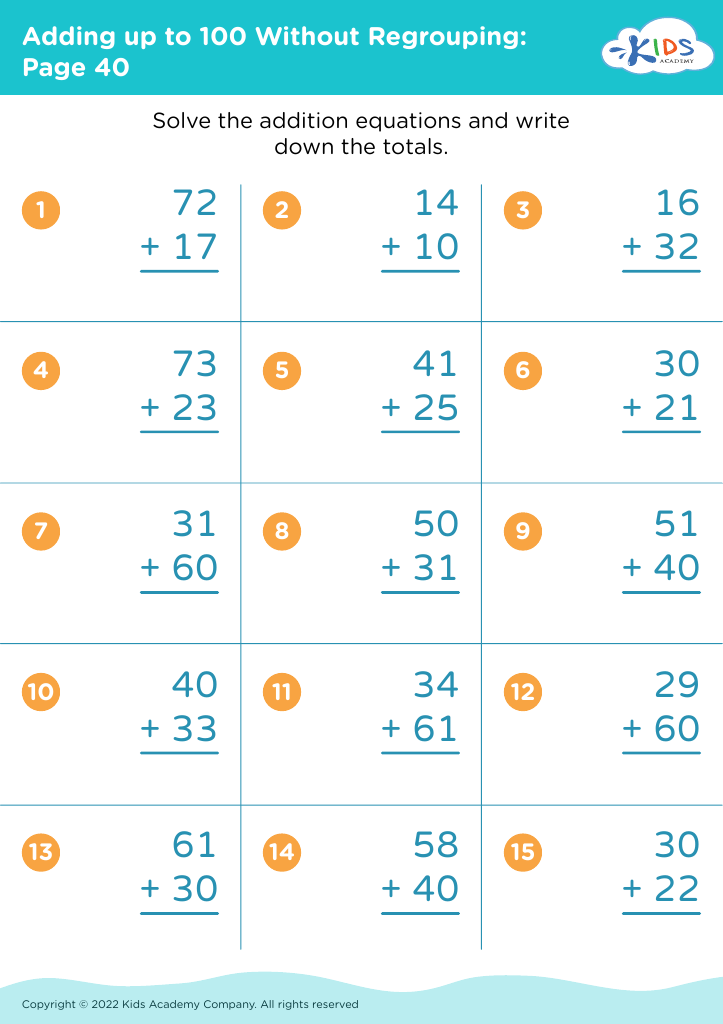
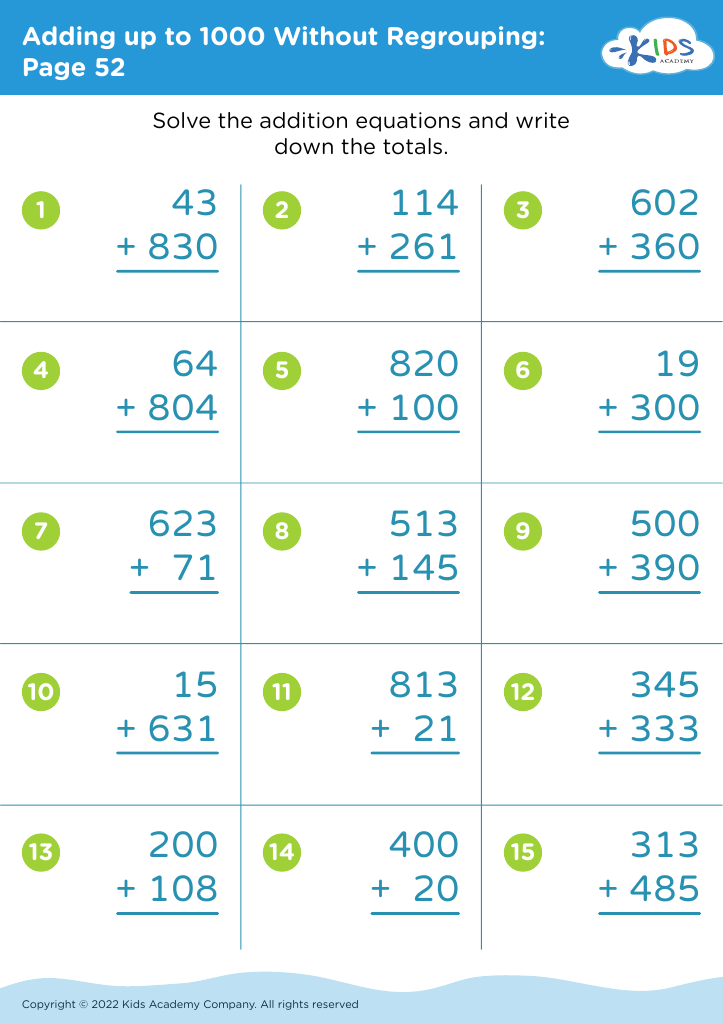
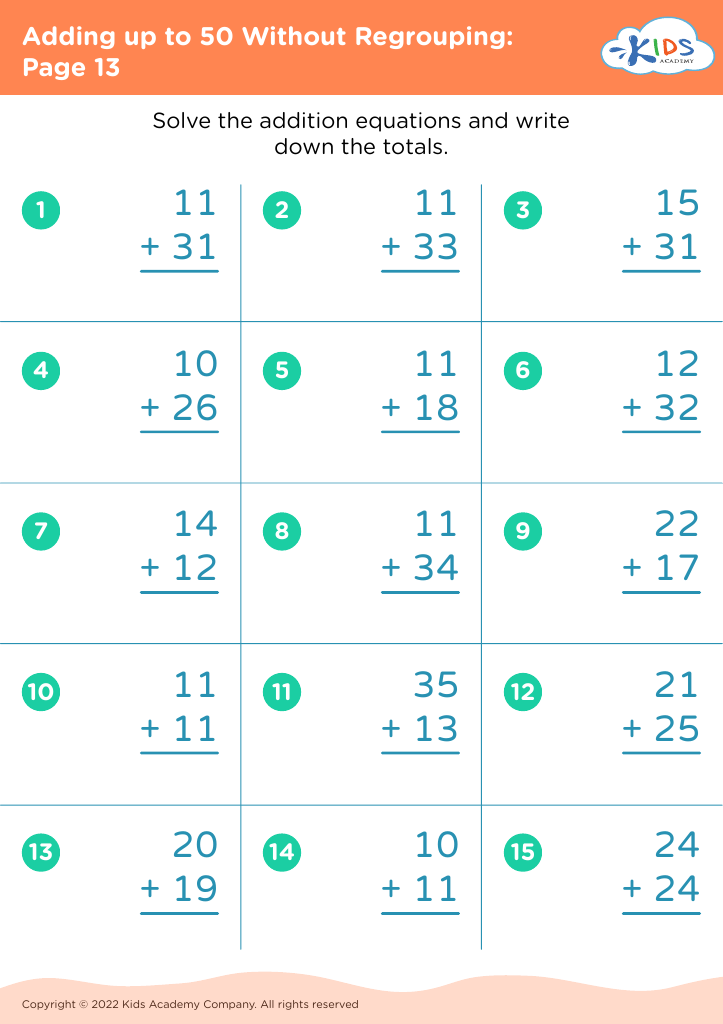
Explore our "Understanding Number Sequence Addition & Subtraction Worksheets" designed for children ages 4-8! These engaging worksheets help young learners grasp the fundamentals of number sequencing while mastering addition and subtraction skills. Each activity promotes critical thinking and problem-solving, making math fun and interactive. Kids will build confidence as they recognize patterns in numbers and learn how to apply them to addition and subtraction scenarios. Perfect for home or classroom use, these resources encourage early mathematical development and pave the way for future success. Download today to support your child’s journey in becoming a math whiz!
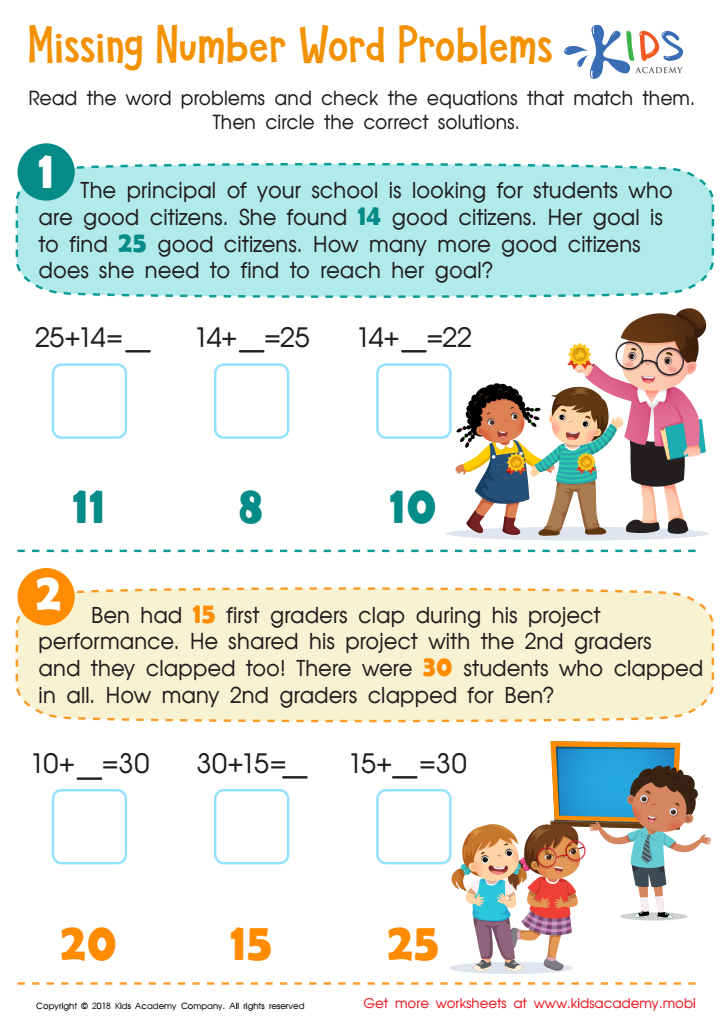
Missing Number Word Problems Worksheet
 Assign to My Students








Understanding number sequences in addition and subtraction is crucial for children aged 4-8 as it lays the foundational skills for more advanced mathematical concepts. First, recognizing number patterns helps children grasp the concept of counting and number sense, which is essential for everyday math applications. For instance, when children understand that numbers are sequential, it supports their ability to perform addition by counting up and subtraction by counting back.
Moreover, mastering these operations aids in developing problem-solving skills and logical reasoning. Early exposure to addition and subtraction can enhance a child's confidence in mathematics, making them more willing to engage with complex problems later in their education. Furthermore, these skills feed into critical cognitive development areas, such as memory and attention.
Additionally, in our technology-driven world, basic math skills are fundamental. From managing finances to understanding measurements, solid addition and subtraction skills provide tools for success in everyday life. Parents and teachers should prioritize these concepts, offering various activities that promote exploration, practice, and reinforcement. Encouraging a positive relationship with numbers at this early age can inspire long-lasting mathematical enjoyment and understanding, empowering children academically and practically throughout their lives.








