Underwater animal identification Addition & Subtraction Worksheets for Ages 4-8
3 filtered results
-
From - To
Explore our engaging "Underwater Animal Identification Addition & Subtraction Worksheets" designed for children aged 4-8! These worksheets combine fun underwater themes with foundational math skills, helping young learners practice addition and subtraction while discovering fascinating ocean creatures. Each worksheet features vibrant illustrations of various underwater animals to capture children's interest, making math enjoyable and interactive. Ideal for classroom activities or home learning, these resources support cognitive development, enhance problem-solving abilities, and encourage early math proficiency. Dive into learning today and make math a splash with these captivating, educational worksheets that promote essential life skills alongside exciting adventure in the ocean!
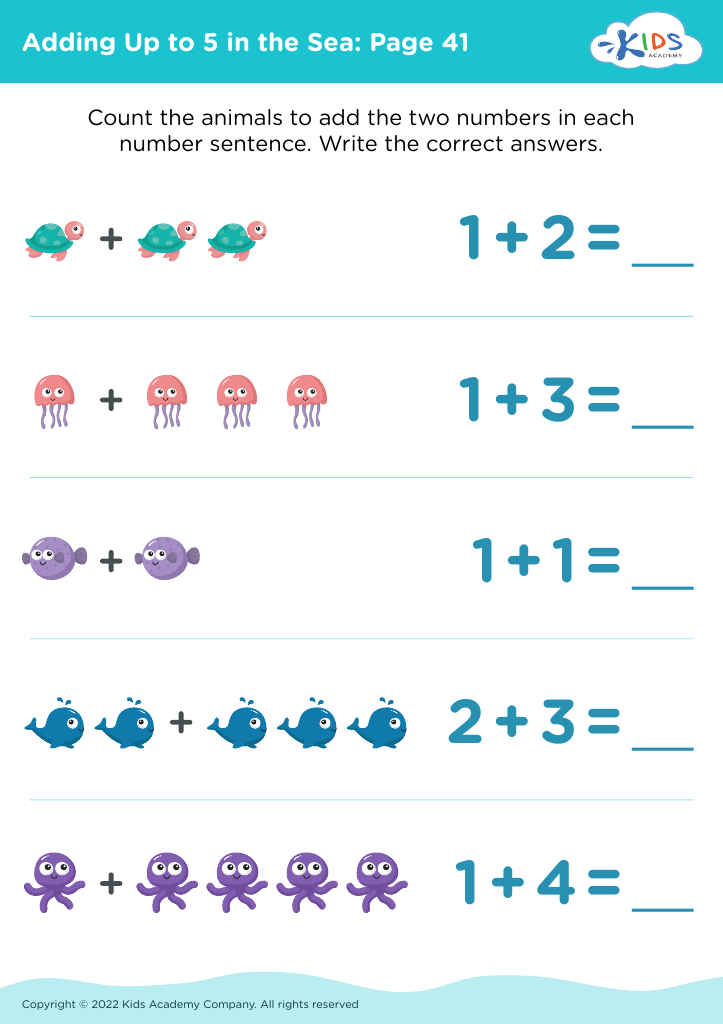
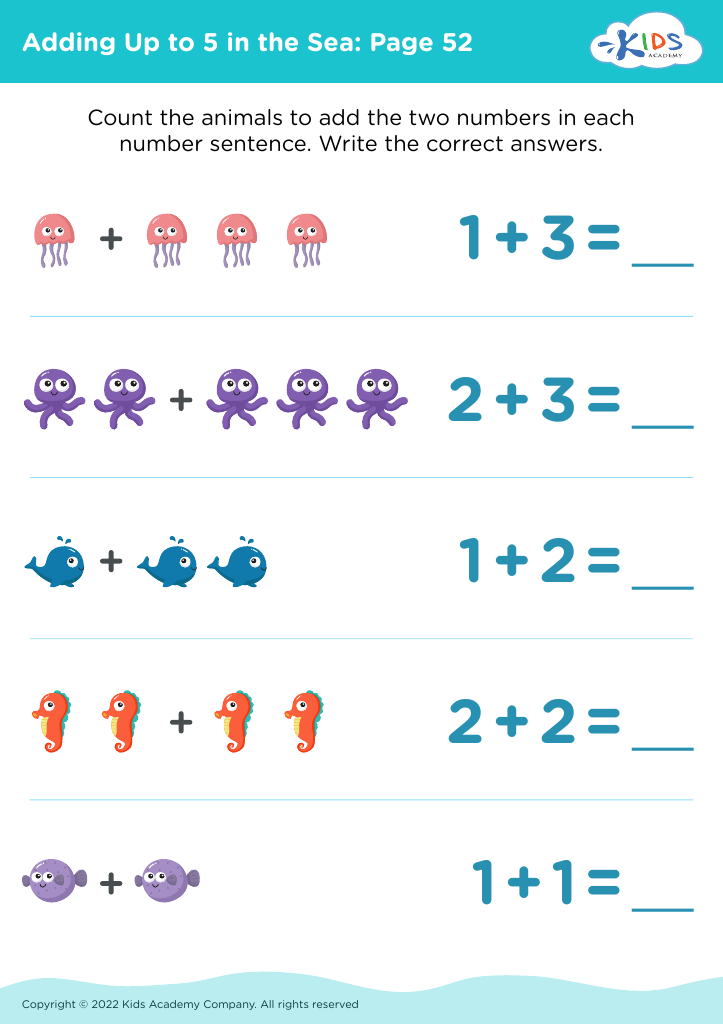
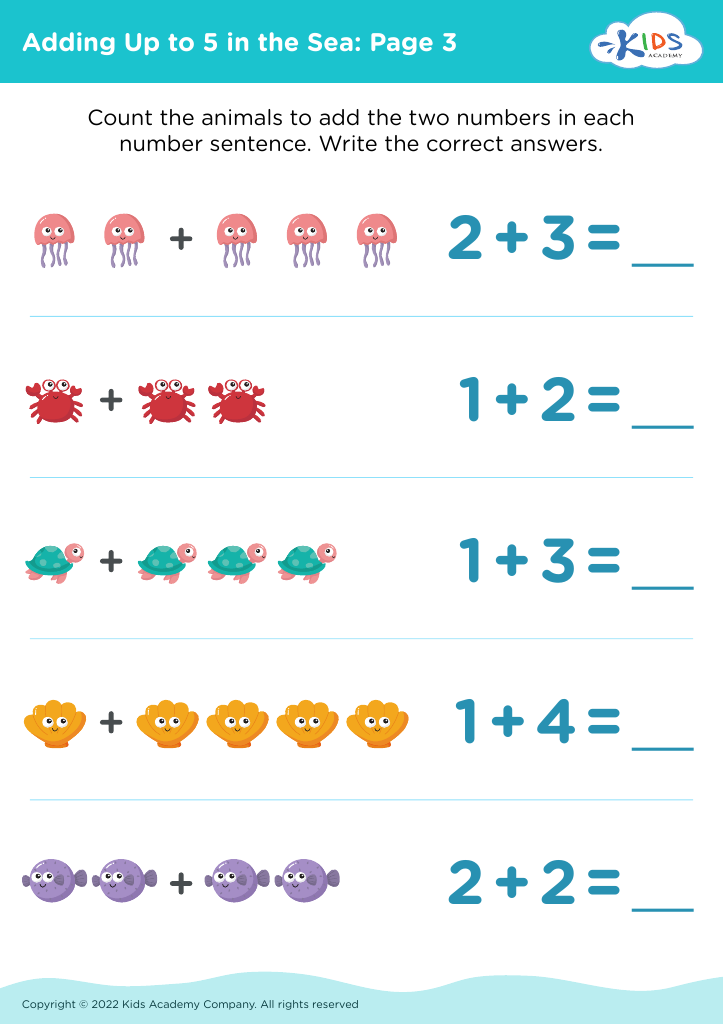








Parents and teachers should care about underwater animal identification along with addition and subtraction for children aged 4-8 because it promotes a holistic approach to learning. Integrating subjects can enhance educational engagement and relevance for young learners. Kids are naturally curious about animals, especially diverse and colorful underwater species, which makes this topic particularly appealing.
Identifying underwater animals can spark interest in science and biodiversity, fostering a love for nature and environmental stewardship. Simultaneously, incorporating addition and subtraction in this context makes math lessons more enjoyable and tangible. For example, asking children to solve simple math problems, like “If you see 3 clownfish and 2 angelfish, how many fish are there altogether?” creates practical applications for arithmetic in a fun way.
This dual focus supports cognitive development. Children learn to categorize and analyze information while also building foundational math skills. Furthermore, the blend of art, science, and math caters to various learning styles, ensuring that more children find connections in their education. Ultimately, by nurturing curiosity and developing essential skills simultaneously, parents and teachers can encourage well-rounded education, preparing children for future learning challenges in an engaging manner.








