
Visual discrimination Addition & Subtraction Worksheets for Ages 4-8
6 filtered results
Difficulty Level
Grade
Age
-
From - To
Subject
Activity
Standards
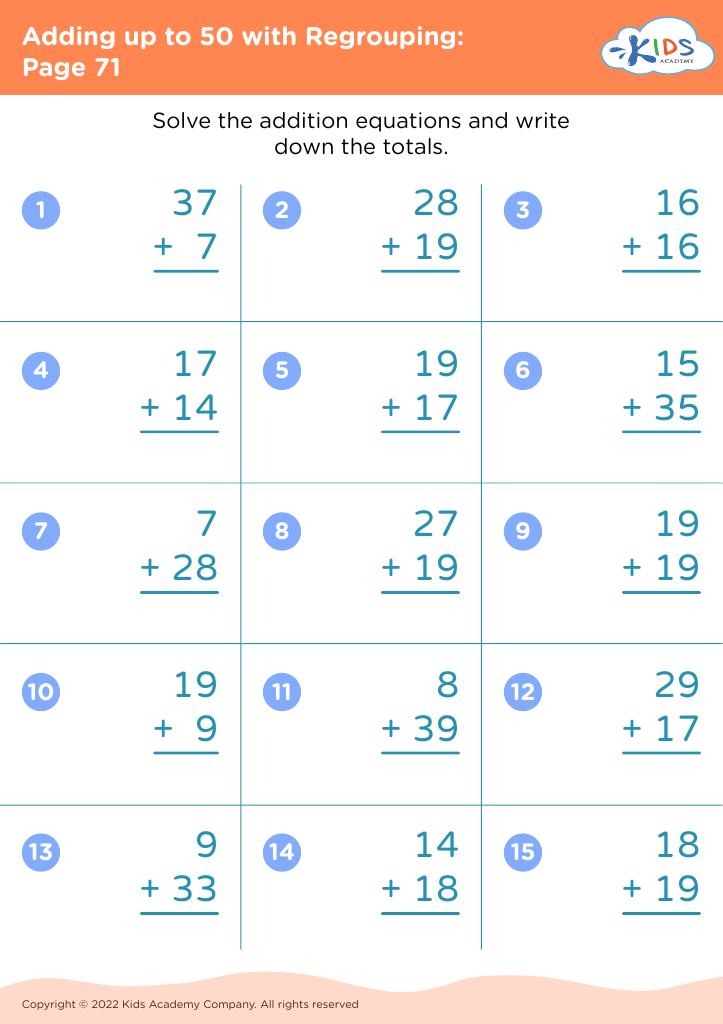
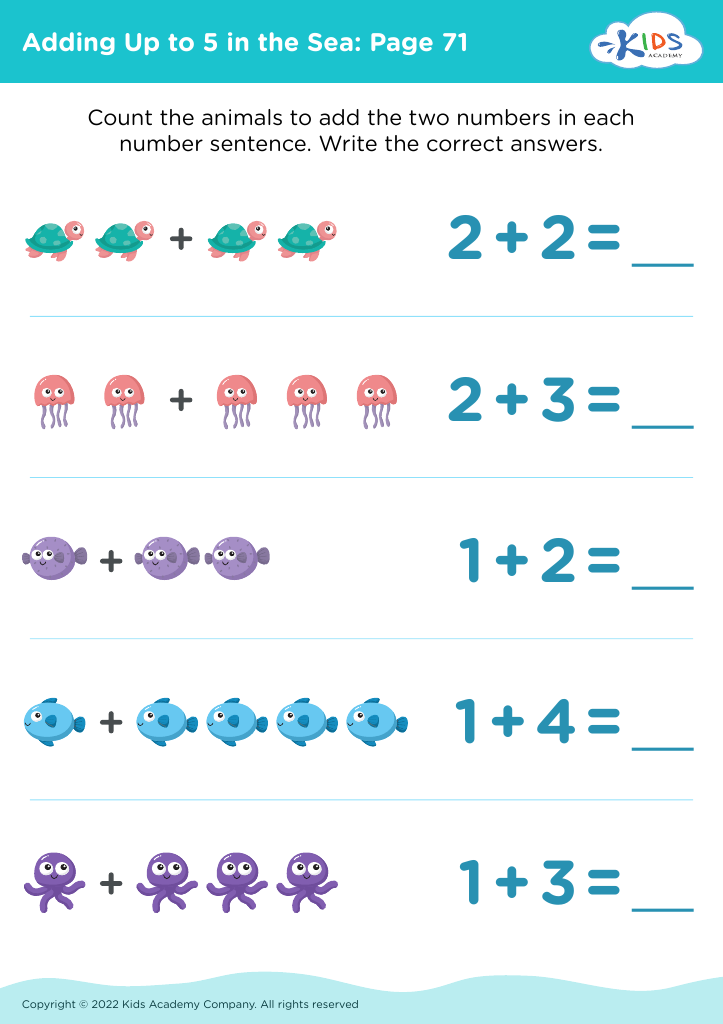
Explore our engaging Visual Discrimination Addition & Subtraction Worksheets, specifically designed for children aged 4-8. These interactive worksheets help young learners enhance their visual discrimination skills while mastering basic math concepts. By identifying differences in visual patterns and comparing numbers, children gain confidence in addition and subtraction skills in a fun and dynamic way. Our well-structured worksheets develop critical thinking and attention to detail, ensuring a solid foundation for future math success. Perfect for home or classroom use, these resources make learning enjoyable and effective. Join us in fostering a love for math with our thoughtfully crafted educational materials!
Favorites
With answer key
Interactive
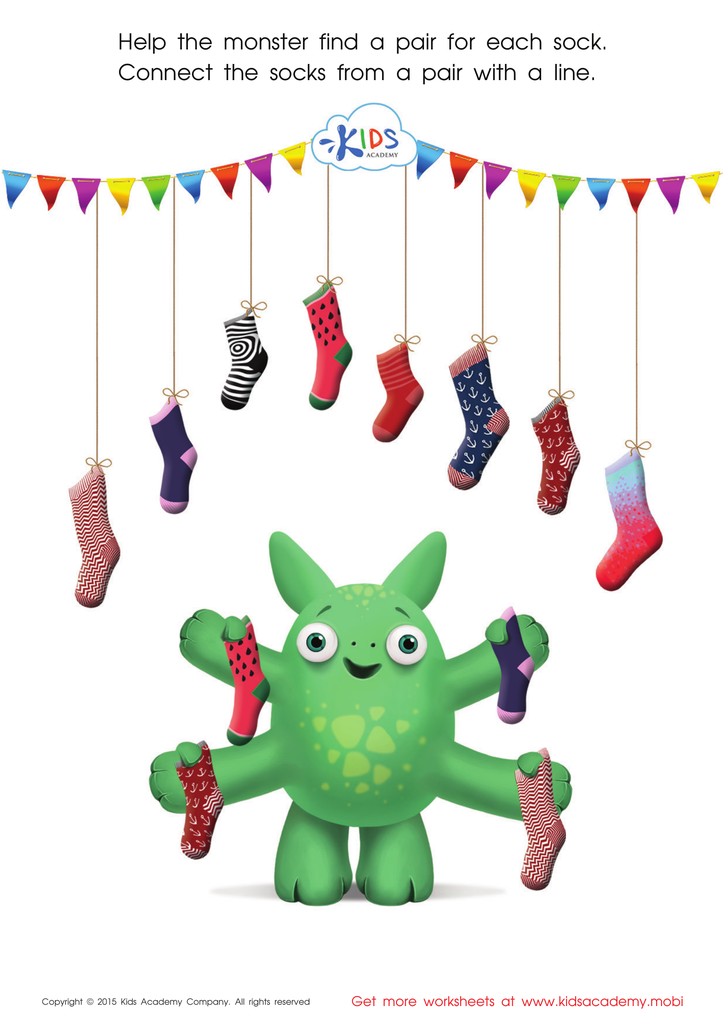
Math Matching Game: Monsterв's Socks Worksheet
Help the Monster put pairs of socks back together after a big storm! Kids draw lines to match the socks and develop cognitive and fine motor skills. Download and print the worksheet from Kids Academy. More preschool and kindergarten activities available.
Math Matching Game: Monsterв's Socks Worksheet
Worksheet
Join Kids Academy for Free
Who is primarily going to use this learning content?








Visual discrimination in addition and subtraction is crucial for children aged 4-8 as it lays the foundation for their mathematical development. At this age, children are not only learning numbers but also how to recognize patterns, shapes, and quantities, which are essential for calculating and solving mathematical problems effectively.
When children enhance their visual discrimination skills, they become better equipped to identify differences and similarities between numbers and objects. This skill directly impacts their ability to engage with addition and subtraction problems accurately. For instance, recognizing the number of objects in a group can enhance their understanding of how to make calculations through grouping or separating items, which directly relates to counting and arithmetic.
Additionally, developing visual discrimination fosters critical thinking and analytical skills. It encourages children to observe, compare, and contrast information, which are vital skills in grasping more complex mathematical concepts later on. By investing time in activities that promote visual discrimination, parents and teachers can significantly improve children's confidence and competence in math, ensuring a more successful academic journey. Ultimately, this foundational skill not only supports their immediate learning but also prepares them for future educational challenges in mathematics and beyond.








