Attention to Detail Addition Worksheets for Ages 4-8
4 filtered results
-
From - To
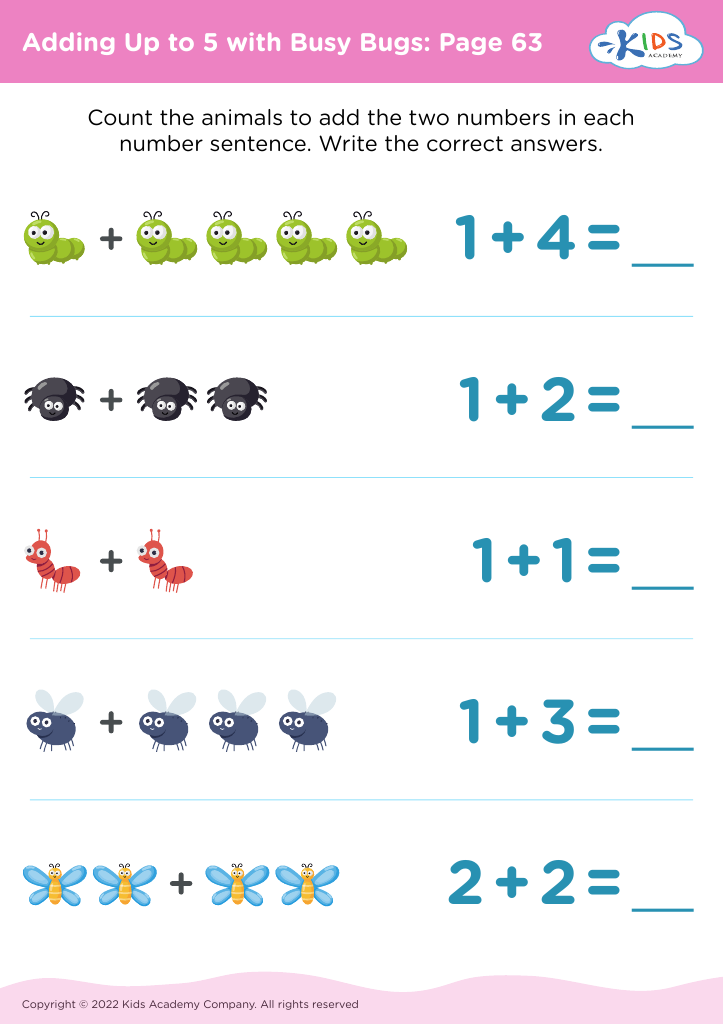
Our "Attention to Detail Addition Worksheets for Ages 4-8" are specially designed to help young learners sharpen their addition skills while enhancing their ability to focus on small details. These engaging and interactive worksheets provide a variety of exercises tailored to build strong mathematical foundations. Through fun and colorful activities, children will practice adding numbers, identifying patterns, and solving puzzles, all while improving their observation and concentration skills. Ideal for both classroom and at-home learning, our worksheets are a perfect blend of education and entertainment, ensuring a comprehensive learning experience for your child.
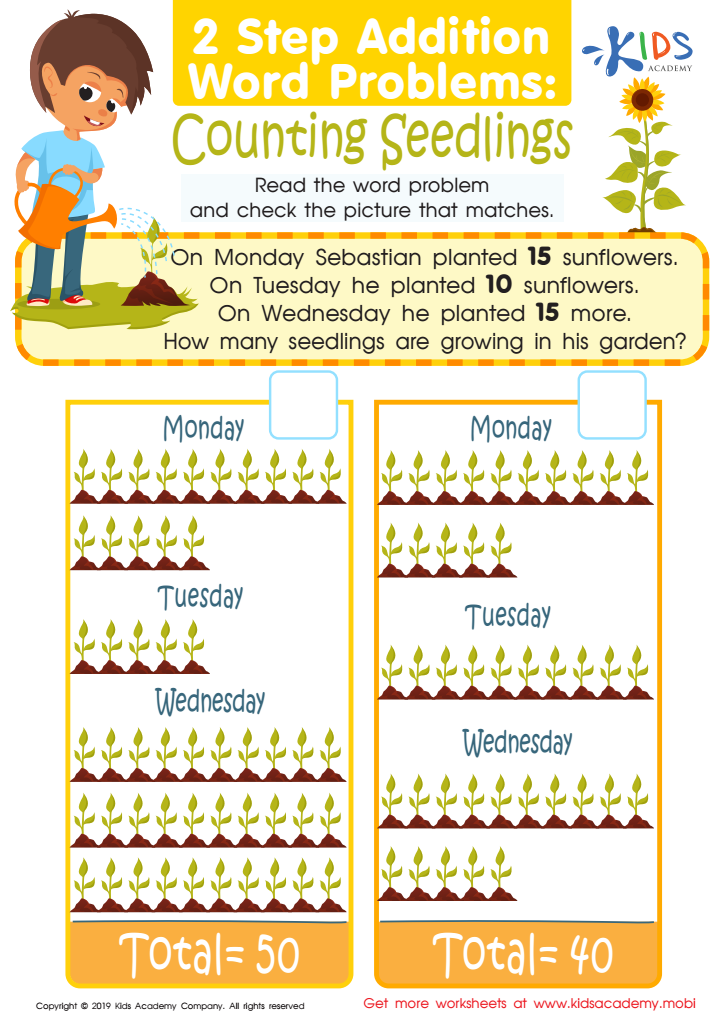
Counting Seedlings Worksheet
 Assign to My Students
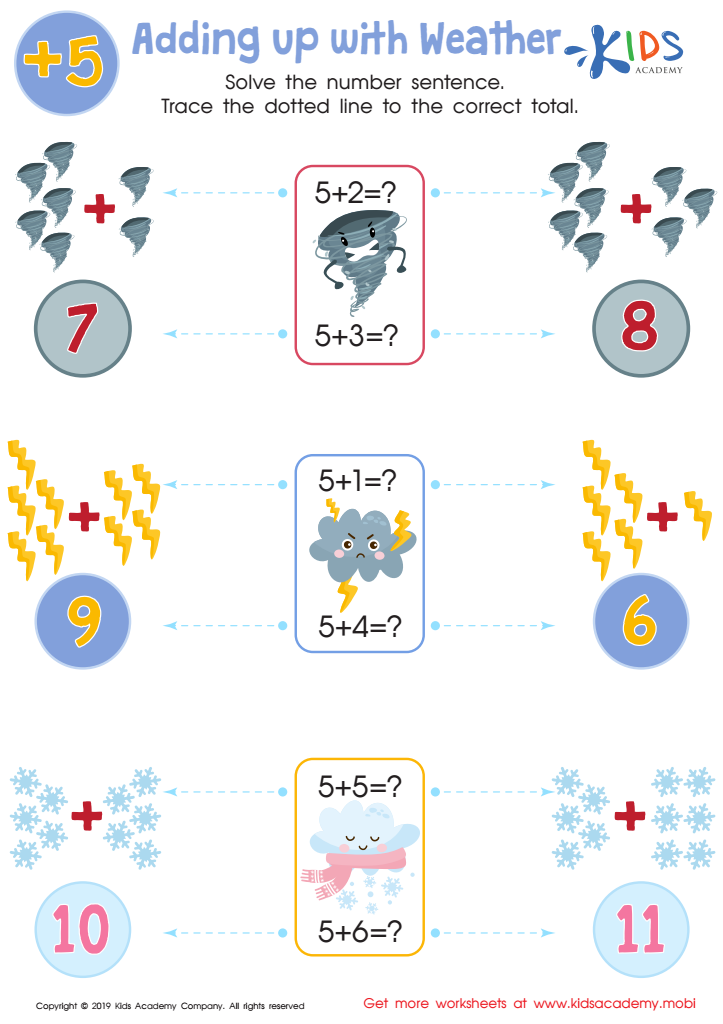
Adding up With Water Worksheet
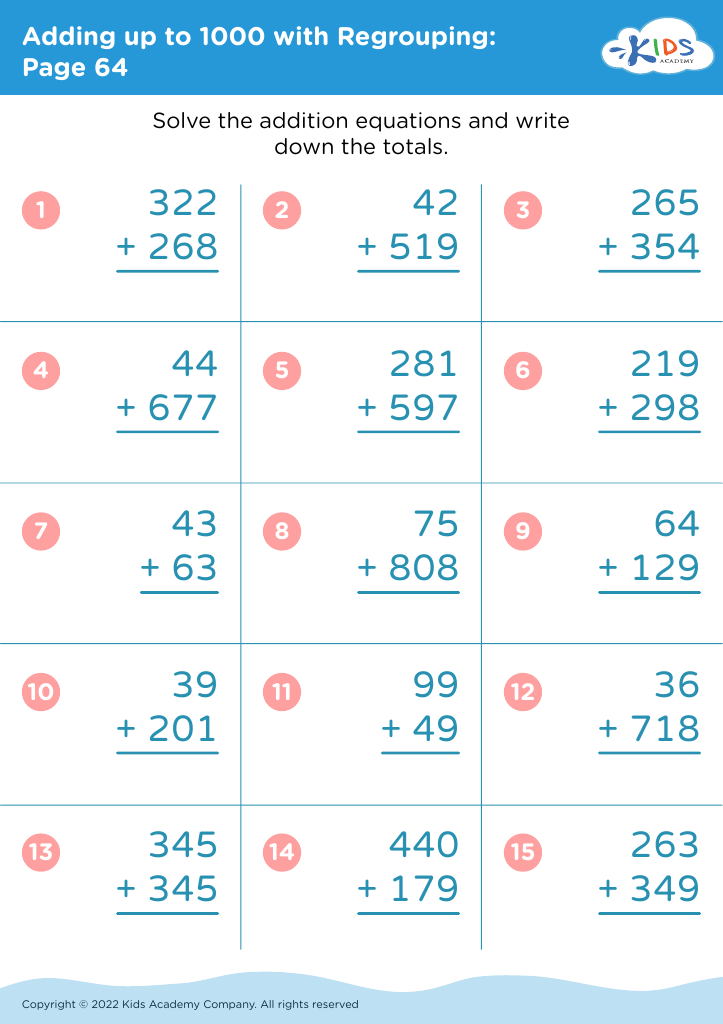








Attention to detail in addition for ages 4-8 is crucial for several interconnected reasons. Firstly, early mathematics skills lay the foundation for future competence in more complex mathematical concepts. By focusing on detail, young learners can develop accuracy, inevitably resulting in more confident problem solvers. When children grasp the importance of precision in addition, they become more meticulous, reducing careless errors that could hinder their mathematical understanding as the complexity of their tasks increases.
Secondly, fostering attention to detail helps to develop cognitive skills beyond mathematics. It encourages children to practice focus, patience, and mindfulness, qualities essential for academic success across all subjects. This attention further supports reading comprehension as children learn to notice and interpret small variations in texts.
For parents and teachers, emphasizing attention to systematic detail nurtures a mindset of excellence and responsibility in learners. When children adopt these skills early, they learn the value of careful work and problem-solving—traits that are crucial both inside and outside the classroom. Encouraging this approach at an early age ensures a smoother transition into higher grades, where the academic load increases in both volume and complexity. Ultimately, it sets a strong precedent for lifelong learning and critical thinking skills, essential for both academic success and everyday life.








