Filters

18 filtered results

Clear all filters
Favorites
With answer key
Interactive

18 filtered results

Difficulty Level

Grade


Enhance your child's foundational math skills with our "Basic Addition Practice" worksheets specifically designed for ages 4-8. These easy-to-follow worksheets by Kids Academy are perfect for young learners, helping them grasp fundamental addition concepts through engaging activities. With colorful illustrations and a variety of fun problems, children will build confidence as they practice adding numbers up to 10. Ideal for both classroom and at-home learning, our printables ensure that kids master basic addition while developing their problem-solving abilities. Download today and make math fun and exciting for your little one!
Check out this FREE Trial Lesson on Addition for age 4-8!

X

Favorites
With answer key
Interactive
  • 4-8
  • Basic addition practice
  • Addition
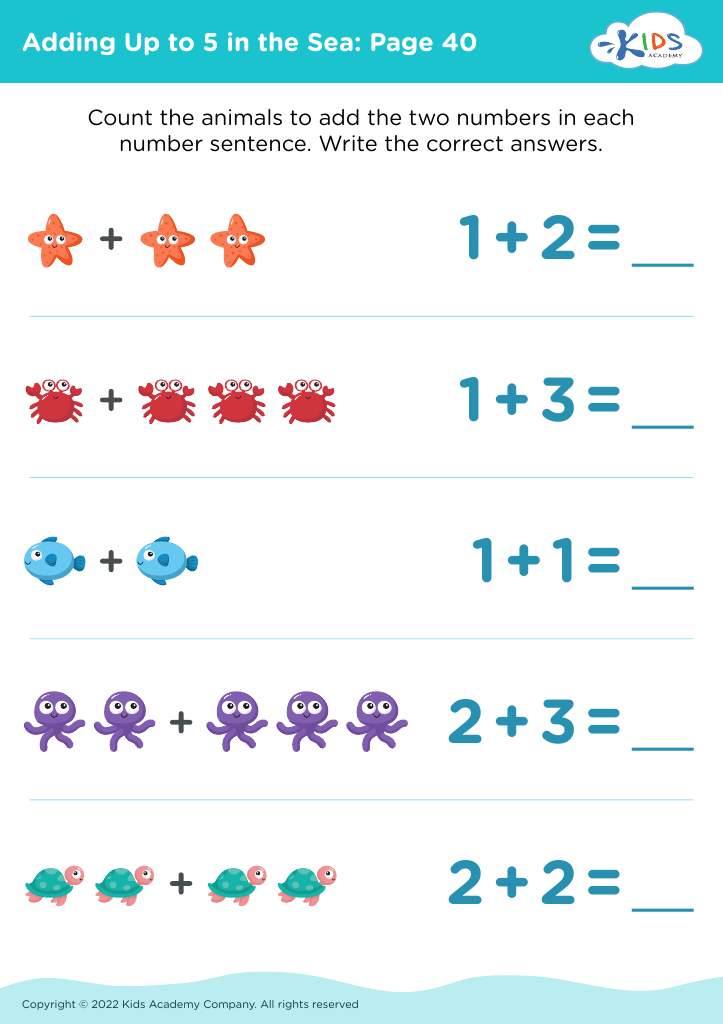
Adding Up to 5 in the Sea: Page 40
Worksheet
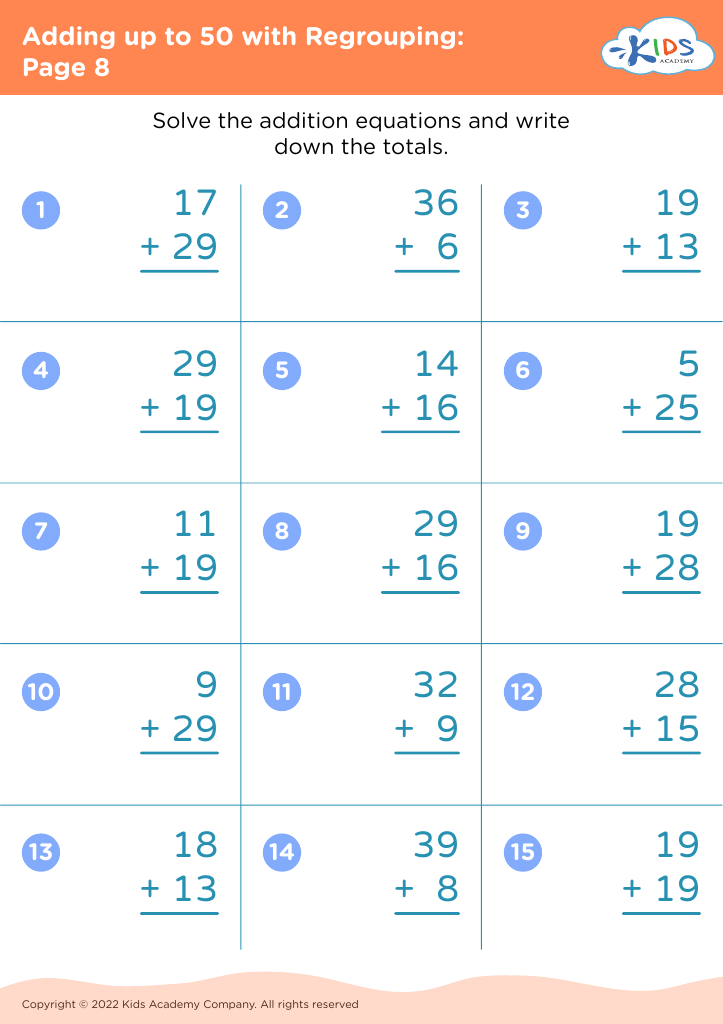
Adding up to 50 with Regrouping: Page 8
Worksheet
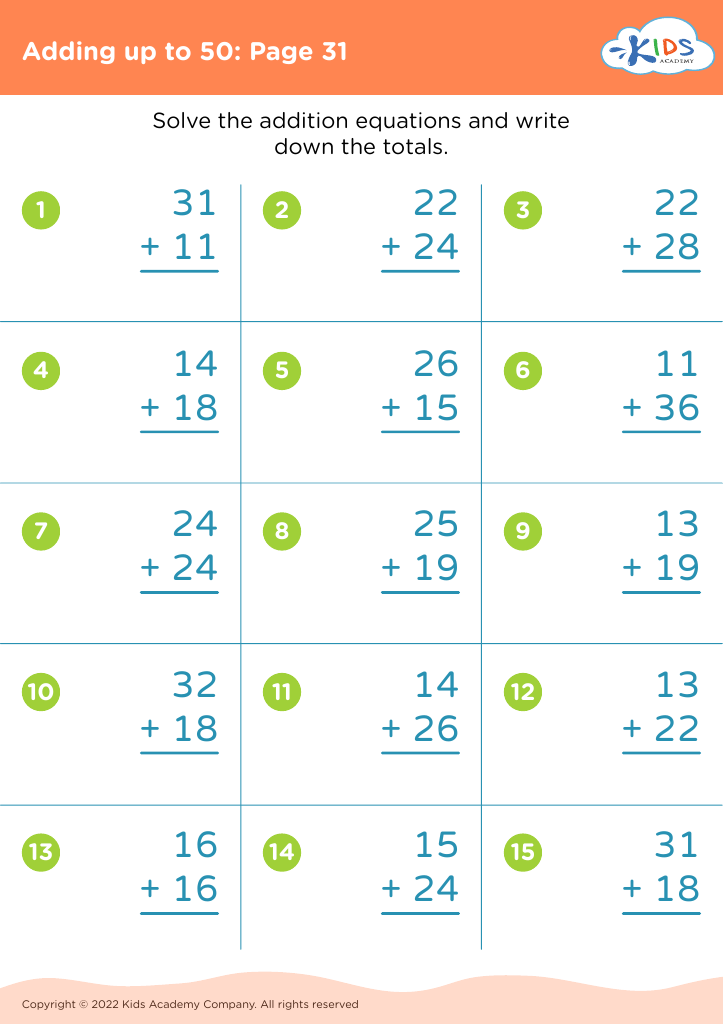
Adding up to 50: Page 31

Adding up to 50: Page 31

Adding up to 50: Page 31
Worksheet
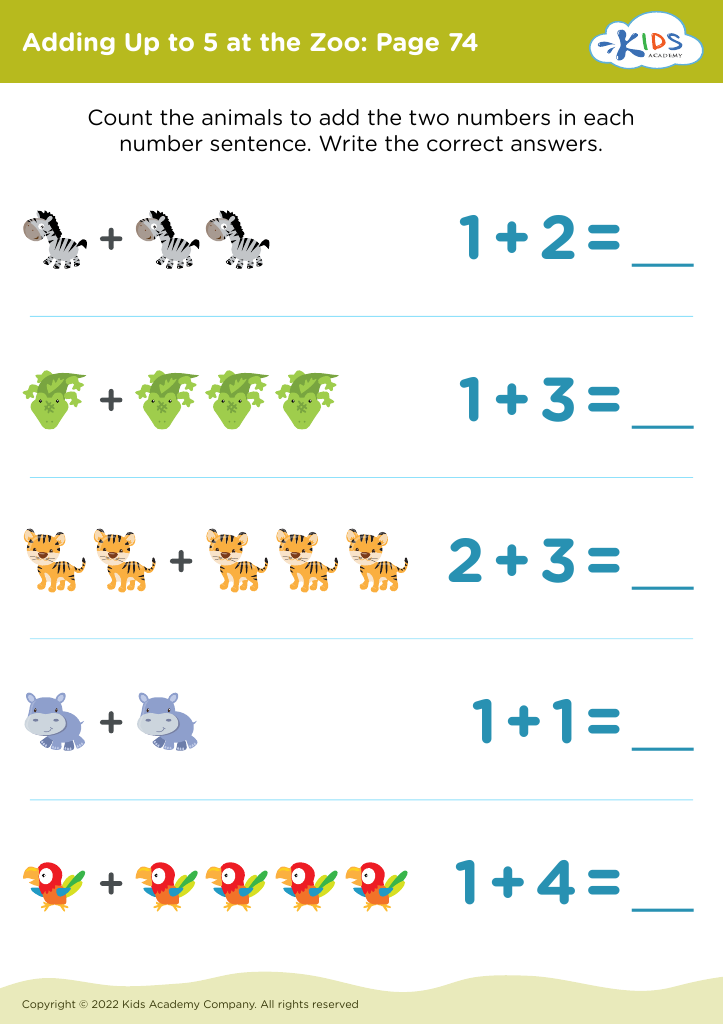
Adding Up to 5 at the Zoo: Page 74
Worksheet
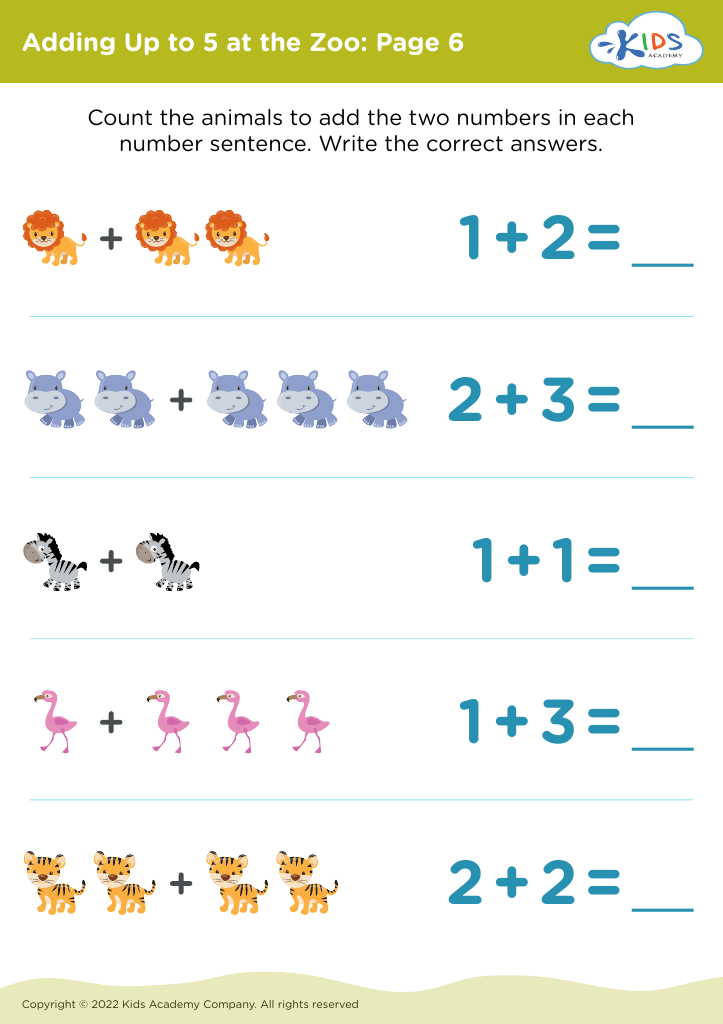
Adding Up to 5 at the Zoo: Page 6

Adding Up to 5 at the Zoo: Page 6

Adding Up to 5 at the Zoo: Page 6
Worksheet
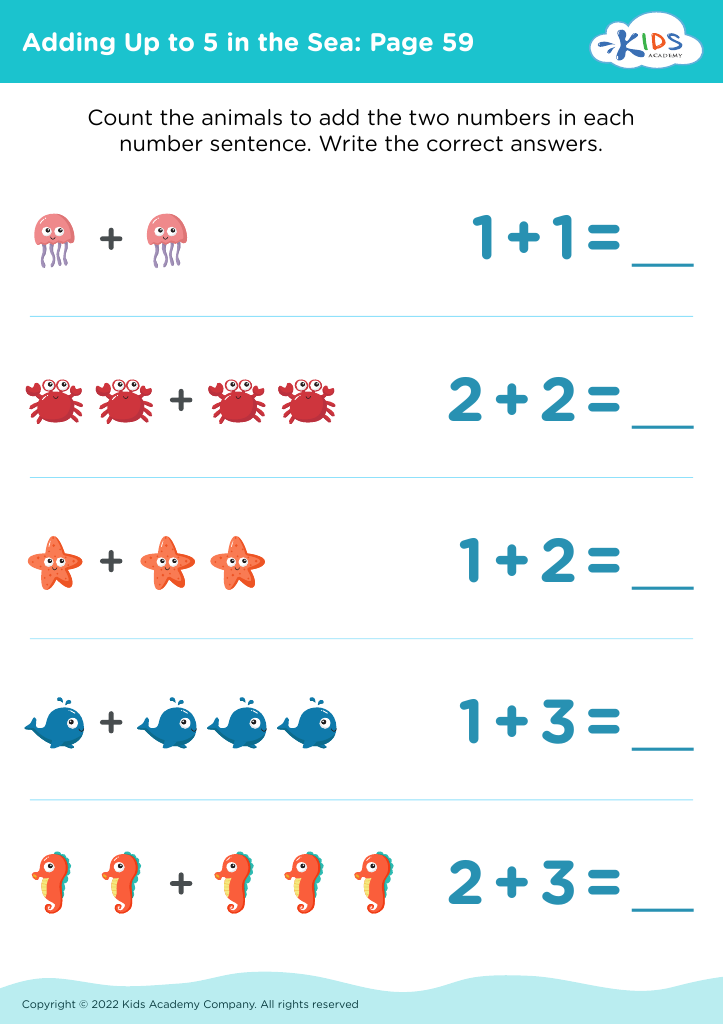
Adding Up to 5 in the Sea: Page 59
Worksheet
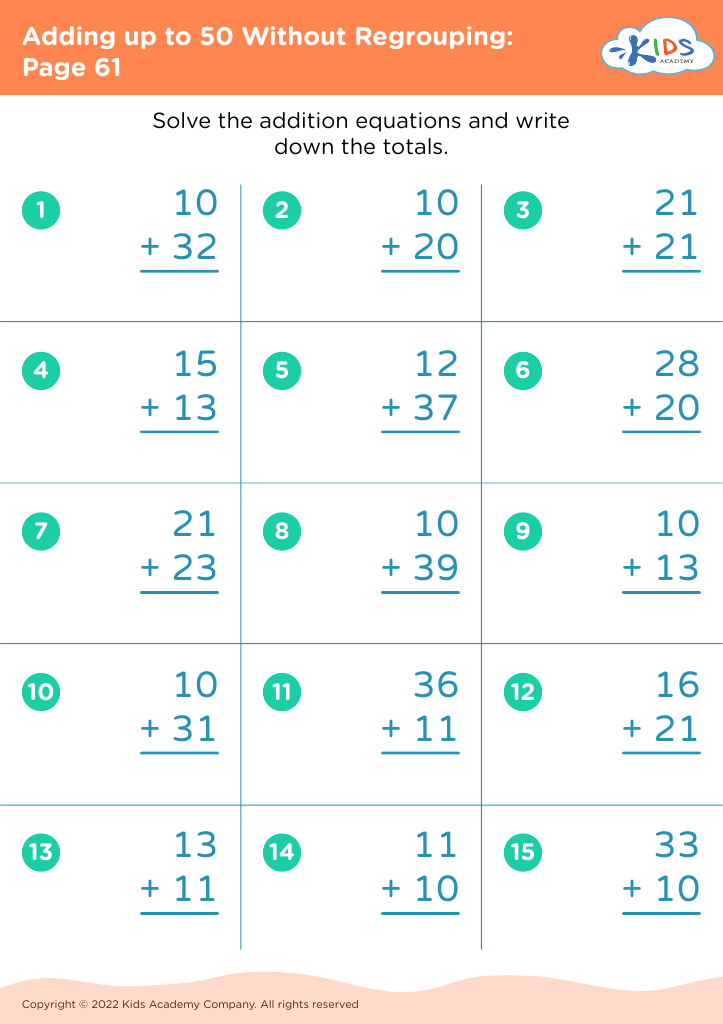
Adding up to 50 Without Regrouping: Page 61
Worksheet
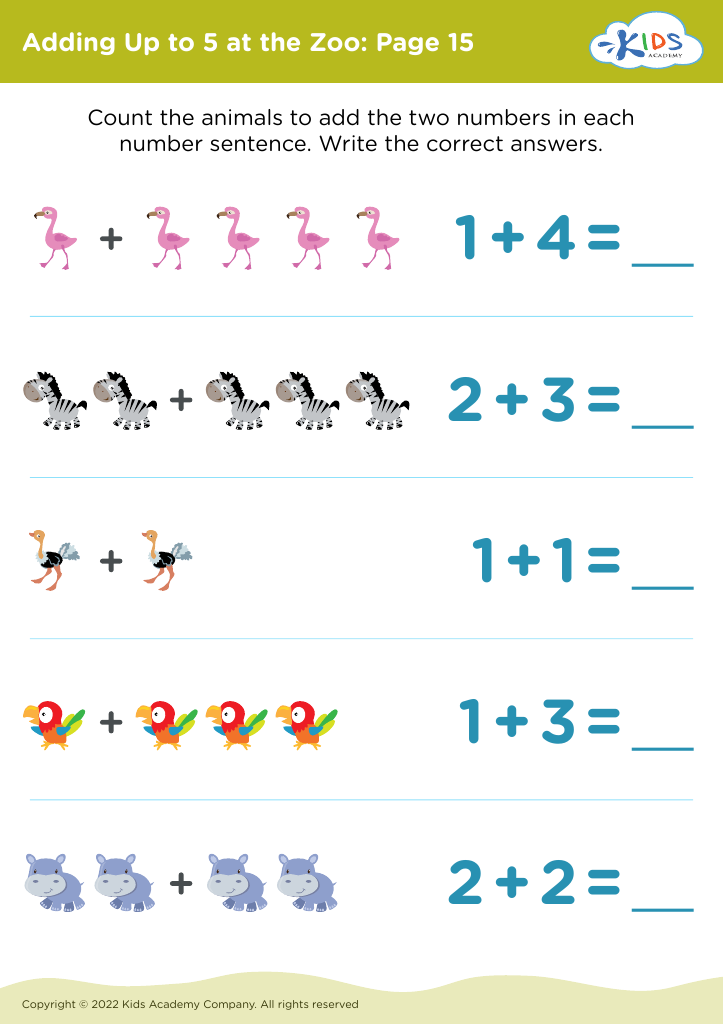
Adding Up to 5 at the Zoo: Page 15
Worksheet
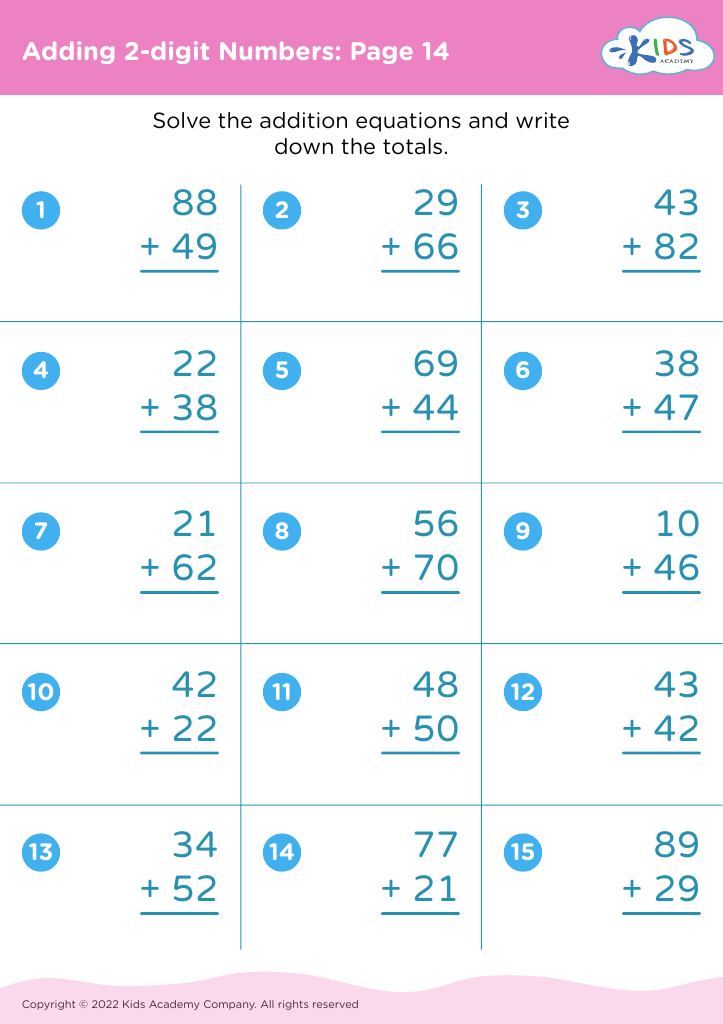
Adding 2-digit Numbers: Page 14

Adding 2-digit Numbers: Page 14

Adding 2-digit Numbers: Page 14
Worksheet
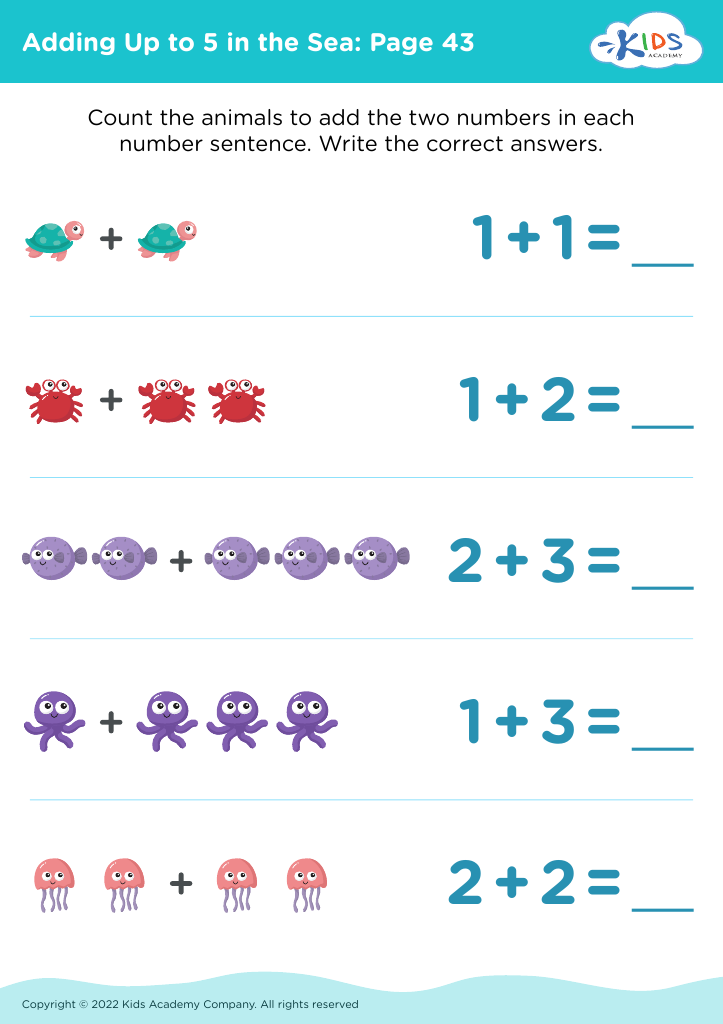
Adding Up to 5 in the Sea: Page 43
Worksheet
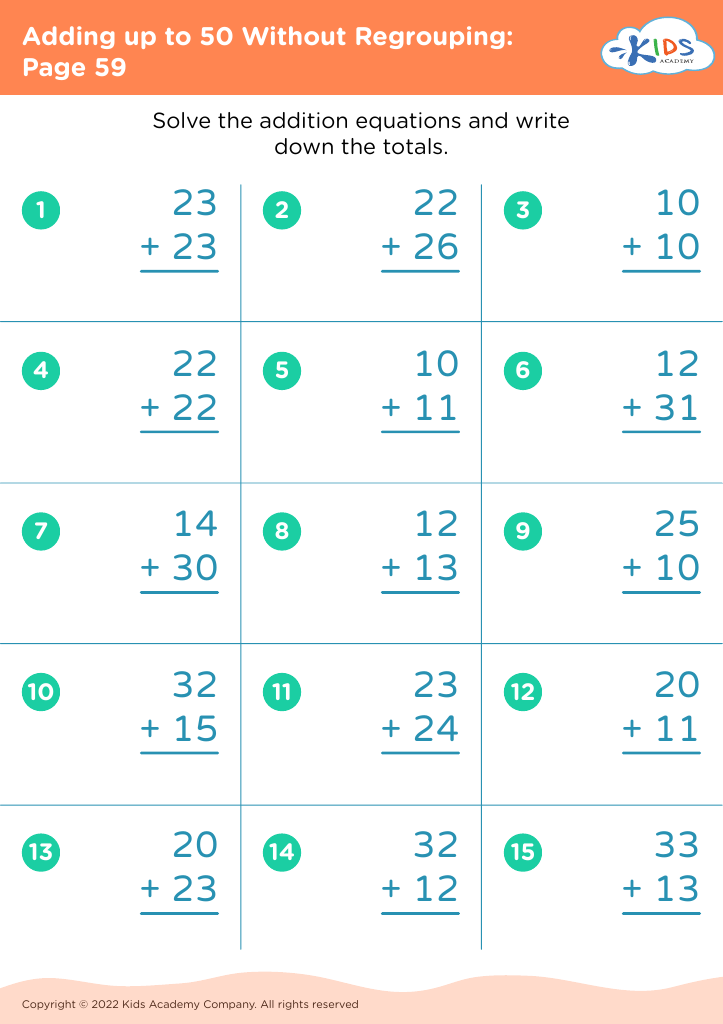
Adding up to 50 Without Regrouping: Page 59
Worksheet
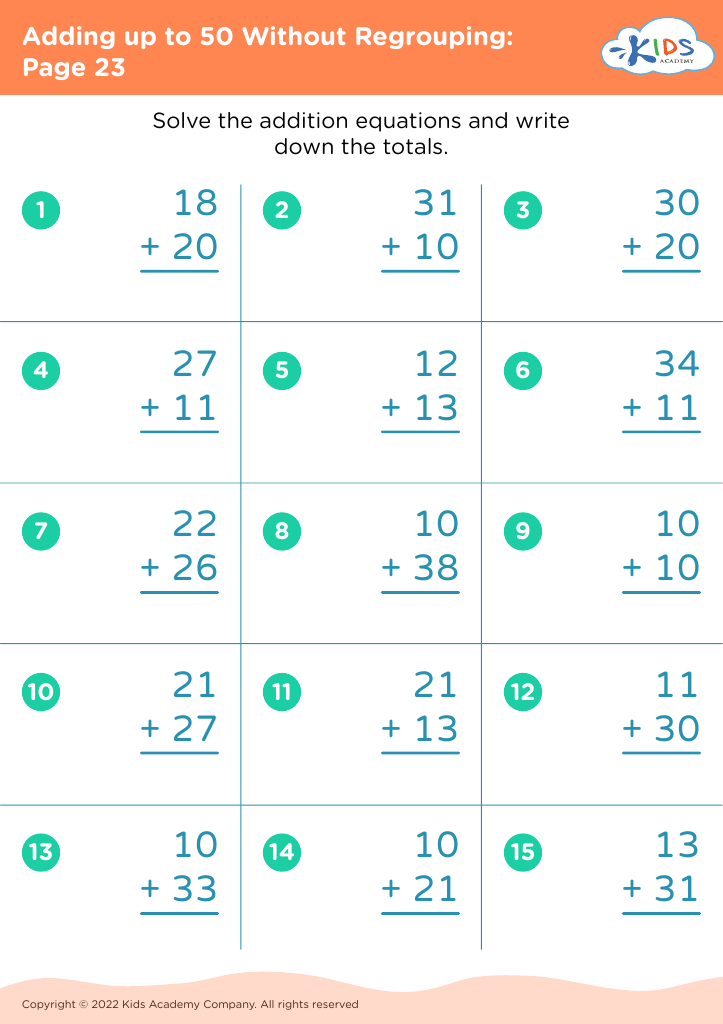
Adding up to 50 Without Regrouping: Page 23
Worksheet
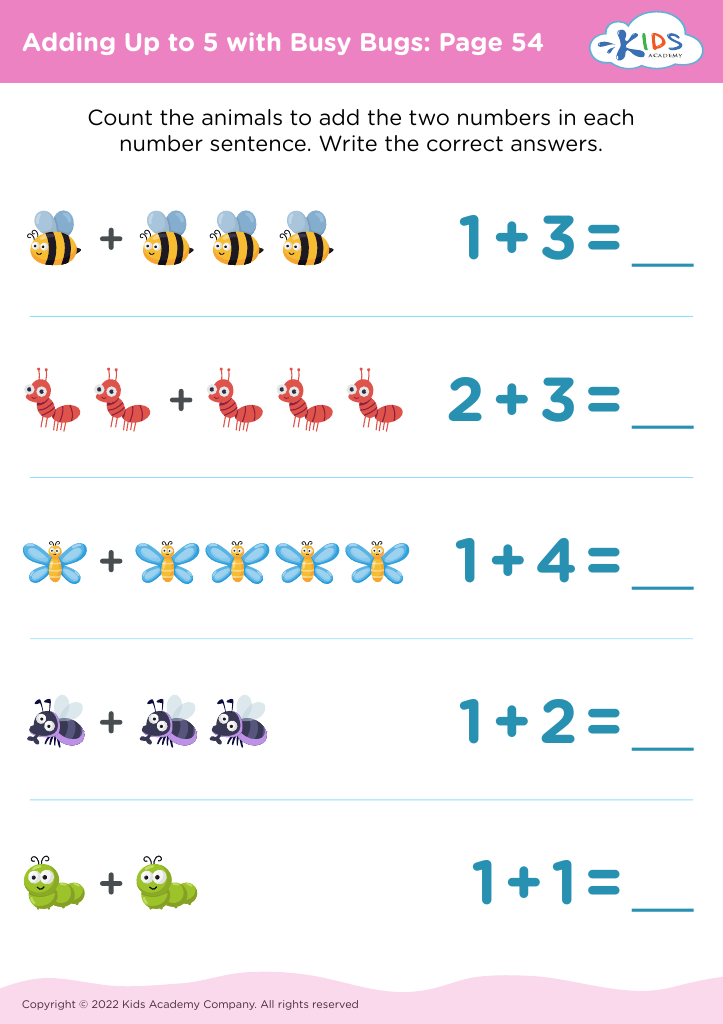
Adding Up to 5 with Busy Bugs: Page 54
Worksheet
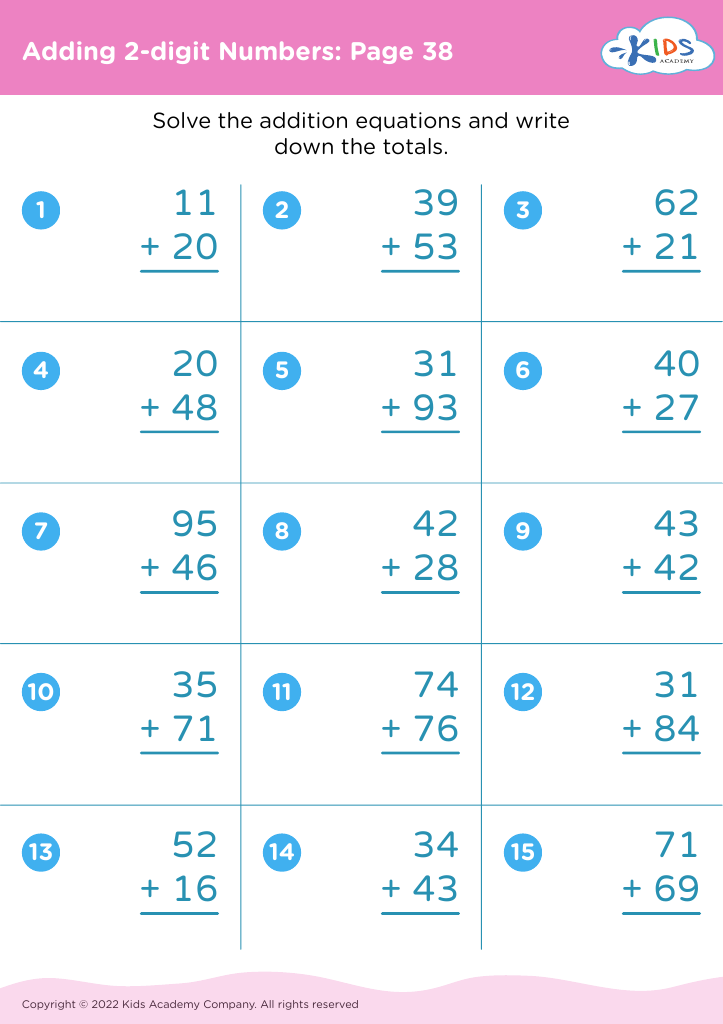
Adding 2-digit Numbers: Page 38

Adding 2-digit Numbers: Page 38

Adding 2-digit Numbers: Page 38
Worksheet
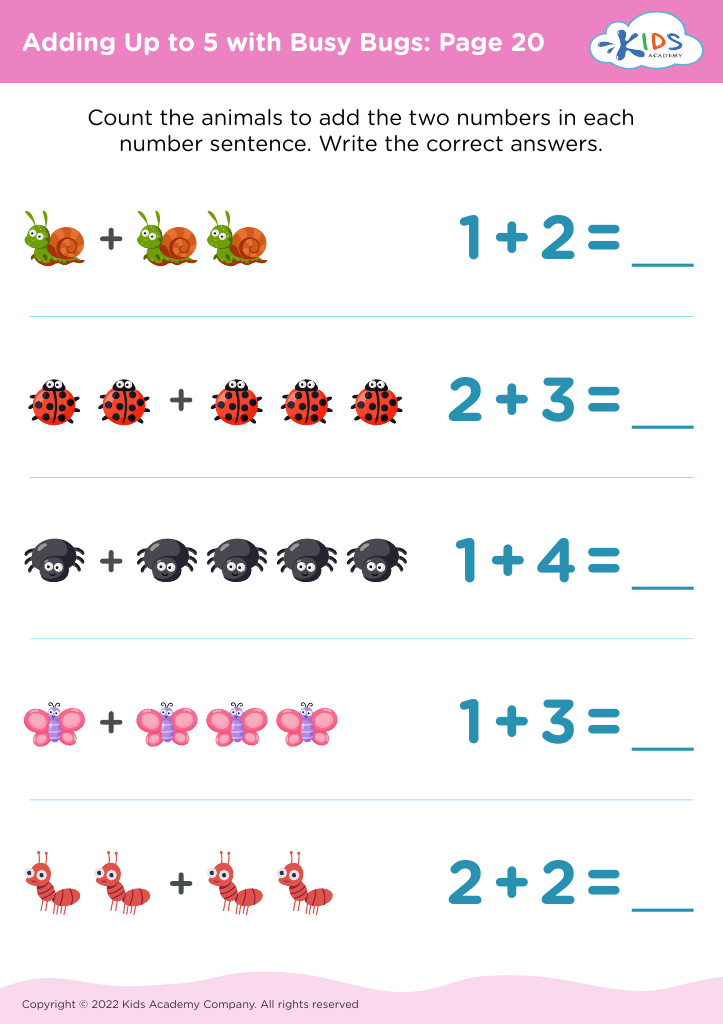
Adding Up to 5 with Busy Bugs: Page 20
Worksheet
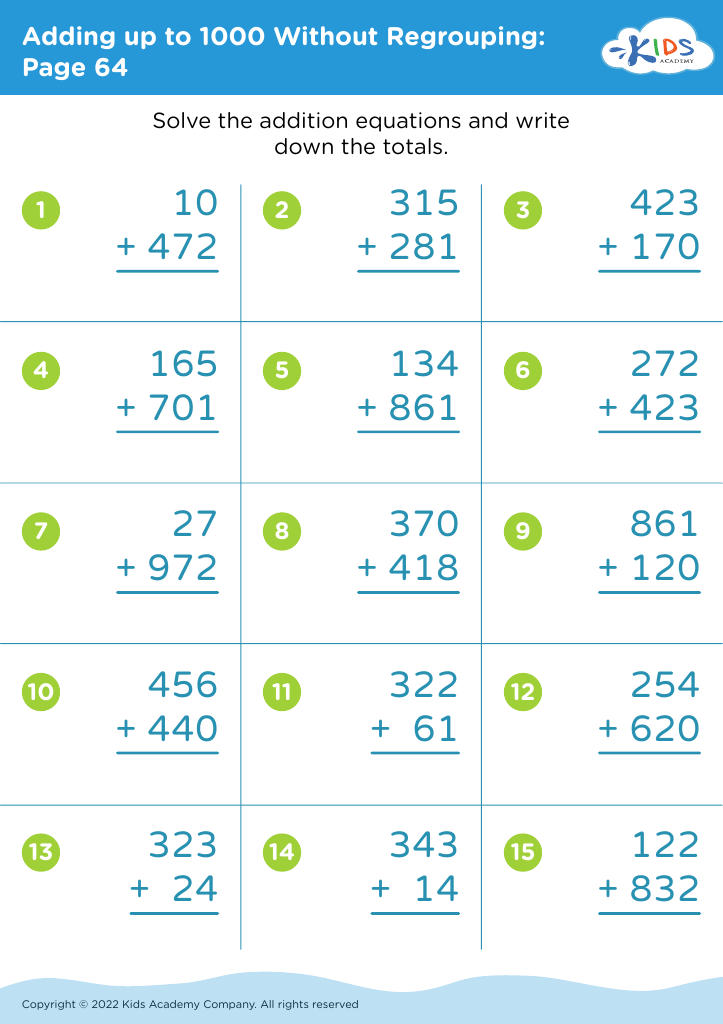
Adding up to 1000 Without Regrouping: Page 64
Worksheet
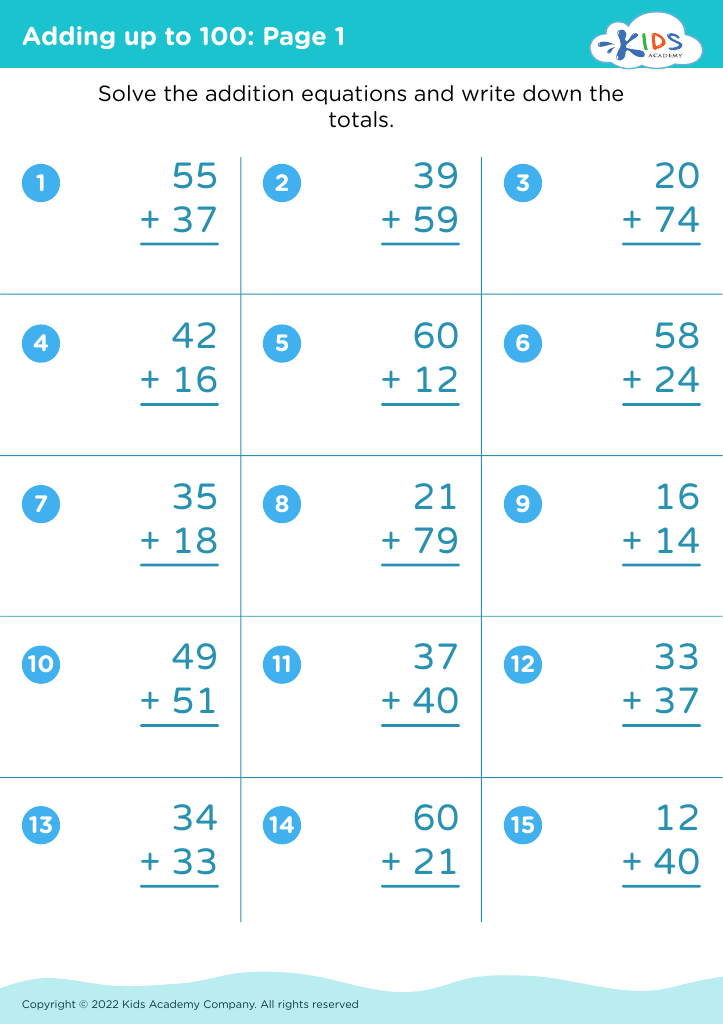
Adding up to 100: Page 1

Adding up to 100: Page 1

Adding up to 100: Page 1
Worksheet
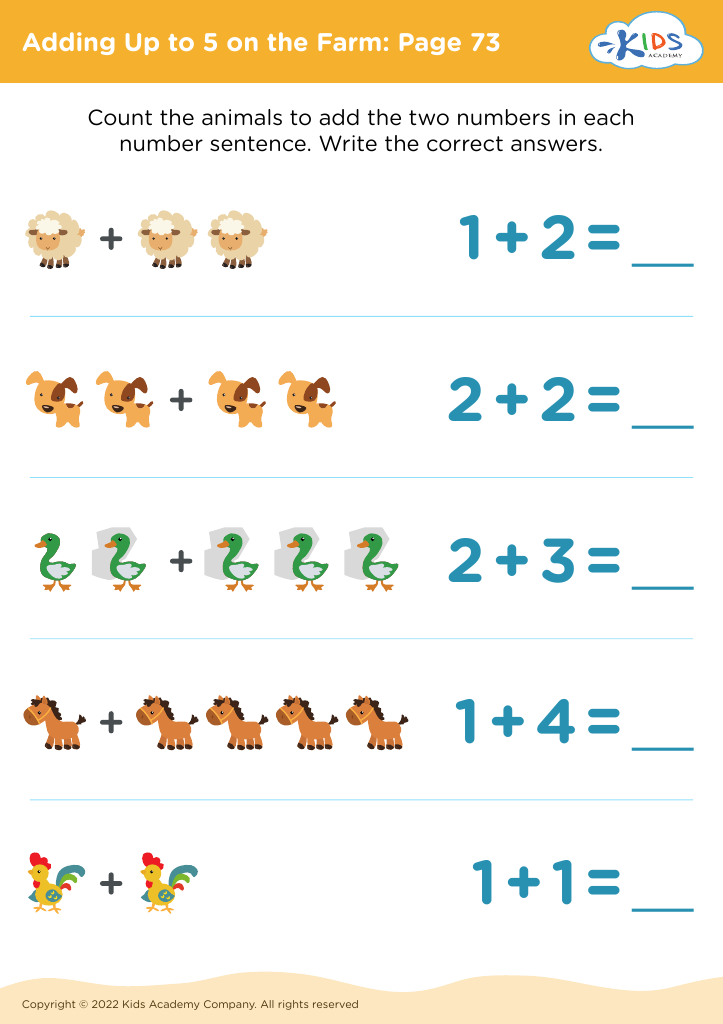
Adding Up to 5 on the Farm: Page 73
Worksheet


Parents and teachers should prioritize basic addition practice for ages 4-8 because this foundational skill is crucial for a child's mathematical development and overall cognitive growth. At this young age, children are at a critical stage where they can absorb and learn new concepts rapidly. Mastering basic addition helps to build their number sense, which is essential for tackling more complex mathematical problems later on.

Practicing addition enhances children's logical thinking and problem-solving abilities, which are applicable beyond just math. It encourages them to think critically and understand relationships between numbers, fostering analytical skills that are beneficial in various subjects and life situations. Additionally, success in early math can boost a child's confidence and promote a positive attitude toward learning, which is essential for lifelong educational development.

Involving children in engaging, hands-on addition activities can also make learning fun, keeping them motivated and interested. Parents and teachers who invest time and energy into teaching basic addition provide vital support that can spark a love for math and learning in general. In essence, early proficiency in addition establishes a strong educational foundation, paving the way for future academic achievements and life skills.