
Basic math learning Addition Worksheets for Ages 4-8
3 filtered results
Difficulty Level
Grade
Age
-
From - To
Subject
Activity
Standards
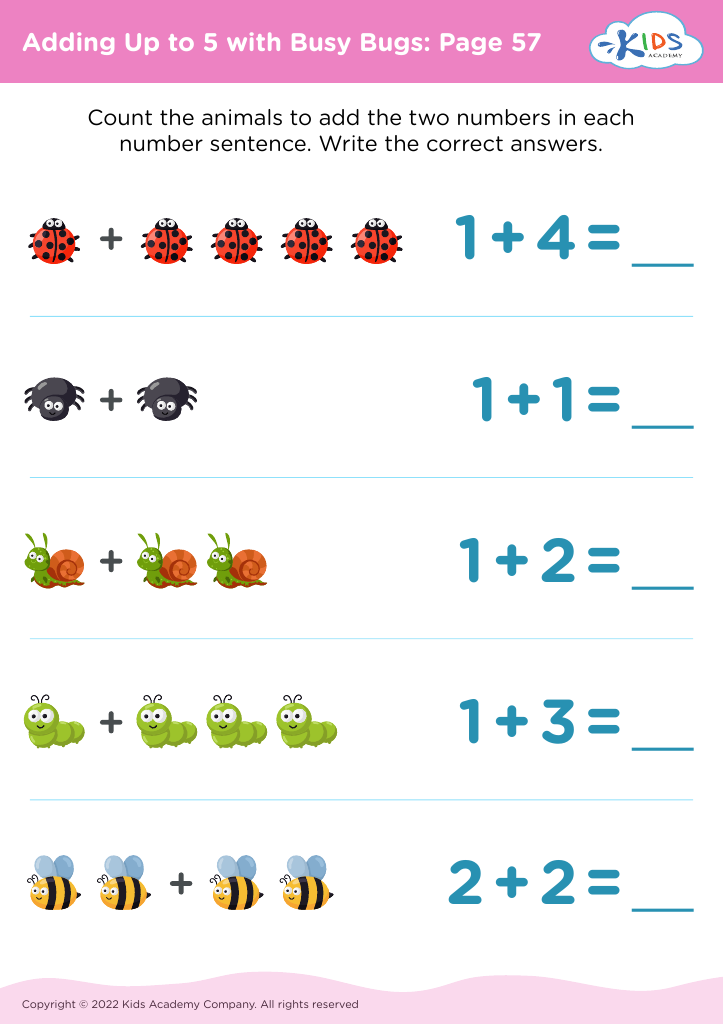
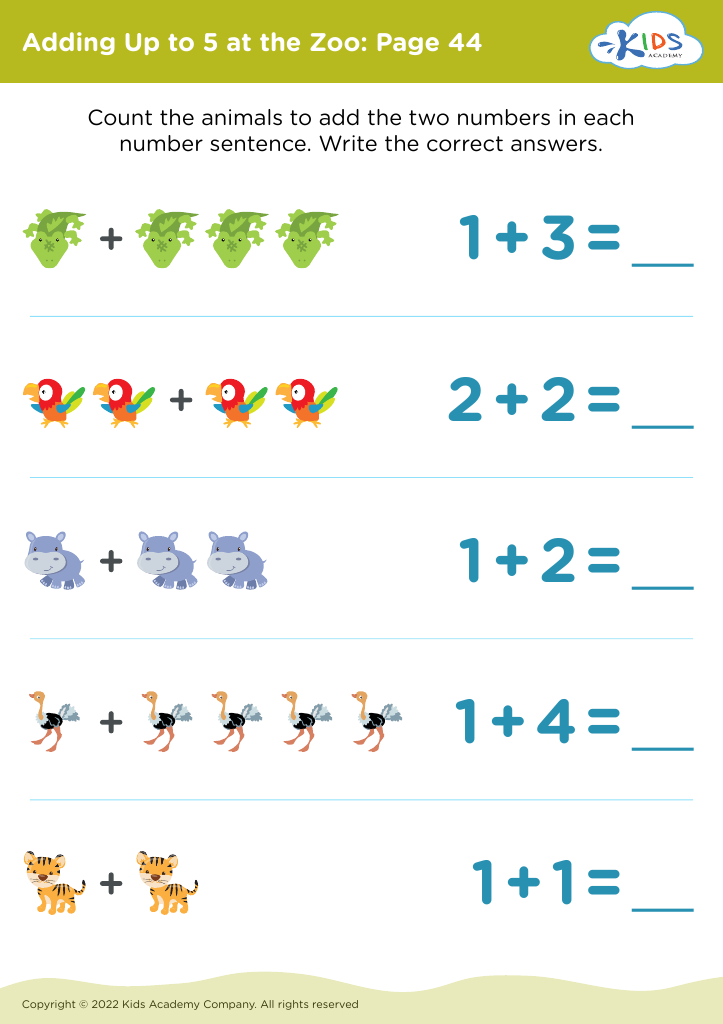
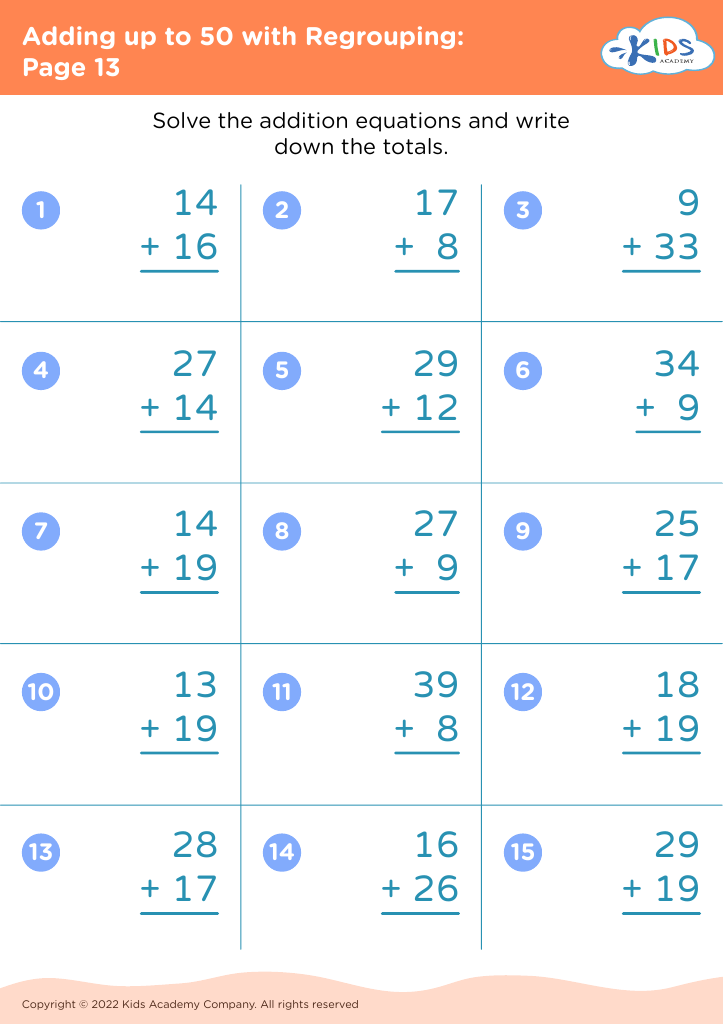
Unlock your child's math potential with our "Basic Math Learning Addition Worksheets for Ages 4-8". These expertly designed worksheets offer engaging and intuitive activities to help young learners develop essential addition skills. Perfect for both classroom and home use, our exercises focus on foundational concepts, incorporating visual aids and enjoyable themes to maintain interest. Children will love practicing addition through colorful and interactive formats, ensuring a solid understanding while fostering a love for math. Give your child the tools they need to succeed in math with our fun, educational worksheets tailored specifically for young minds.
Favorites
With answer key
Interactive
Join Kids Academy for Free
Who is primarily going to use this learning content?








Basic math learning, particularly addition, is crucial for children ages 4-8 because it lays the foundation for future academic success and everyday problem-solving skills. Learning addition not only helps children build essential arithmetic skills but also improves their logical thinking, pattern recognition, and cognitive development. At a tender age, grasping the concept of addition can boost a child's confidence and foster a positive attitude toward mathematics as they progress through school.
Furthermore, early proficiency in basic math allows children to understand and organize the world around them. For instance, when children learn to add, they can more easily comprehend concepts like sharing equally, counting money, or measuring ingredients while baking. These activities enhance their practical life skills and promote a sense of independence.
Parents and teachers play a significant role in a child's early learning. Investing time and effort to ensure that children understand addition can lead to enhanced academic performance in higher grades. It also aids in cultivating a mindset where children view challenges as opportunities to learn and grow. Supporting children during their initial encounters with addition sets a strong mathematical foundation, preparing them for more complex problem-solving tasks in their academic journey and everyday life.








