
Critical thinking development Addition Worksheets for Ages 4-8
3 filtered results
Difficulty Level
Grade
Age
-
From - To
Subject
Activity
Standards
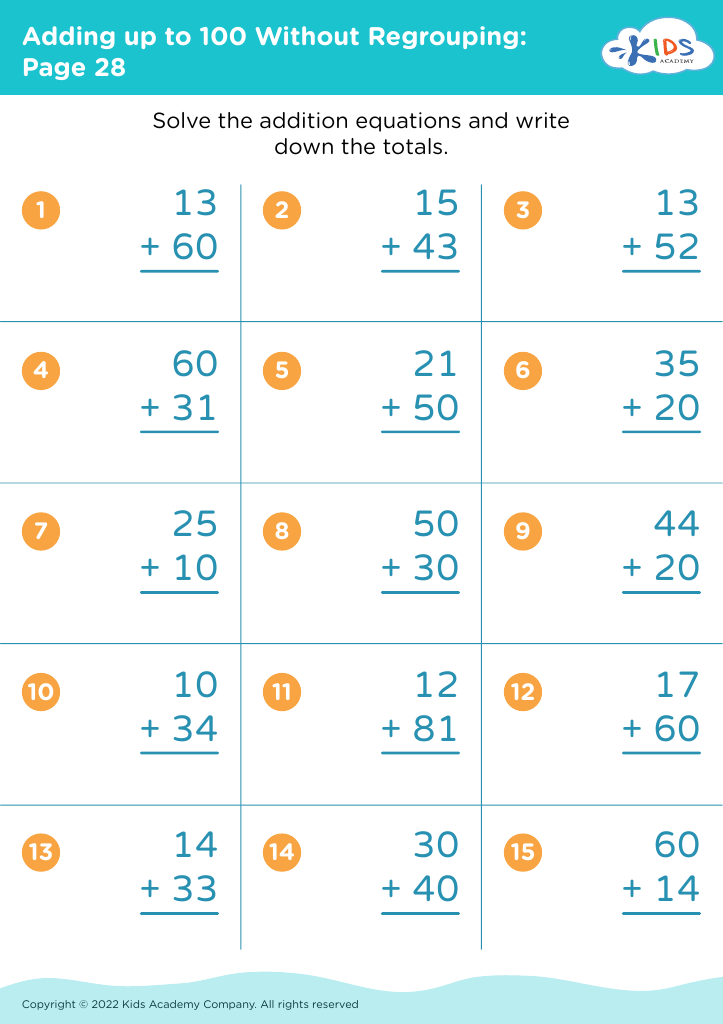
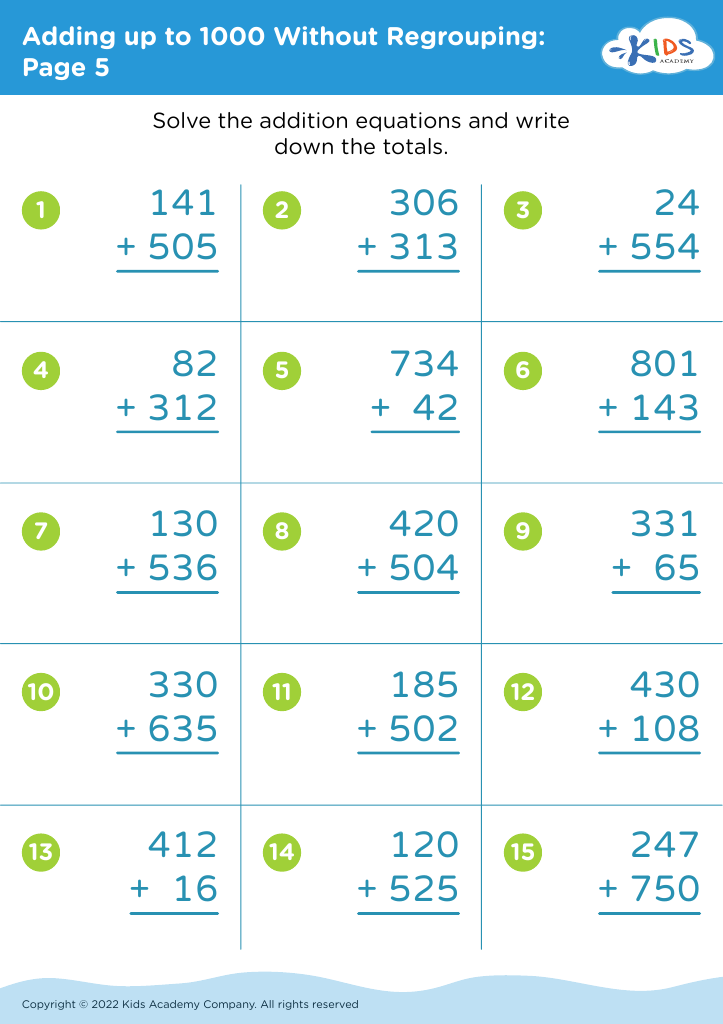
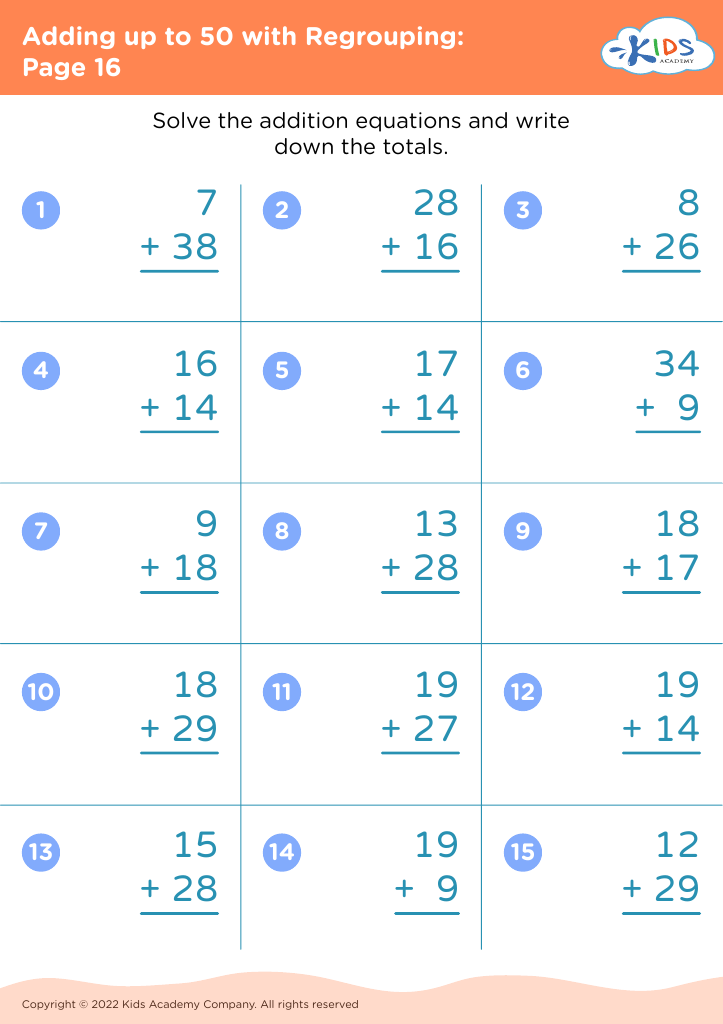
Explore our engaging Critical Thinking Development Addition Worksheets designed for children aged 4-8! These worksheets focus on enhancing critical thinking skills while making math enjoyable. Through fun and interactive exercises, children can strengthen their addition abilities, solve problems, and think creatively. Each worksheet incorporates colorful visuals and relatable scenarios to make learning captivating. Ideal for parents and educators seeking to cultivate mathematical understanding, these resources help kids connect addition concepts to real-life situations. Promote essential thinking skills in young learners as they tackle challenges and build confidence in their math journey. Start their critical thinking adventure today!
Favorites
With answer key
Interactive
Join Kids Academy for Free
Who is primarily going to use this learning content?








Developing critical thinking skills in children aged 4-8 is essential for their holistic growth and future success. During these formative years, children are naturally curious and eager to explore, making it the perfect time to nurture their ability to think critically. Critical thinking fosters inquiry, enabling kids to ask questions and seek answers rather than passively accept information. This process empowers them to evaluate evidence, recognize biases, and form their own opinions.
Furthermore, critical thinking lays the foundation for problem-solving skills, which are crucial as children encounter increasingly complex challenges in school and life. By encouraging these skills early on, parents and teachers help build resilience, adaptability, and creativity—qualities necessary to navigate an ever-changing world.
Moreover, critical thinking enhances communication skills, as children learn to articulate their thoughts, defend their viewpoints, and engage in constructive discussions. In an educational system that values rote memorization, promoting critical thinking offers a more dynamic, engaged approach to learning.
Ultimately, nurturing critical thinking in young children prepares them for the demands of the 21st century, where analytical abilities, creativity, and collaborative problem-solving are paramount. Supporting this development can significantly impact their academic, personal, and social success in the long run.








