Enhance vocabulary skills Addition Worksheets for Ages 4-8
4 filtered results
-
From - To
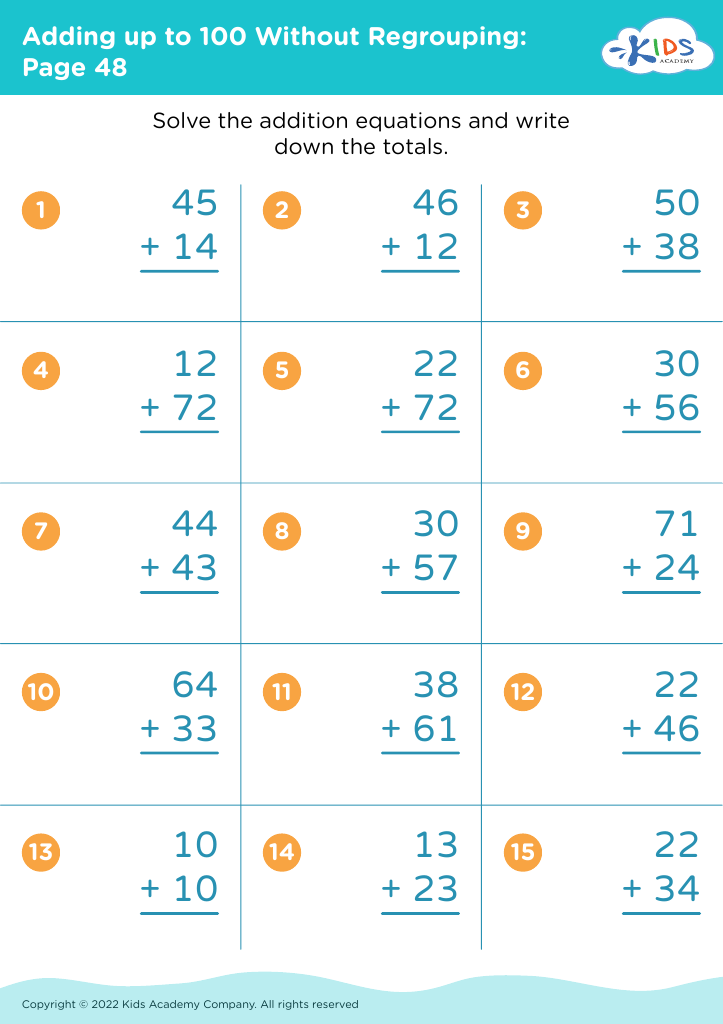
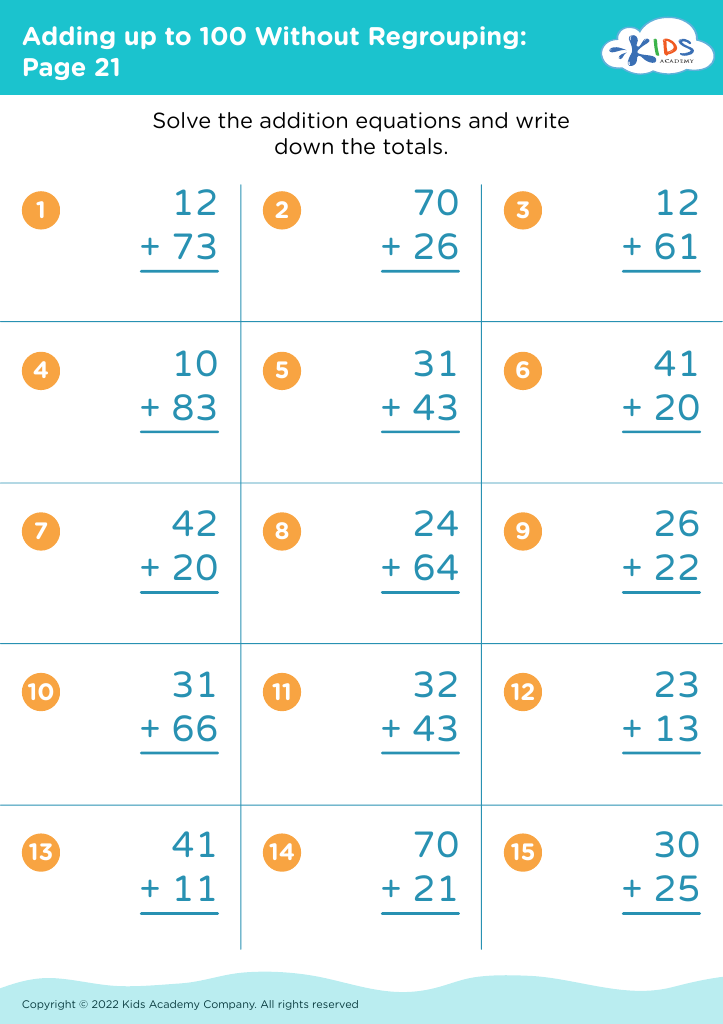
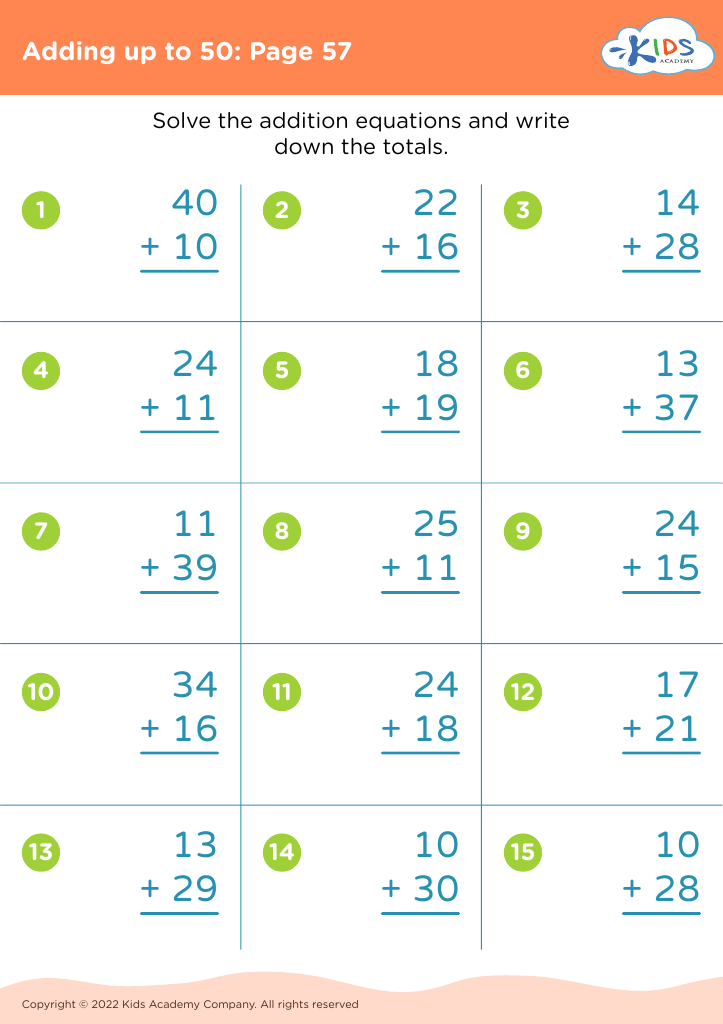
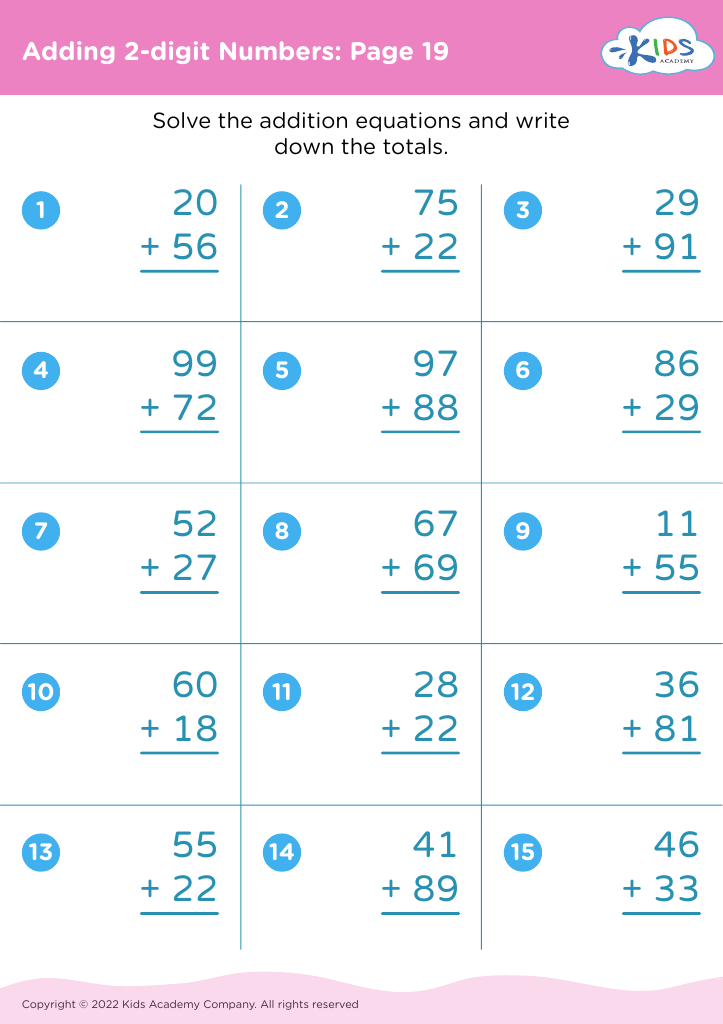
Enhance your child’s vocabulary and math skills with our specially designed Addition Worksheets for ages 4-8. These engaging printable activities do more than just teach basic math—they foster language development by merging vocabulary enrichment with fun addition exercises. Each worksheet challenges young learners to solve addition problems while exploring new words and phrases, improving their linguistic and numerical abilities simultaneously. Perfect for the classroom or at-home learning, our worksheets are crafted to entertain and educate, ensuring children build a strong foundation in both math and vocabulary. Download now to give your child a head start in their learning journey!








Enhancing vocabulary skills for children ages 4-8 is essential for their cognitive, emotional, and social development. During these early years, children's brains are highly receptive to learning new words, which lays a solid foundation for future academic success. Strong vocabulary skills are closely linked to better reading comprehension. As children encounter more words during reading, their ability to understand and enjoy the material increases, promoting a lifelong love for reading and learning.
Moreover, a rich vocabulary allows children to express themselves more clearly and accurately. This is vital for effective communication, which is critical for building relationships and resolving conflicts. Children with a robust vocabulary can articulate their thoughts, needs, and feelings better, leading to improved social interactions and emotional well-being.
Academic success aside, enhancing vocabulary positively impacts critical thinking skills. Understanding and using a wide range of words enable children to grasp complex concepts, follow instructions more easily, and engage in more intricate problem-solving tasks.
Early intervention in vocabulary building also ensures that children do not fall behind their peers. Gaps in vocabulary can widen over time, leading to academic disparities. Thus, parents and teachers should prioritize vocabulary enrichment to support children's holistic development, setting the stage for lifelong educational and personal success.








