Enhances number recognition Addition Worksheets for Ages 4-8
4 filtered results
-
From - To
Enhance your child's number recognition skills with our specially designed Addition Worksheets for ages 4-8! These engaging and interactive worksheets provide a fun way for young learners to develop their understanding of numbers through addition activities. Each worksheet is crafted to captivate your child’s interest, reinforcing their ability to identify and utilize numbers effectively. By practicing with these resources, your little ones will build strong foundational math skills, boosting their confidence and preparing them for future learning. Explore our collection today and watch your child thrive in their numerical journey! Perfect for classrooms and home learning experiences alike.
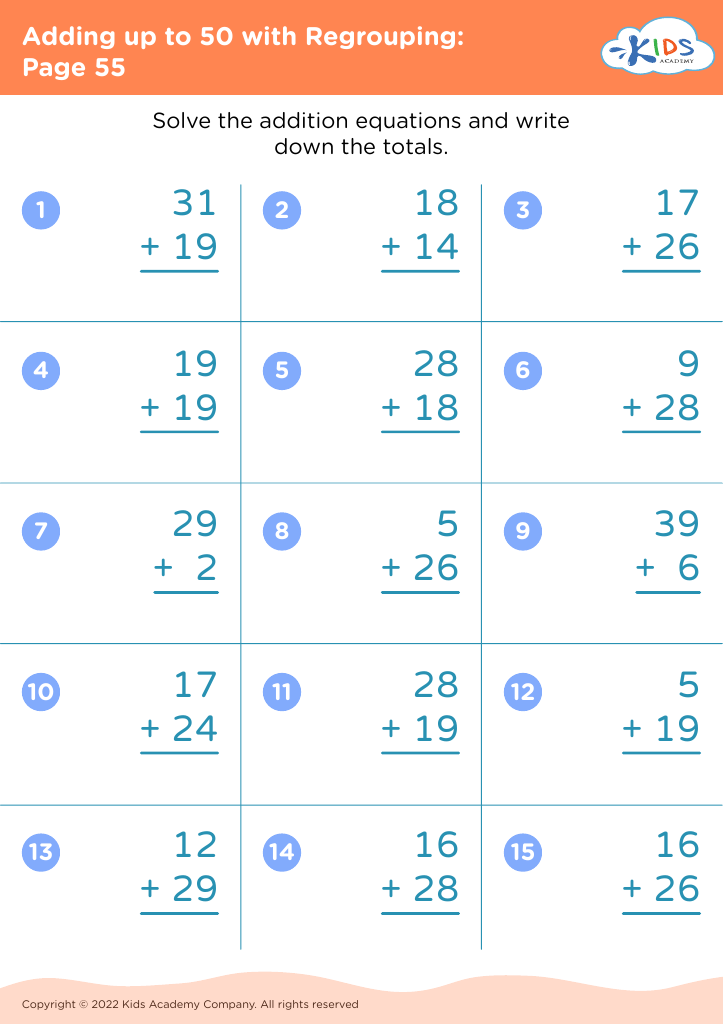
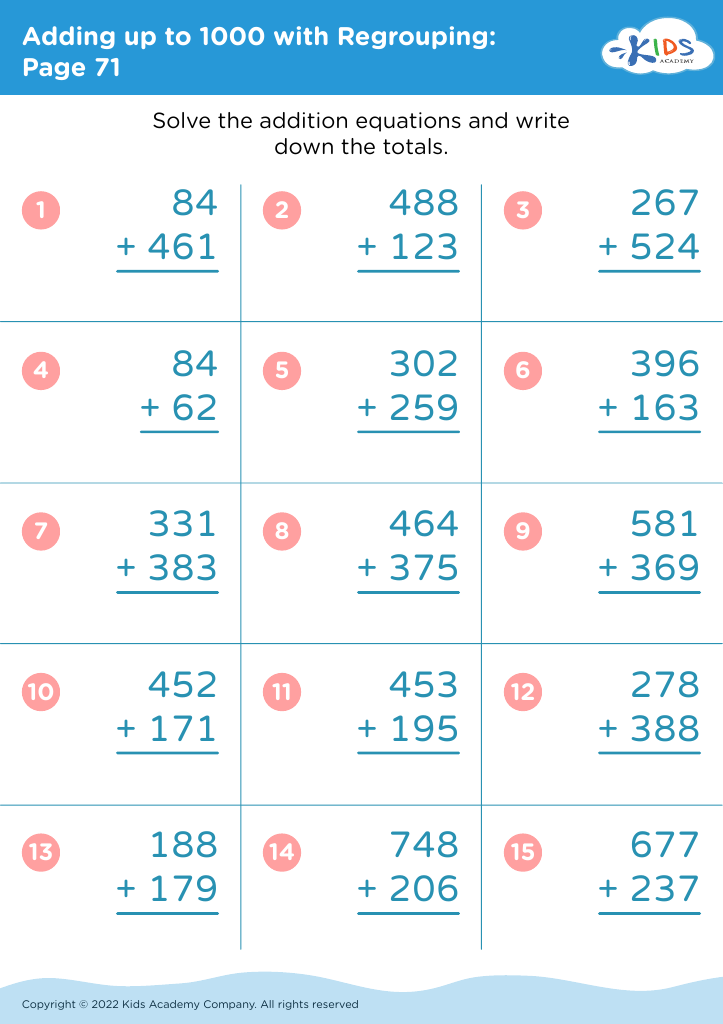
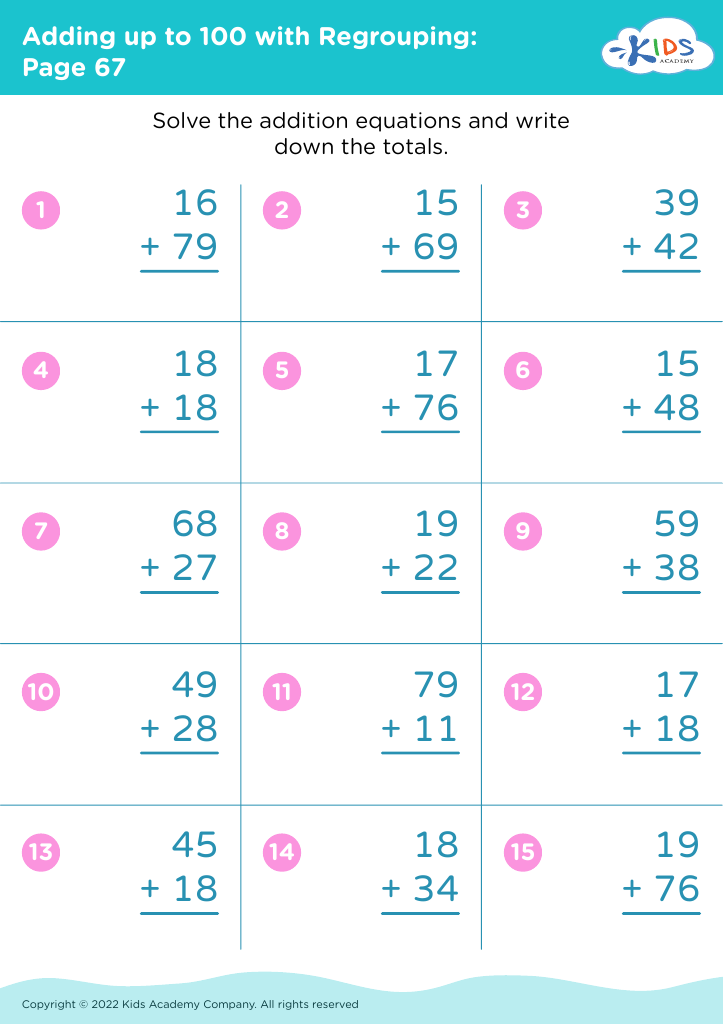
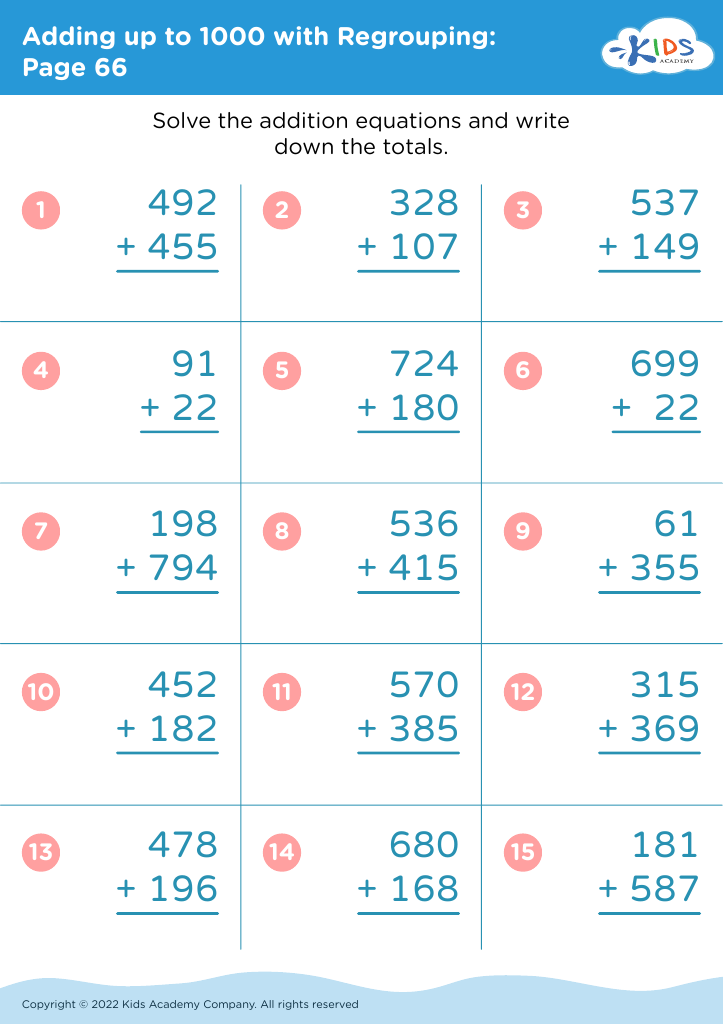








Enhancing number recognition and addition skills in children ages 4-8 is crucial for their cognitive development and future academic success. At this young age, children are forming foundational math skills, and a strong grasp of numbers helps them to better understand various mathematical concepts later on. Recognizing numbers is the first step towards mastering addition, which is one of the core building blocks of math.
When parents and teachers invest time in improving these skills, they promote numerical literacy that translates into everyday situations, fostering confidence and independence in young learners. Moreover, establishing a solid mathematical base early on can reduce anxiety surrounding math and encourage a positive attitude toward the subject.
Engaging children in fun, interactive activities—such as games, puzzles, and counting exercises—can make learning enjoyable. This playful approach not only reinforces academic concepts but also enhances fine motor skills and critical thinking. By focusing on number recognition and addition, adults can help children develop essential problem-solving skills and logical reasoning.
Ultimately, supporting children in this area helps lay the groundwork for future learning, preparing them for more complex math concepts in later grades. This readiness enables children to thrive in academic environments, setting them on a path to success.








