
Fine motor development Addition Worksheets for Ages 4-8
4 filtered results
Difficulty Level
Grade
Age
-
From - To
Subject
Activity
Standards
Enhance your child's learning experience with our Fine Motor Development Addition Worksheets, designed specifically for ages 4-8. These engaging worksheets focus on improving fine motor skills while introducing the fundamentals of addition in a fun and interactive way. Each worksheet combines creative activities and visual aids, helping children practice essential counting and problem-solving skills with a hands-on approach. Great for at-home or classroom use, our resources promote both cognitive growth and dexterity, making learning a joy. Explore our collection today and watch your child excel in addition while developing the fine motor skills essential for future success!
Favorites
With answer key
Interactive
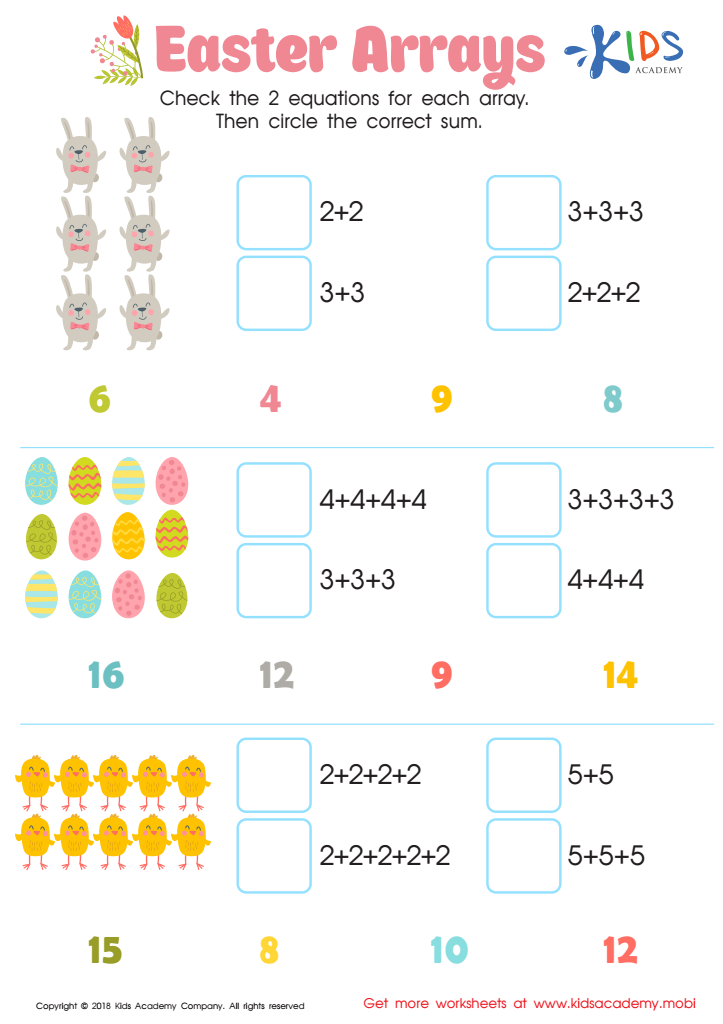
Easter Arrays Worksheet
Does your child love Easter? Do they adore the Easter bunny and egg hunts? Help them have fun with this worksheet! Go through it with them and check the equations for each array. Then, have them circle the correct sum. It's a great way to make the holiday extra exciting!
 Assign to My Students
Easter Arrays Worksheet
Worksheet
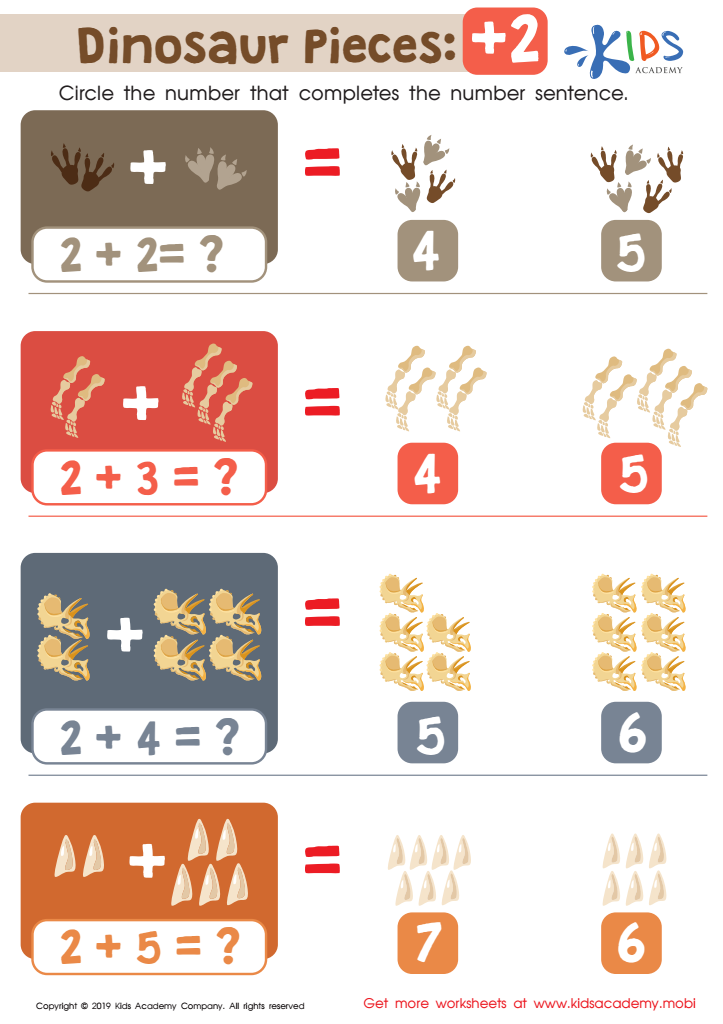
Dinosaur Pieces: +2 Worksheet
Kids love dinosaurs! See if your kids can solve these three equations featuring the mysterious creatures. Download the PDF and have them circle the number that completes each equation. Dinosaurs are extinct, not seen for thousands of years, but they can still help kids work on their math skills!
Dinosaur Pieces: +2 Worksheet
Worksheet
Join Kids Academy for Free
Who is primarily going to use this learning content?








Fine motor development is crucial for children aged 4-8 as it underpins both academic success and daily life skills. This developmental phase involves the coordination of small muscle movements in the hands and fingers, essential for tasks such as writing, drawing, buttoning clothes, and using utensils. When parents and teachers prioritize fine motor skills, they set the foundation for more complex tasks in the future.
Firstly, strong fine motor skills boost a child's academic performance. For instance, the ability to grip a pencil properly and form letters enables children to express their thoughts clearly in writing. Secondly, fine motor skills enhance problem-solving abilities, as children engage in activities such as cutting, tracing, and manipulating small objects, fostering creativity and critical thinking.
Additionally, fine motor development is linked to a child's self-esteem and independence. Successfully mastering skills like tying shoelaces or completing puzzles can foster a sense of accomplishment.
Incorporating activities that challenge and support fine motor growth—such as crafting, building, and sensory play—into the daily routine of children is essential. This investment not only nurtures their development but empowers parents and teachers to help children thrive both in and out of the classroom.








