Identifying patterns Addition Worksheets for Ages 4-8
3 filtered results
-
From - To
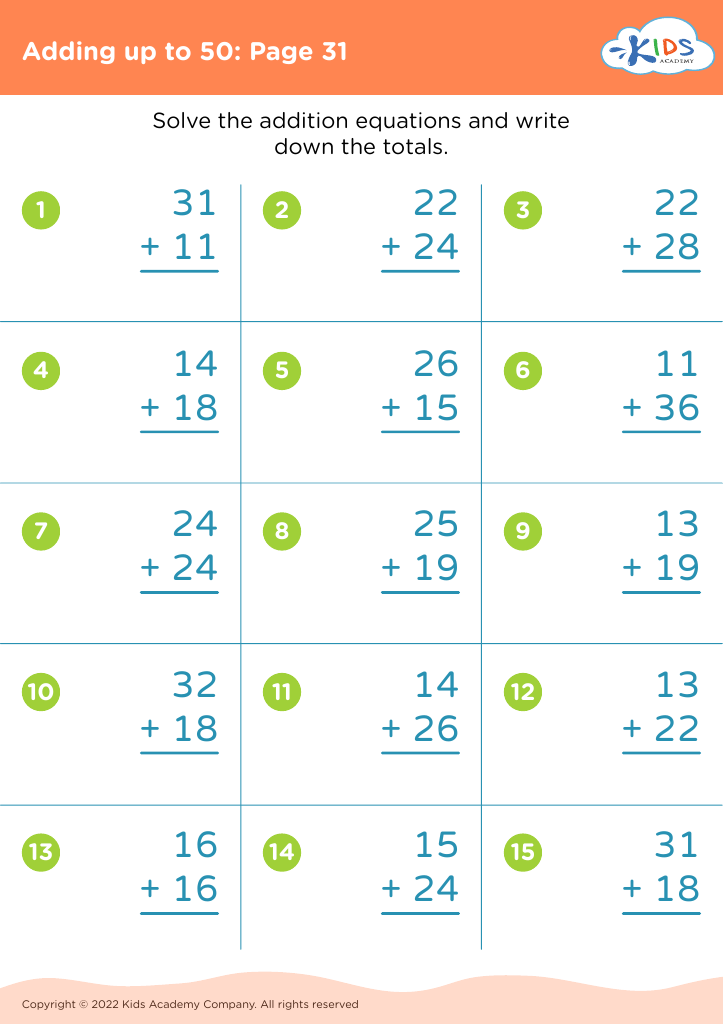
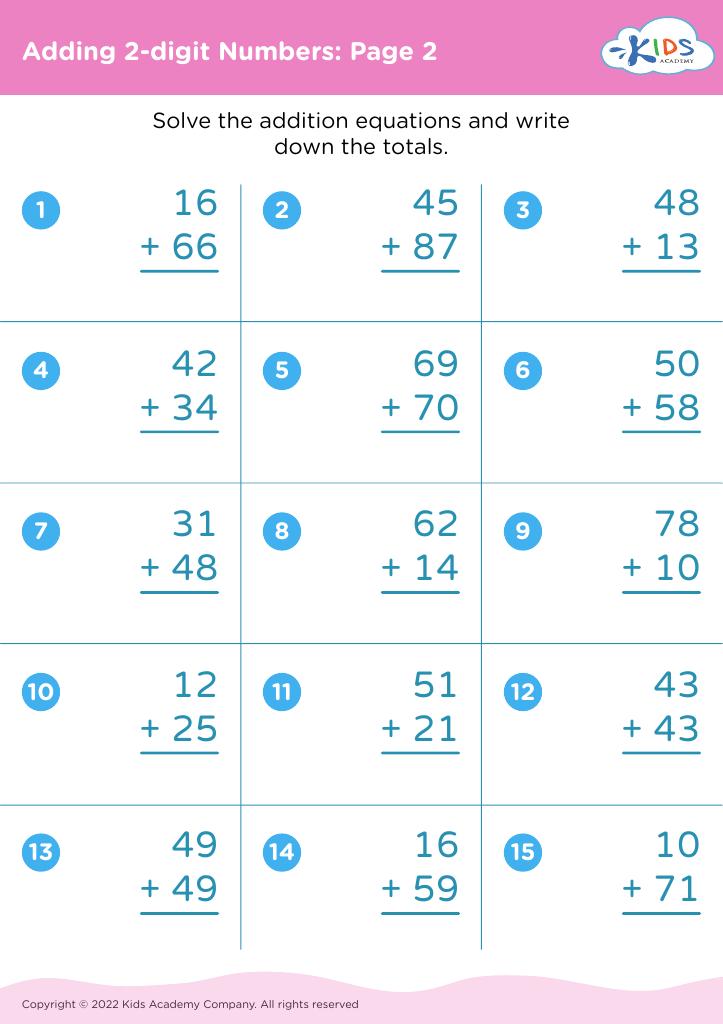
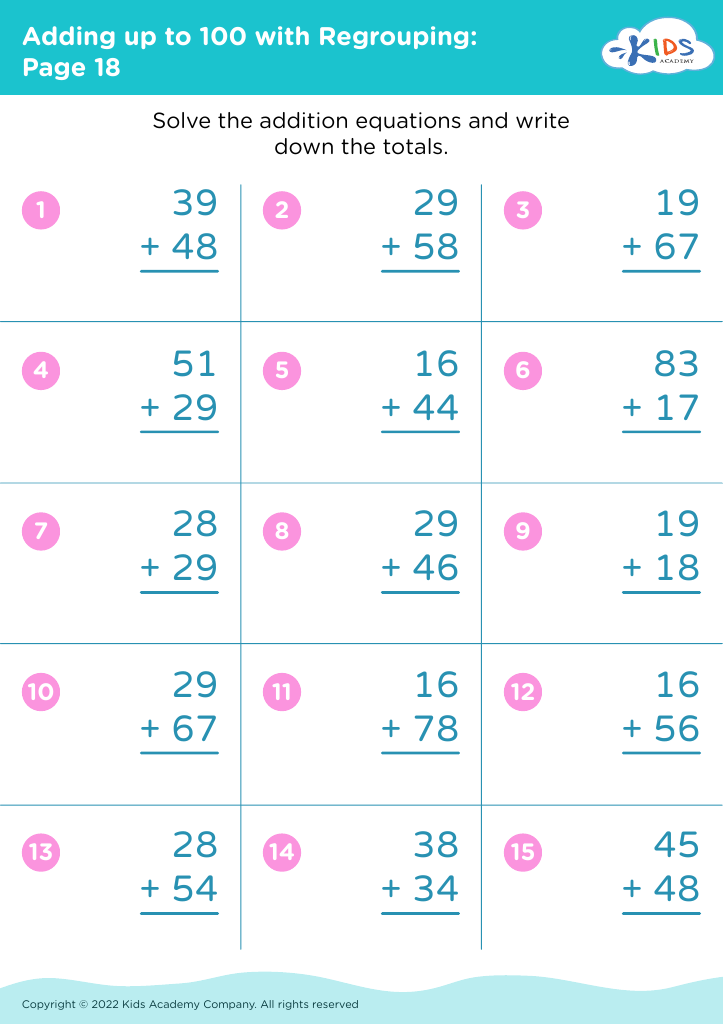
Enhance your child's mathematical skills with our "Identifying Patterns Addition Worksheets" designed specifically for ages 4-8! These engaging printable worksheets help young learners recognize patterns in numbers and grasp foundational addition concepts effortlessly. With colorful illustrations and interactive exercises, children will develop critical thinking and problem-solving skills while having fun. Each worksheet includes a variety of problems that encourage kids to spot trends and sequences, promoting cognitive development. Perfect for at-home learning or as supplemental classroom activities, these worksheets make mastering addition an enjoyable and rewarding experience. Visit us to explore our collection and inspire your child’s love for math today!








Identifying patterns in addition is a vital skill for children aged 4-8, and both parents and teachers should prioritize it for several reasons. Firstly, recognizing patterns helps young learners develop a deeper understanding of numbers and relationships, crucial for their mathematical foundation. When children see patterns, such as the way numbers increase in a sequence (e.g., 2, 4, 6, 8), they can predict outcomes, making addition less daunting and more intuitive.
Secondly, pattern recognition enhances problem-solving skills. Children learn to approach math problems with confidence, using patterns to simplify addition tasks. This approach fosters critical thinking and analytical skills, encouraging them to look for connections and apply their knowledge in various contexts, both in math and beyond.
Moreover, understanding patterns builds a bridge to more complex mathematical concepts, such as multiplication and fractions, ensuring students are well-prepared for future learning. When parents and teachers focus on identifying patterns in addition, they not only make math enjoyable through engaging activities, but they also create a supportive learning environment.
Ultimately, nurturing these skills in early education empowers children to become proficient, confident mathematicians, laying a strong foundation for lifelong learning.








