Improve calculation speed Addition Worksheets for Ages 4-8
3 filtered results
-
From - To
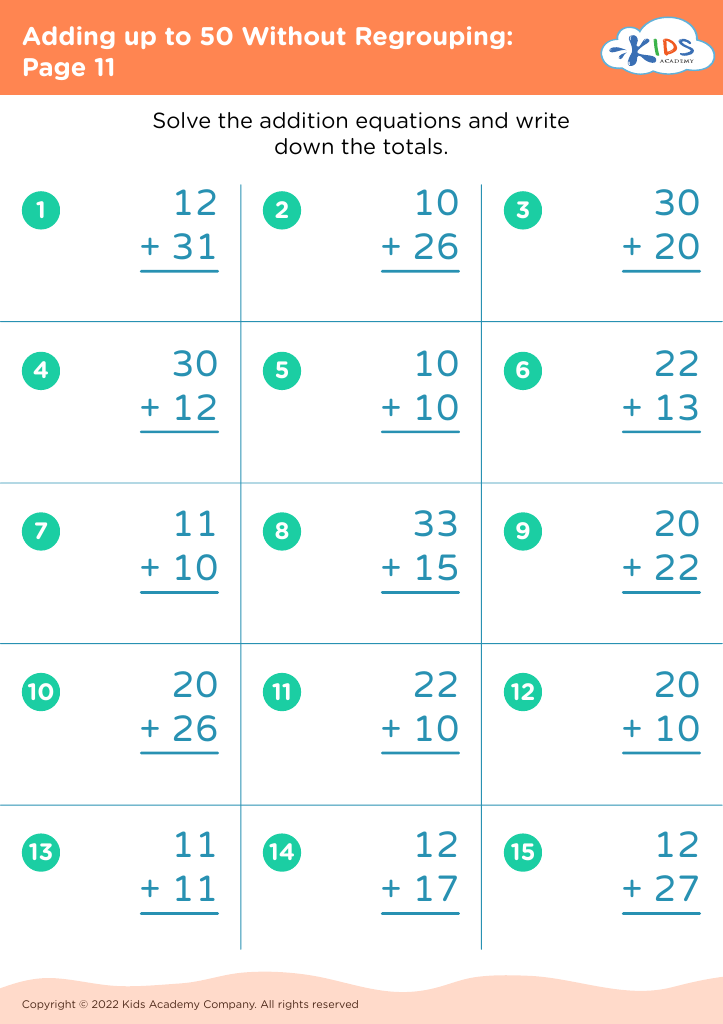
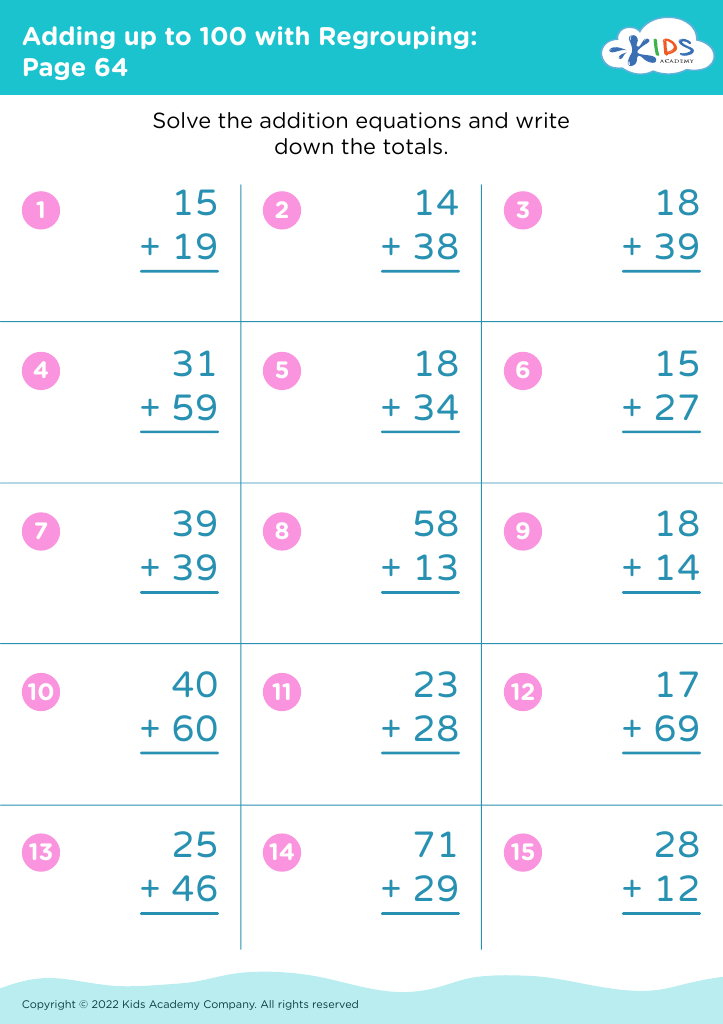
Boost your child's math skills with our "Improve Calculation Speed Addition Worksheets" designed for ages 4 to 8! These engaging and age-appropriate worksheets focus on enhancing speed and accuracy in basic addition. With colorful illustrations and fun exercises, your little ones will enjoy practicing essential math concepts while building confidence in their abilities. Our printable worksheets will not only streamline the learning process but also make math enjoyable and accessible. Perfect for students at home or in the classroom, these sheets are an excellent resource for parents and teachers looking to support early math development. Get started on the path to math mastery today!
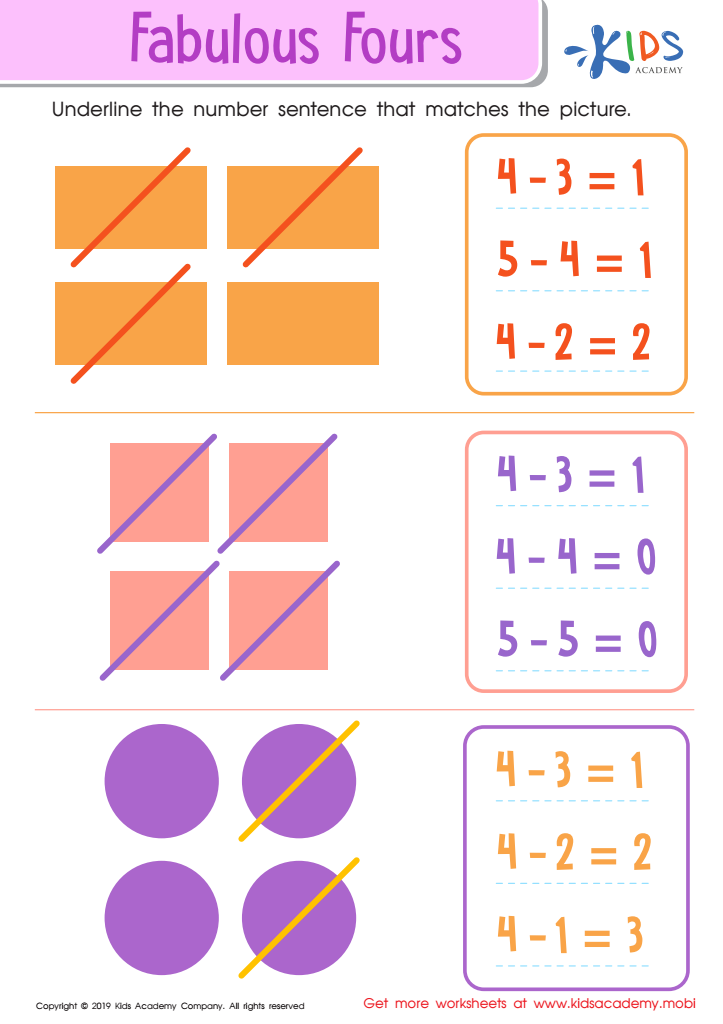
Fabulous Fours Worksheet
 Assign to My Students








Improving calculation speed in addition for ages 4-8 is vital for several reasons. First, early math skills form the foundation for lifelong learning and academic achievement. When children grasp basic addition quickly, they develop confidence and a positive attitude towards mathematics, laying the groundwork for more complex concepts like subtraction, multiplication, and division.
Second, faster calculation skills enhance problem-solving abilities. Children who can swiftly add numbers are less likely to struggle with math-related tasks in later years, reducing math anxiety and frustration. Improved speed also fosters greater fluidity in mental math, allowing young learners to tackle everyday situations—like counting change or sharing snacks—efficiently.
Moreover, encouraging a strong grasp of basic addition during these formative years supports cognitive development. Engaging with numbers strengthens neural pathways associated with logical reasoning and critical thinking.
Finally, focused attention on calculation speed can build positive parent-teacher partnerships. When both parties prioritize mathematical growth, they can work collaboratively to implement fun, engaging strategies—like games and activities—to reinforce learning, making math enjoyable for children. Ultimately, nurturing swift addition skills creates a strong educational foundation, promoting mathematical proficiency and a love for learning for years to come.








