Learn subtraction Addition Worksheets for Ages 4-8
4 filtered results
-
From - To
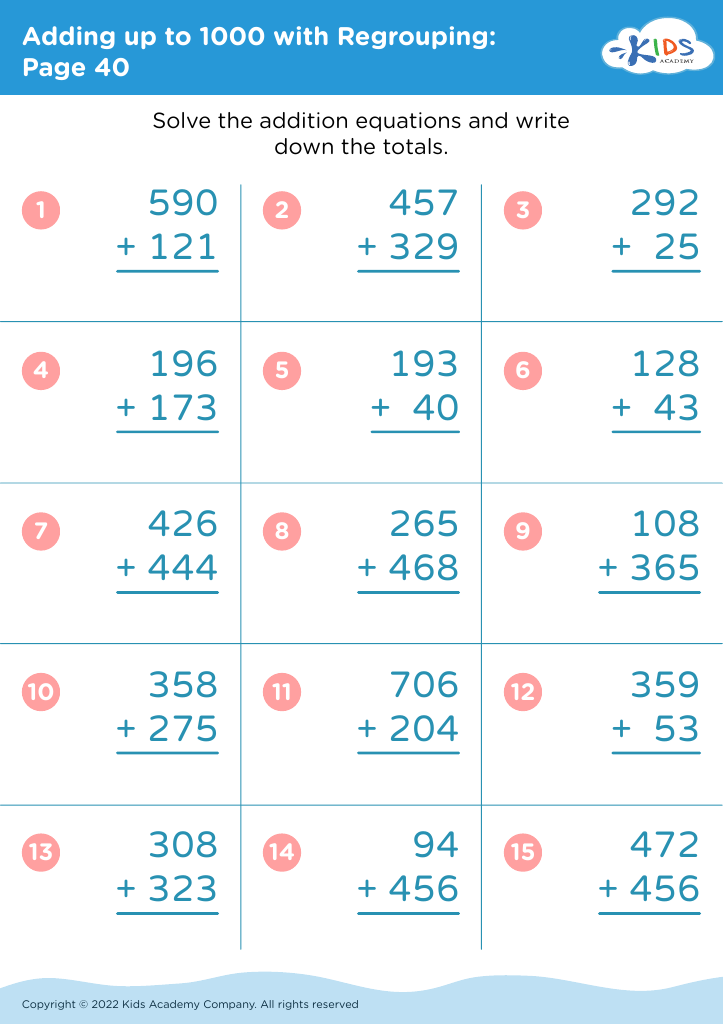
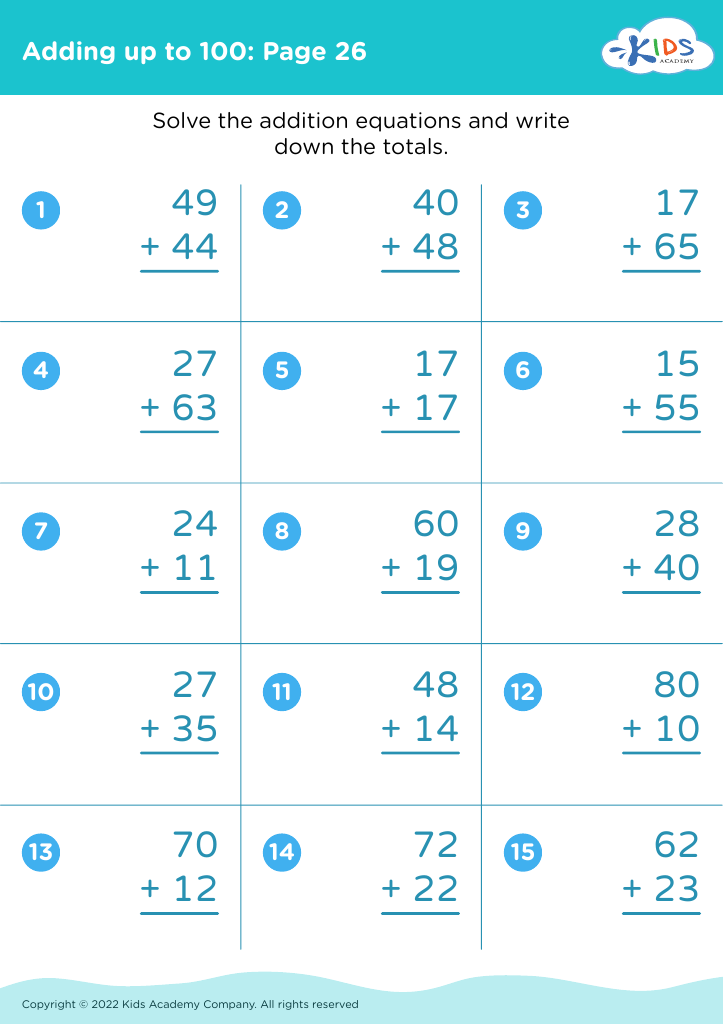
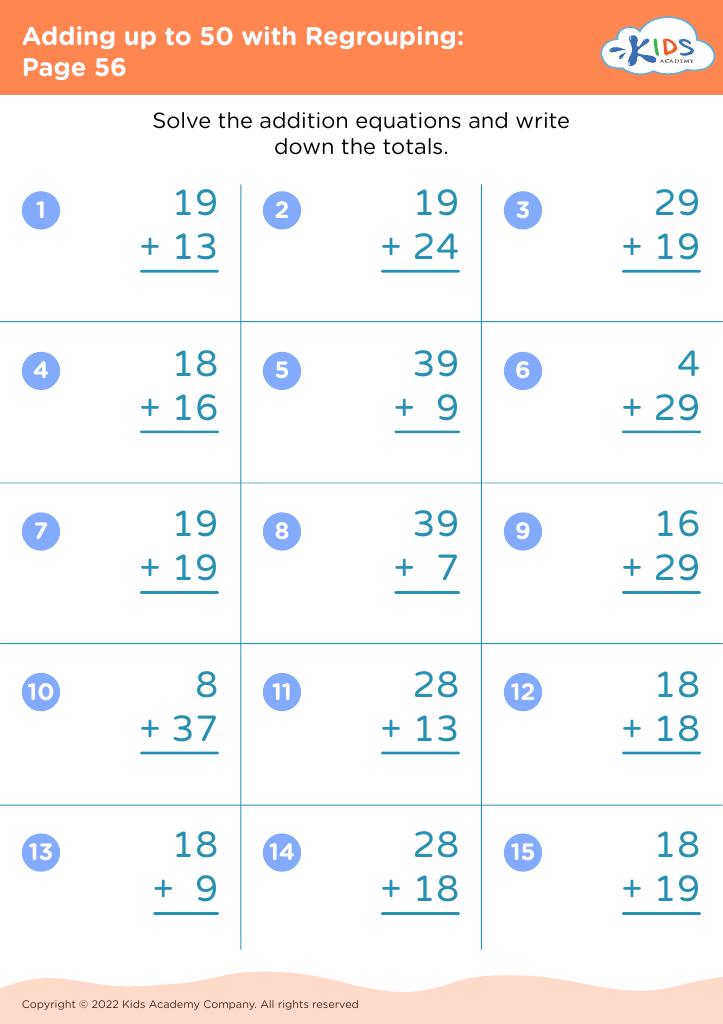
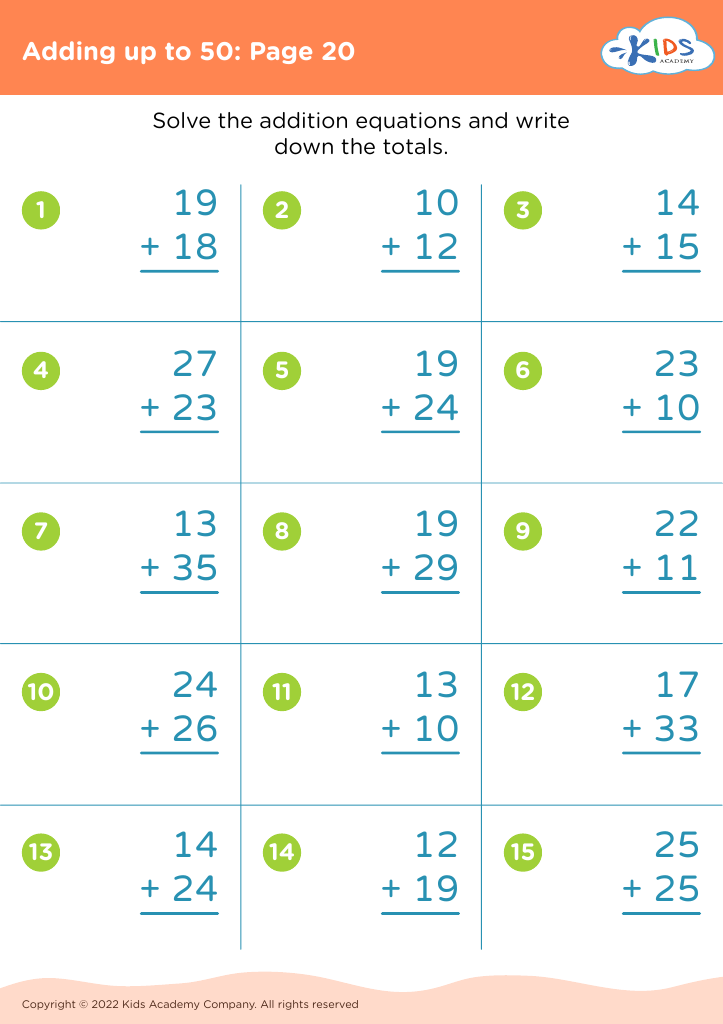
Discover our engaging "Learn Subtraction Addition Worksheets for Ages 4-8," designed to make math fun and accessible for young learners! Our colorful and interactive worksheets help children develop essential addition and subtraction skills through a variety of exercises. Perfect for at-home learning or classroom activities, these worksheets reinforce foundational concepts while promoting critical thinking and problem-solving abilities. Each worksheet is tailored to captivate young minds, keeping them motivated and excited about learning math. Continue fostering a love for numbers with our expertly crafted resources that support your child's educational journey. Start exploring today to boost confidence and academic success!








Parents and teachers play a crucial role in laying a solid foundation for early mathematical skills in children aged 4-8. Learning addition and subtraction during these formative years is essential for several reasons. First, these operations introduce basic number sense, which is foundational for all future mathematical concepts. When children grasp addition and subtraction, they're better equipped to tackle more complex mathematics as they progress in school.
Additionally, these skills help enhance critical thinking and problem-solving abilities. Engaging with addition and subtraction through games, hands-on activities, and real-life scenarios promotes cognitive development, encouraging children to manipulate numbers and understand relationships between them.
Moreover, mastering these concepts boosts children's confidence, fostering a positive attitude toward math. Early success in math can lead to a lifelong love of learning, while struggles in these areas can result in math anxiety later on.
Lastly, parents and teachers can also strengthen their relationship through shared learning experiences. By actively participating in a child's education, they not only reinforce the importance of math but also model a growth mindset, showing that learning is a collaborative and enjoyable process.








