Motor skills development Addition Worksheets for Ages 4-8
5 filtered results
-
From - To
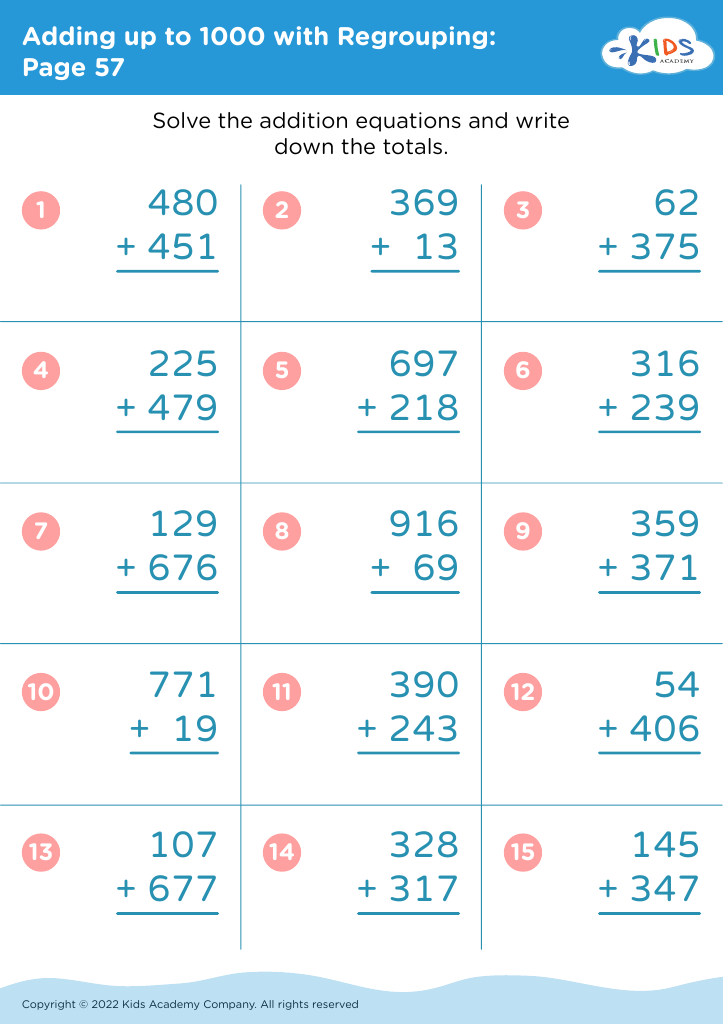
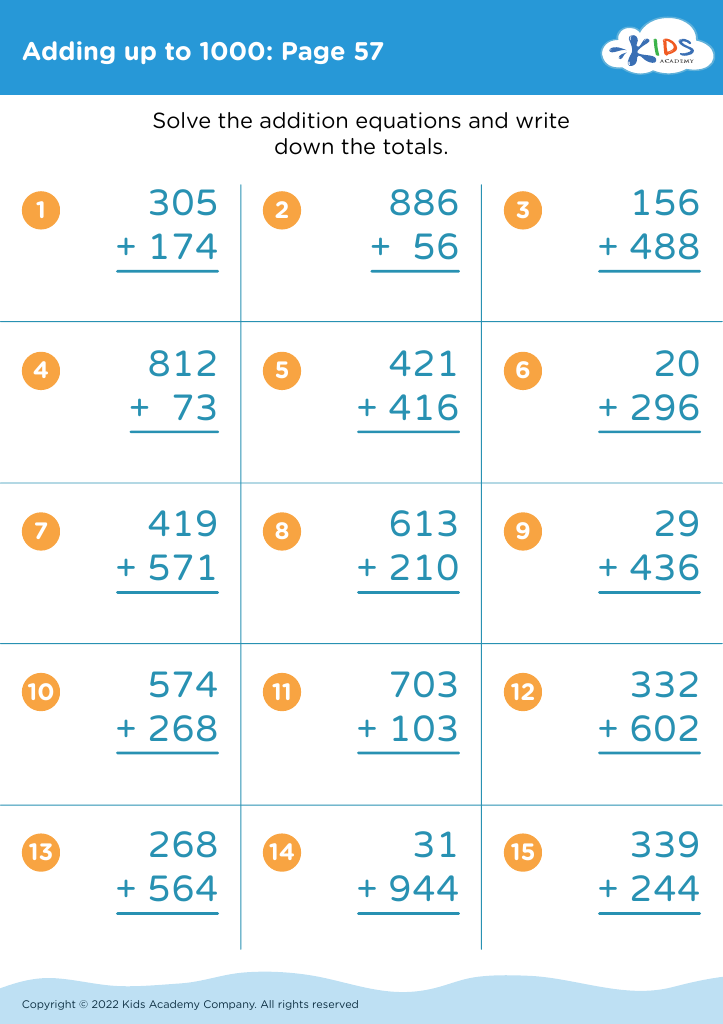
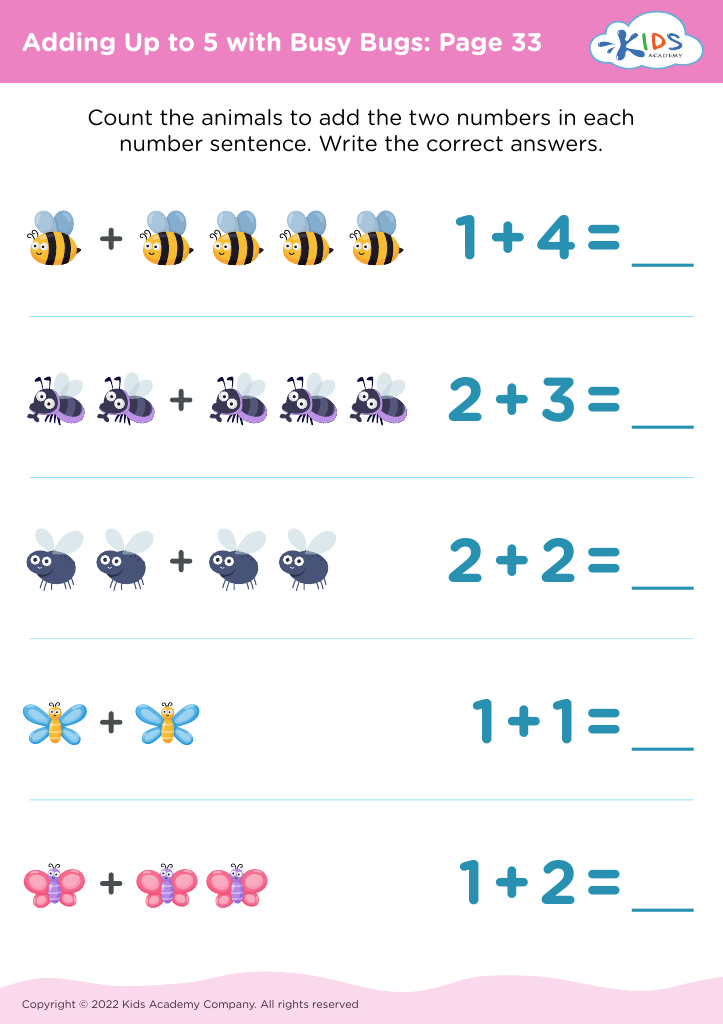
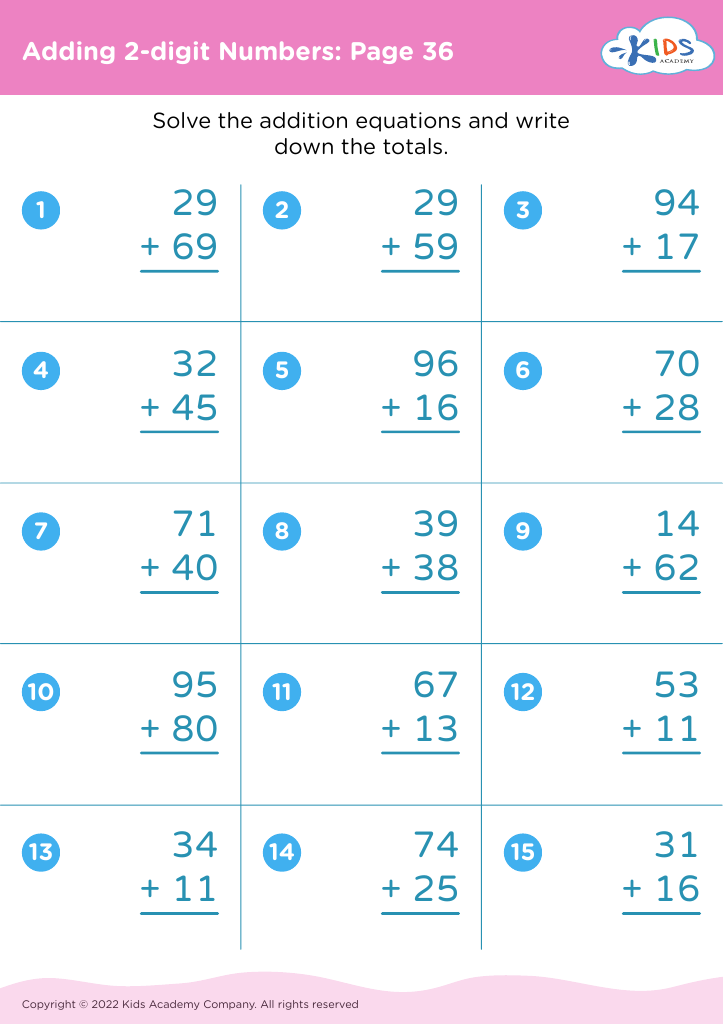
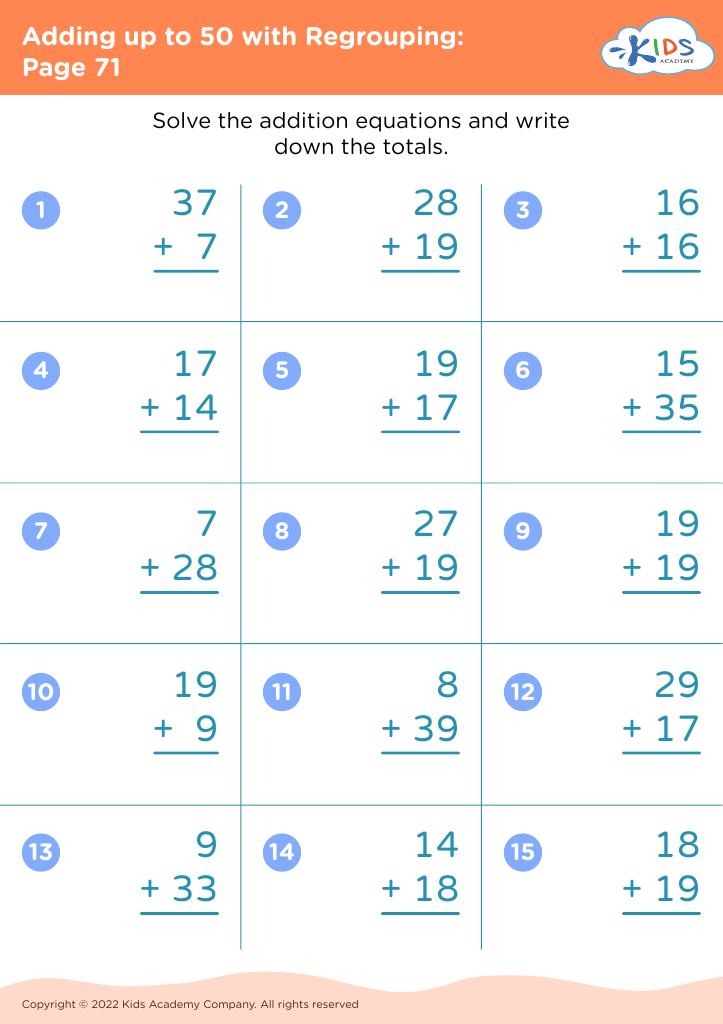
Discover our engaging "Motor Skills Development Addition Worksheets for Ages 4-8"! These expertly designed worksheets effectively blend fun and learning to enhance kids' fine motor skills while mastering basic addition concepts. Through a variety of hands-on activities, children develop important skills like hand-eye coordination, pencil control, and dexterity. Perfect for preschool and early elementary students, these worksheets make math practice enjoyable and productive. Help your child build a solid foundation for math success with our colorful, interactive worksheets that encourage both cognitive and motor skill development. Explore our collection and watch your child's confidence soar!



.jpg)




Motor skills development is crucial for children aged 4-8, as it lays a foundational role in their overall growth and intellectual advancement. For parents and teachers, fostering these skills directly impacts a child's academic success, social interactions, and physical health. Fine motor skills involve small muscle movements, essential for tasks like writing, buttoning clothes, and using utensils, all integral to a child’s independence and confidence.
Developing fine motor skills enhances hand-eye coordination and cognitive abilities such as problem-solving and sequential planning. This translates to better performance in the classroom and an ability to handle age-appropriate challenges. Gross motor skills, involving larger muscle groups, are equally important. Activities like running, jumping, and balancing contribute to physical fitness and help prevent obesity-related issues.
Moreover, children with well-developed motor skills are typically more engaged in playground activities, leading to healthier social interactions and emotional resilience. Skills acquired through play and structured activities provide habits that encourage lifelong physical activity. Hence, focusing on motor skills from an early age ensures a balanced development encompassing physical health, cognitive thinking, and emotional well-being. Recognizing and nurturing these skills promotes an enriching educational and developmental environment for young children.








