
Observational skills Addition Worksheets for Ages 4-8
5 filtered results
Difficulty Level
Grade
Age
-
From - To
Subject
Activity
Standards
Enhance your child's math learning journey with our Observational Skills Addition Worksheets, designed specifically for ages 4-8. These engaging worksheets help young learners develop crucial observational skills while mastering basic addition. Each activity encourages children to focus, analyze patterns, and draw connections, promoting both critical thinking and numerical fluency. Perfect for both classroom and at-home practice, our carefully crafted worksheets make learning fun and interactive. Empower your child to build a strong mathematical foundation and boost their confidence with our comprehensive addition exercises tailored for early learners. Explore our collection and watch your child thrive in math!
Favorites
With answer key
Interactive
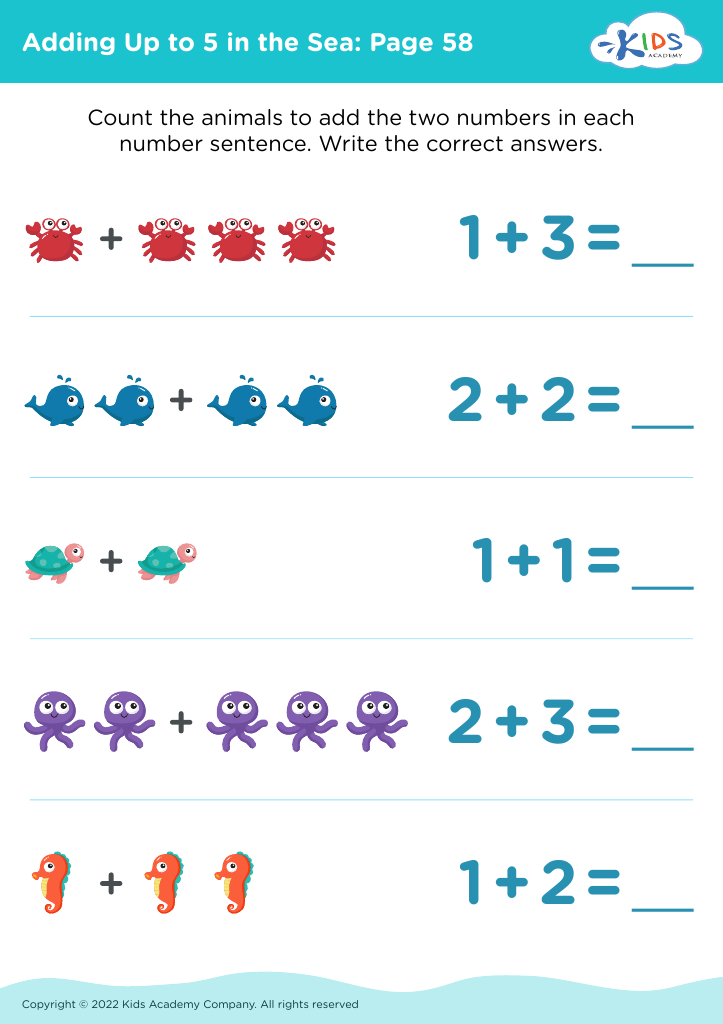
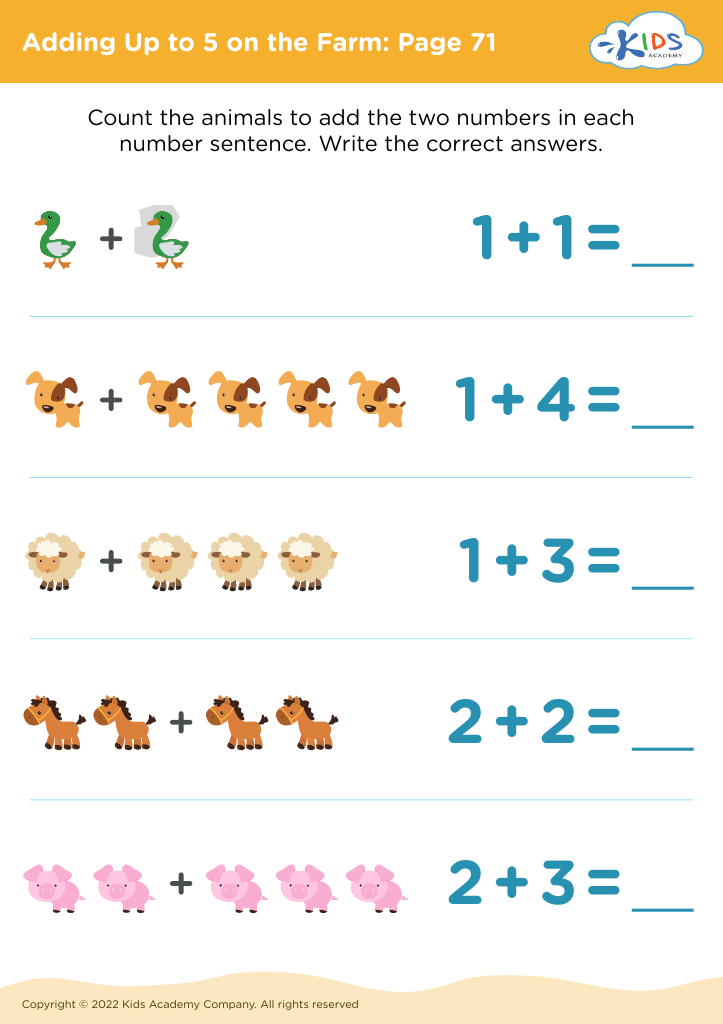
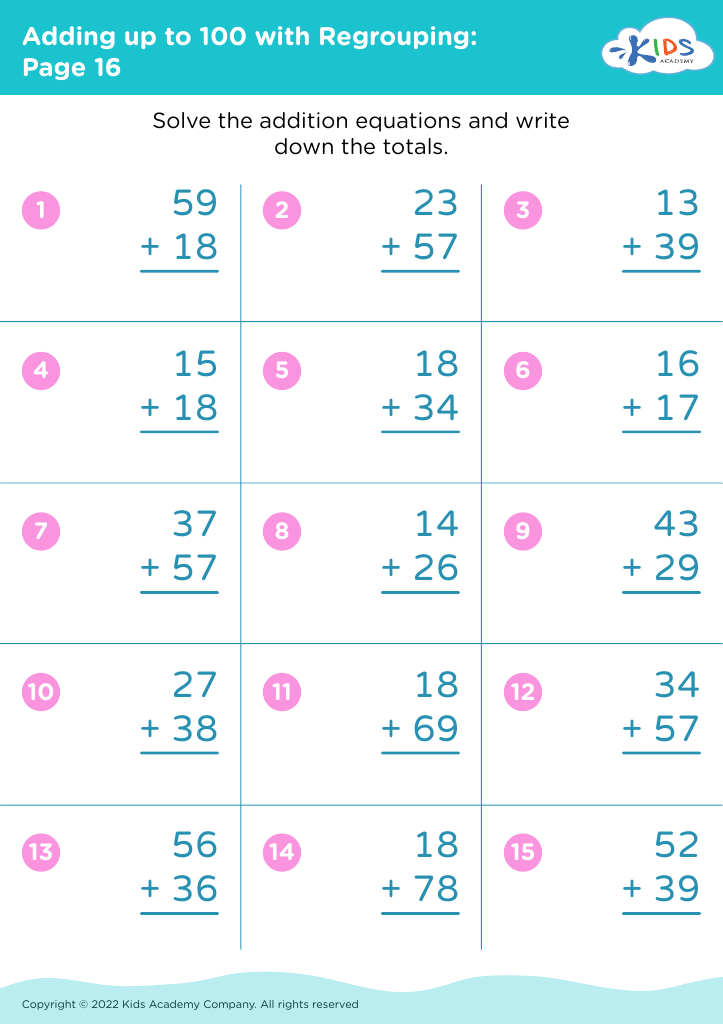
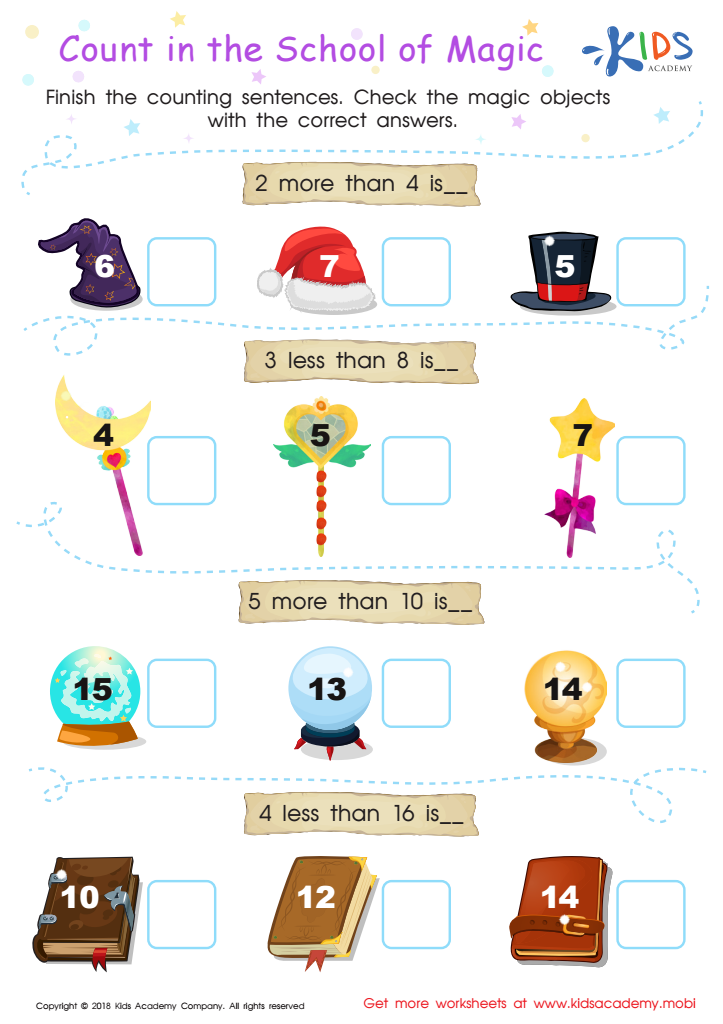
Count in the School of Magic Worksheet
Your math learners can explore the School of Magic with this worksheet. They'll read equations with addition and subtraction numbers under 20, count back and forth to find the answer, then complete the counting sentences. Fun pictures and easy accuracy make it an enjoyable and successful learning experience.
 Assign to My Students
Count in the School of Magic Worksheet
Worksheet
Join Kids Academy for Free
Who is primarily going to use this learning content?








Observational skills are foundational to a child's cognitive development, especially in the critical years between ages 4-8. These skills involve carefully noting and interpreting details in the world around them. Strengthening observational skills can significantly enhance a child's learning journey.
For parents and teachers, nurturing these skills helps children become more attentive and curious, fostering a positive attitude toward learning. Enhanced observational skills allow children to notice patterns, differences, and details that are essential for problem-solving and critical thinking. When children pay closer attention, they grasp concepts more easily and show better academic performance, especially in subjects like science and math.
Incorporating observational activities also aids in developing language and communication skills. Observing a botanical garden, for example, can introduce new vocabulary and concepts, allowing children to articulate their thoughts better.
Furthermore, observational skills contribute to social and emotional growth. When children observe their environment and the people in it, they learn empathy and social cues. This understanding can lead to stronger relationships and better social interactions.
For parents and educators, focusing on observational skills is an investment in a child's holistic development. It lays a strong foundation for lifelong learning, curiosity, and emotional intelligence. Encouraging these skills in early childhood creates alert, empathetic, and thoughtful individuals ready to explore and engage with the world.








