Problem-solving abilities Addition Worksheets for Ages 4-8 - Page 2
29 filtered results
-
From - To
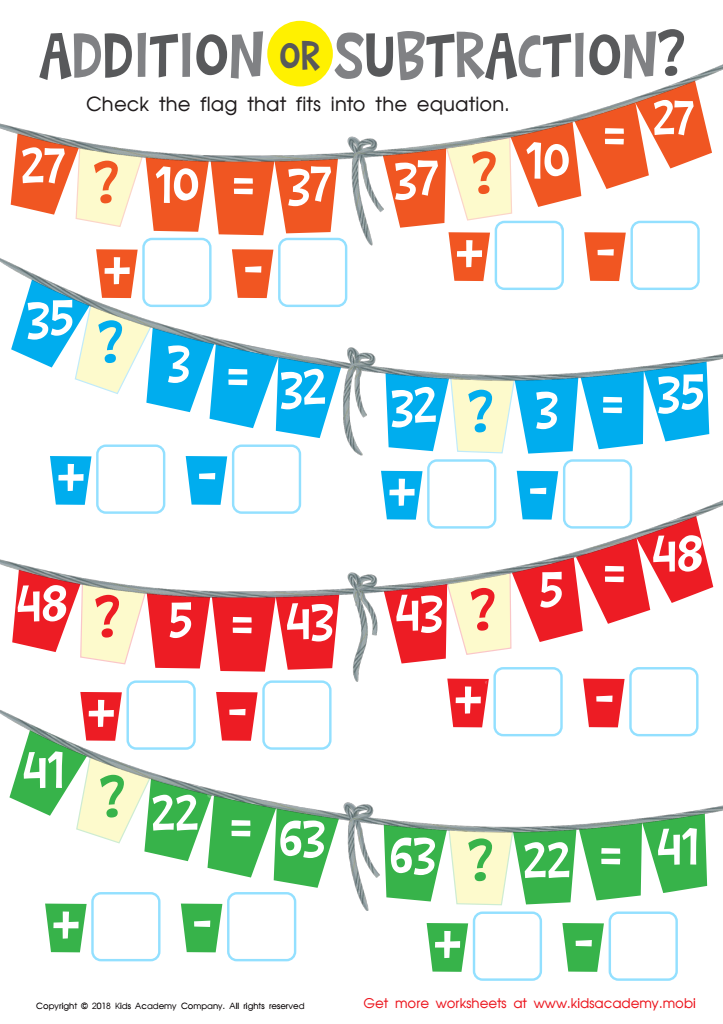
Addition or Subtraction? Worksheet
 Assign to My Students
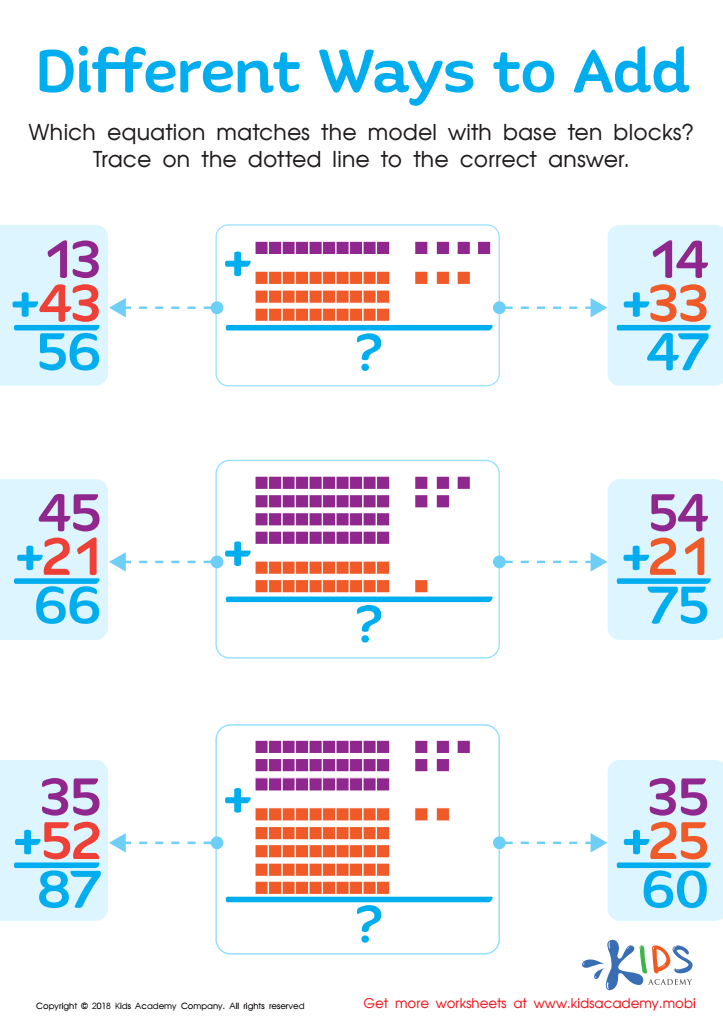
Different Ways to Add Worksheet
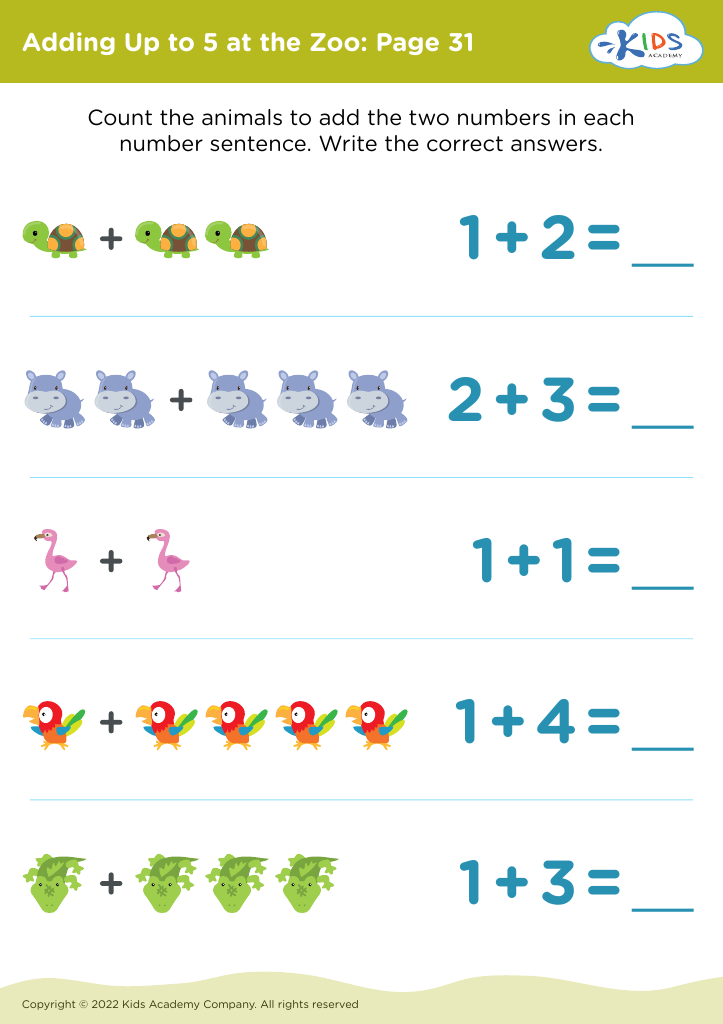
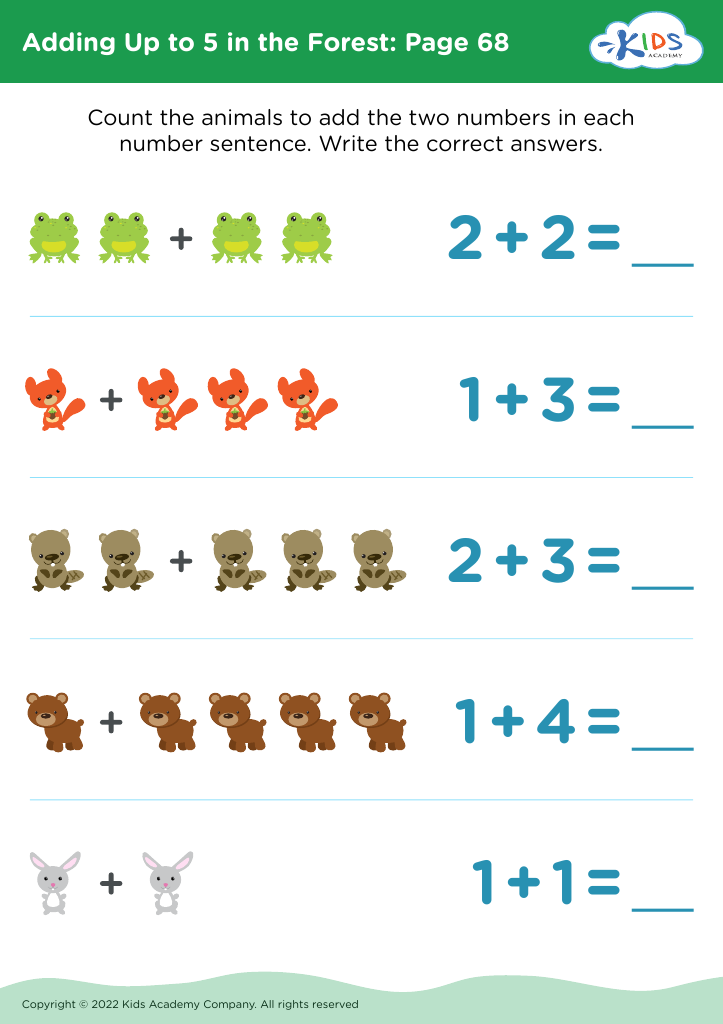
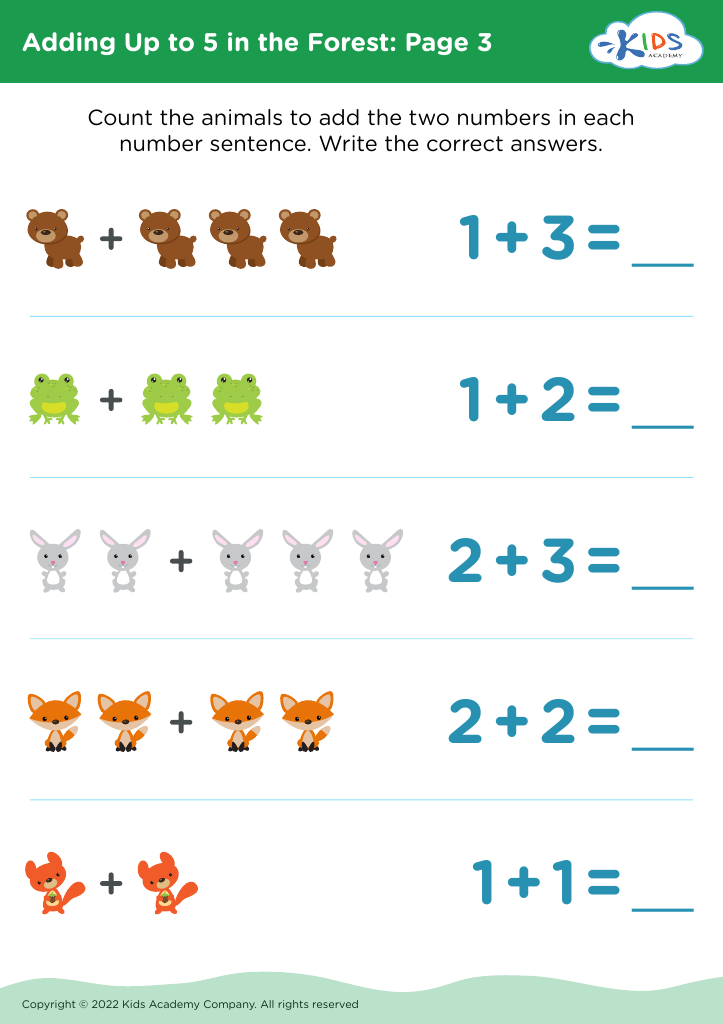








Parents and teachers should prioritize the development of problem-solving abilities in addition for children aged 4-8, as this foundational skill is crucial for overall academic and personal growth. Early proficiency in mathematical problem-solving fosters critical thinking, helping children to analyze situations, identify patterns, and devise solutions. Mastering addition lays the groundwork for understanding more complex mathematical concepts later on.
Furthermore, developing these abilities in young learners promotes a positive attitude toward mathematics. When children learn to tackle problems successfully, they build confidence in their skills, reducing math anxiety and encouraging a lifelong love for learning. Practicing addition through problem-solving activities also enhances cognitive development, improving memory and concentration.
Additionally, these skills transcend mathematics; they are applicable across various subjects and real-life situations, helping children become autonomous thinkers. As they learn to approach and solve problems methodically, they cultivate essential life skills such as perseverance, adaptability, and teamwork, all of which are vital in today’s world.
Incorporating engaging problem-solving activities into daily routines also fosters a collaborative learning environment, further strengthening the bond between parents and teachers as they work together to support a child's development. Ultimately, empowering children with strong problem-solving abilities sets the stage for future success.








