Understand patterns Addition Worksheets for Ages 4-8
6 filtered results
-
From - To
Discover engaging "Understand Patterns Addition Worksheets" designed for children aged 4-8! These worksheets help young learners grasp the fundamentals of addition by exploring numerical patterns in a fun and interactive way. Each activity encourages critical thinking and enhances problem-solving skills, making mathematics enjoyable for early graders. From simple exercises to more challenging tasks, these resources cater to various learning styles, ensuring that every child can build a solid foundation in math. Perfect for home or classroom use, our worksheets provide valuable practice that sets the stage for future success. Explore today and watch your child's confidence in math grow!
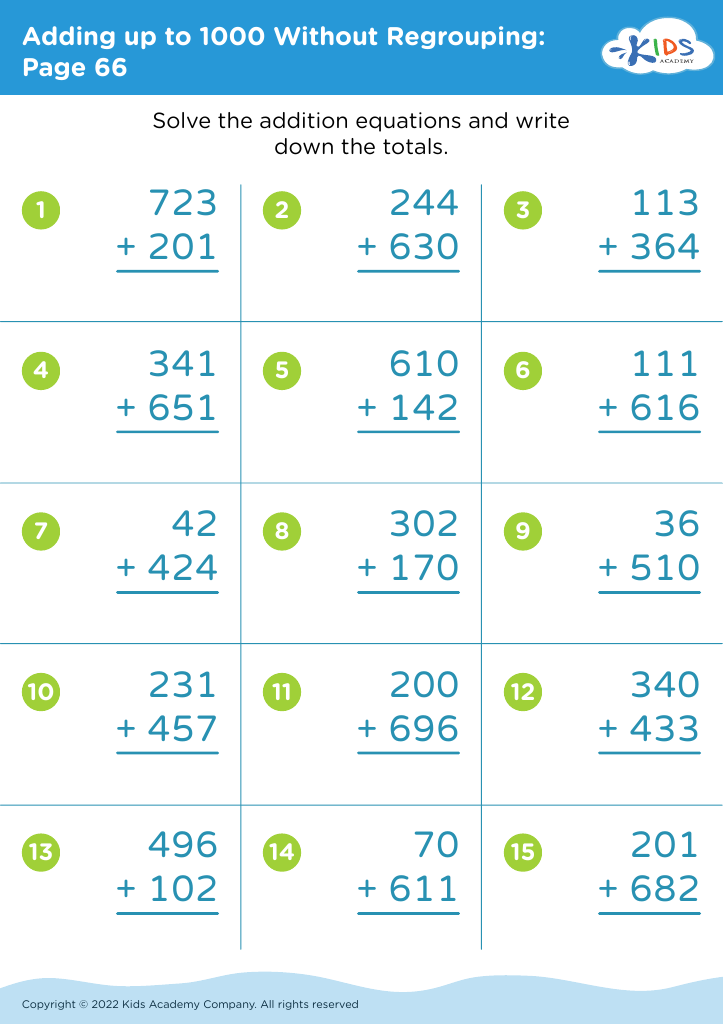
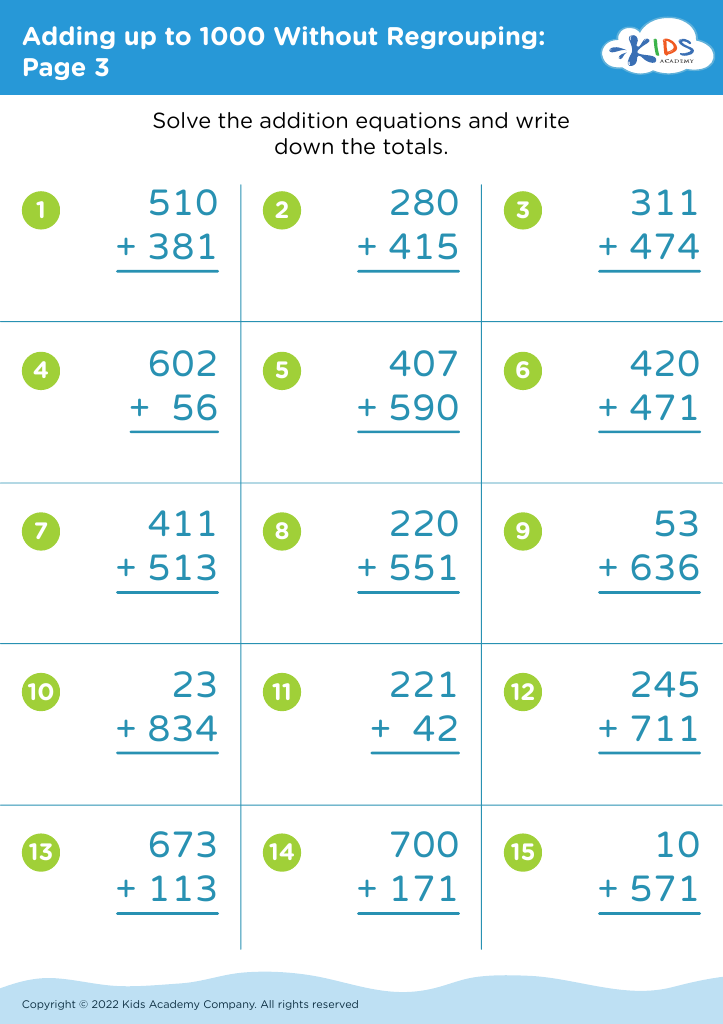
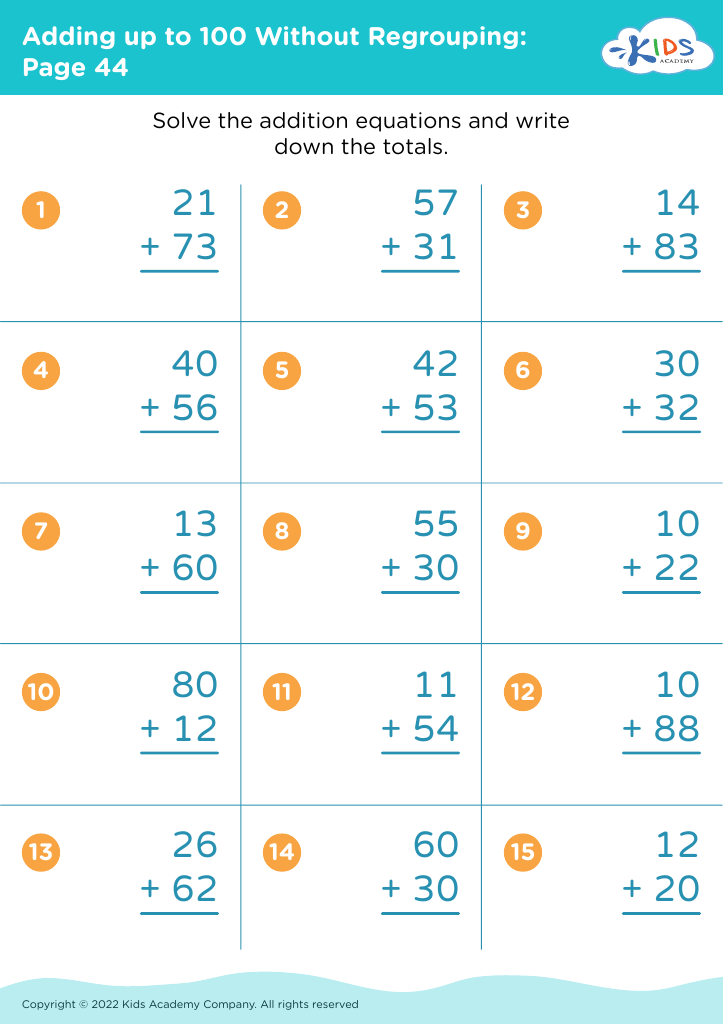
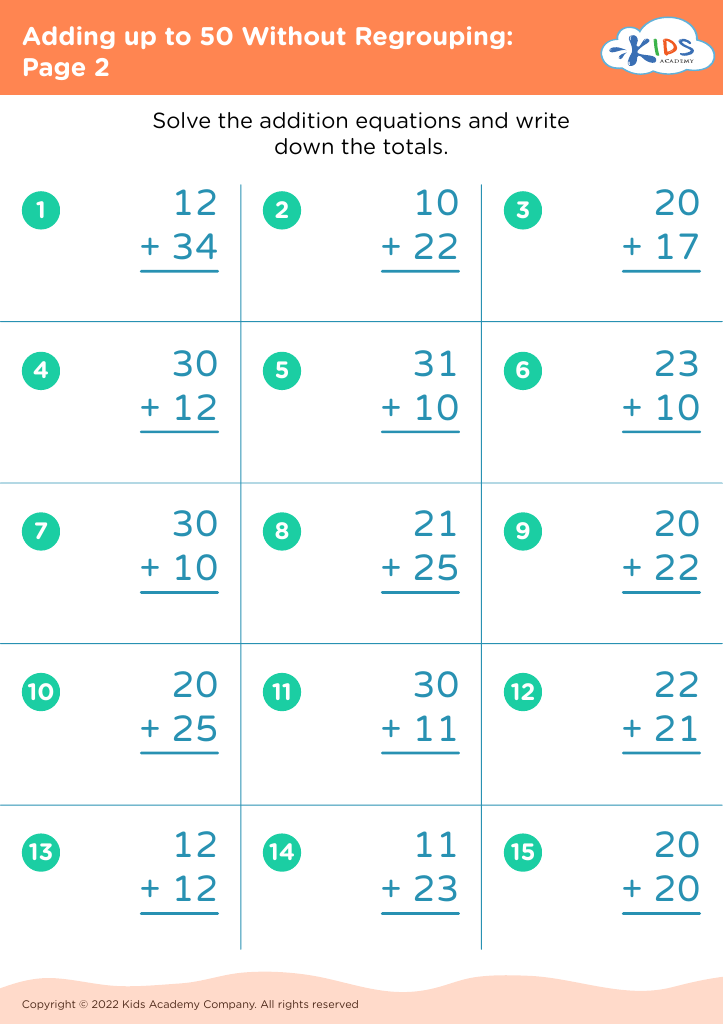
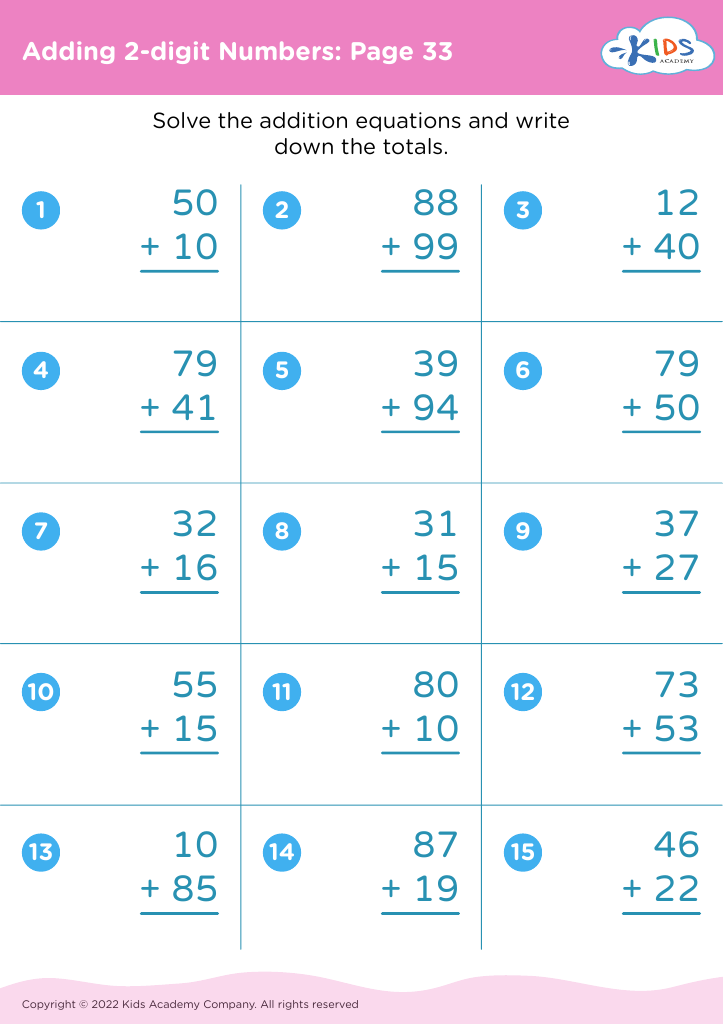
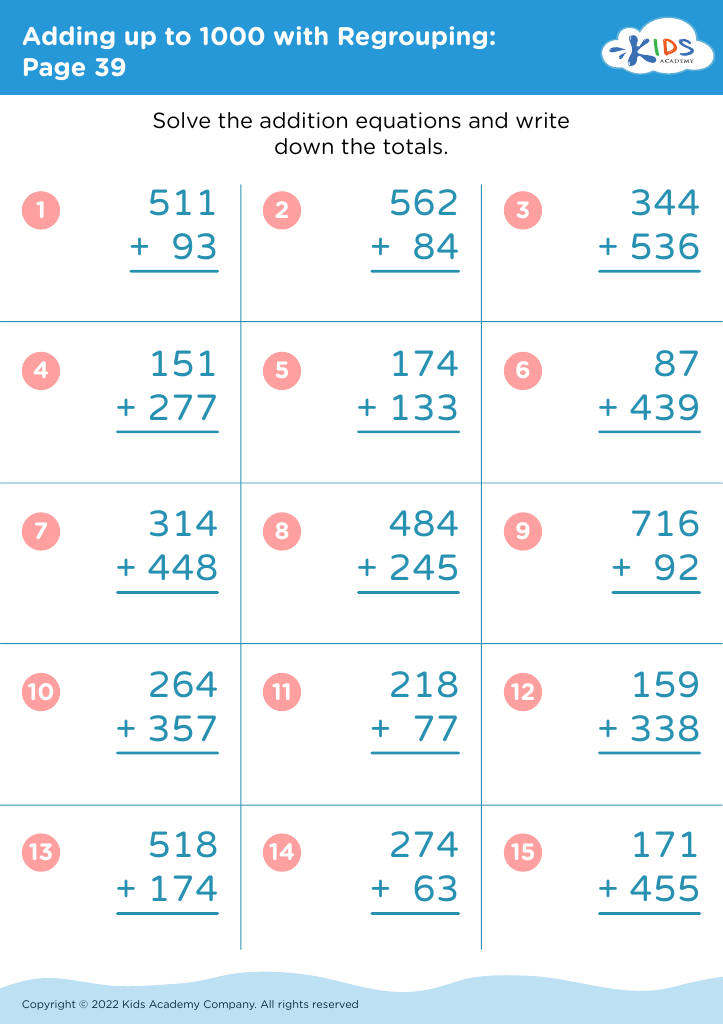








Understanding patterns, particularly in addition, is crucial for children aged 4-8 as it lays a solid foundation for their mathematical skills. When children can recognize and create patterns, they develop critical thinking and problem-solving abilities, which extends beyond mathematics into everyday life.
Patterns help young learners make connections between numbers, enhancing their ability to predict outcomes and understand relationships. For instance, if a child recognizes that the addition of two + two always results in four, they start to grasp the concept of consistency in mathematics. This understanding boosts their confidence and encourages them to explore more complex mathematical concepts.
Moreover, recognizing patterns enhances a child’s cognitive development. It exercises their brains, fostering memory, attention to detail, and analytical skills. Additionally, understanding addition through patterns can make learning more engaging and enjoyable, reducing anxiety about math.
For parents and teachers, fostering pattern recognition should be a priority, as it equips children with the tools they need to succeed academically. By incorporating playful and hands-on experiences involving patterns in everyday activities, they can create a supportive learning environment that enriches children’s overall understanding of math and prepares them for future educational challenges.








