Understand sequences Addition Worksheets for Ages 4-8
5 filtered results
-
From - To
Introduce your young learners to the world of numbers with our Understand Sequences Addition Worksheets designed for ages 4-8. These engaging worksheets transform the basics of addition into fun, interactive activities that enhance critical thinking and problem-solving skills through sequence recognition. Perfect for early grade students, our worksheets encourage children to explore patterns and build a strong foundation in mathematics. With vibrant illustrations and age-appropriate exercises, children will enjoy their learning journey, effortlessly improve their addition abilities, and gain confidence in their math skills. Ideal for classroom use or at-home practice, spark a love for math today!
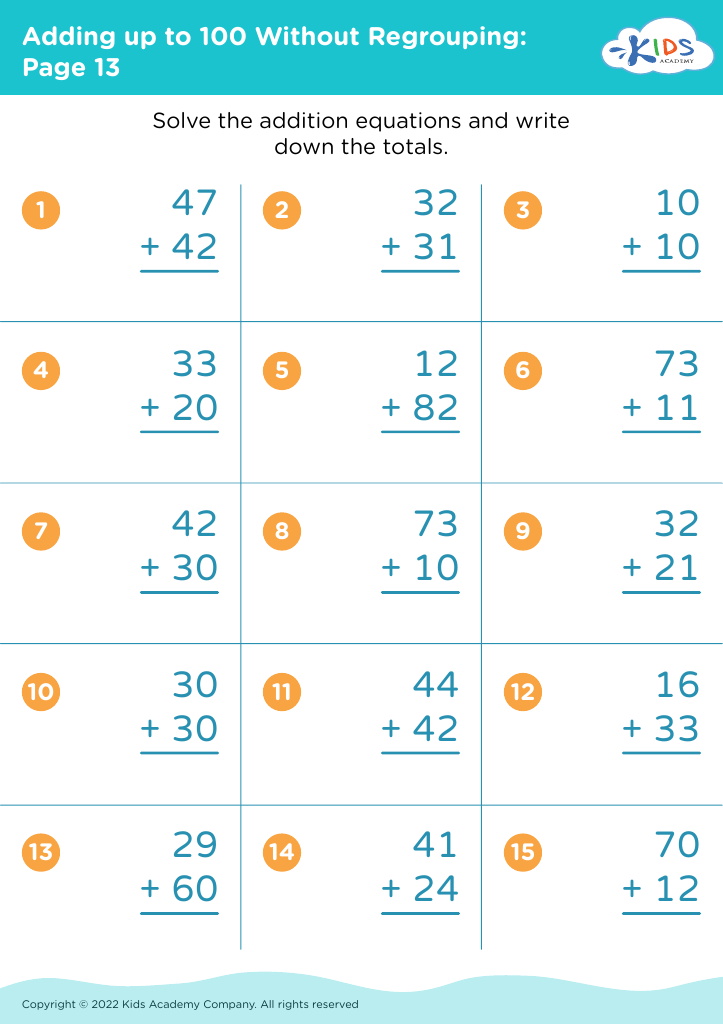
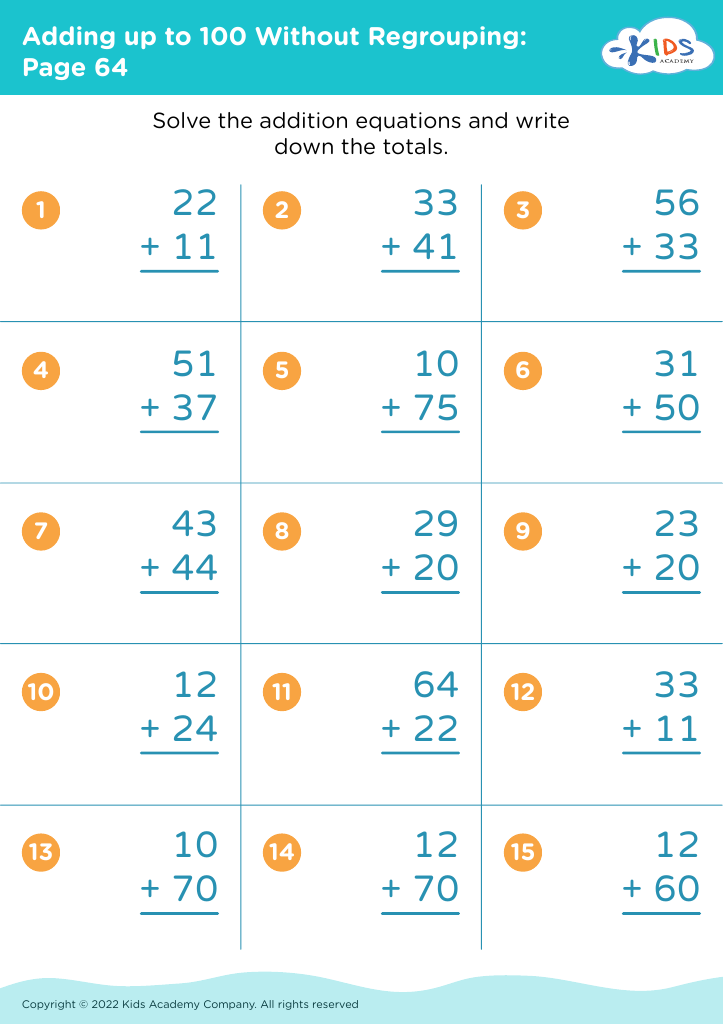
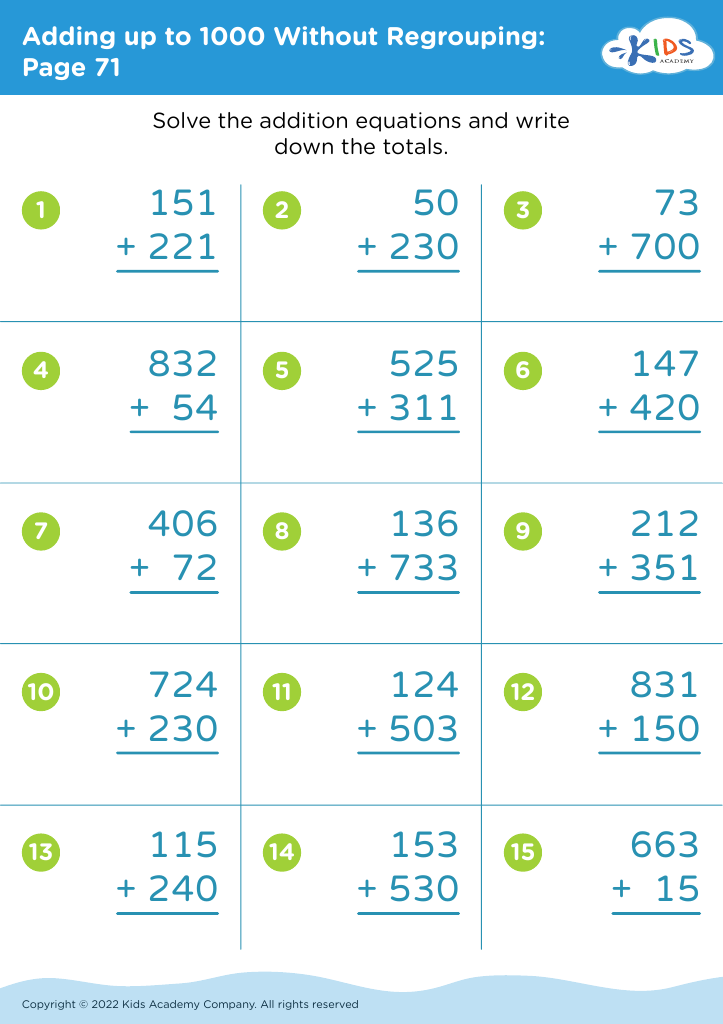
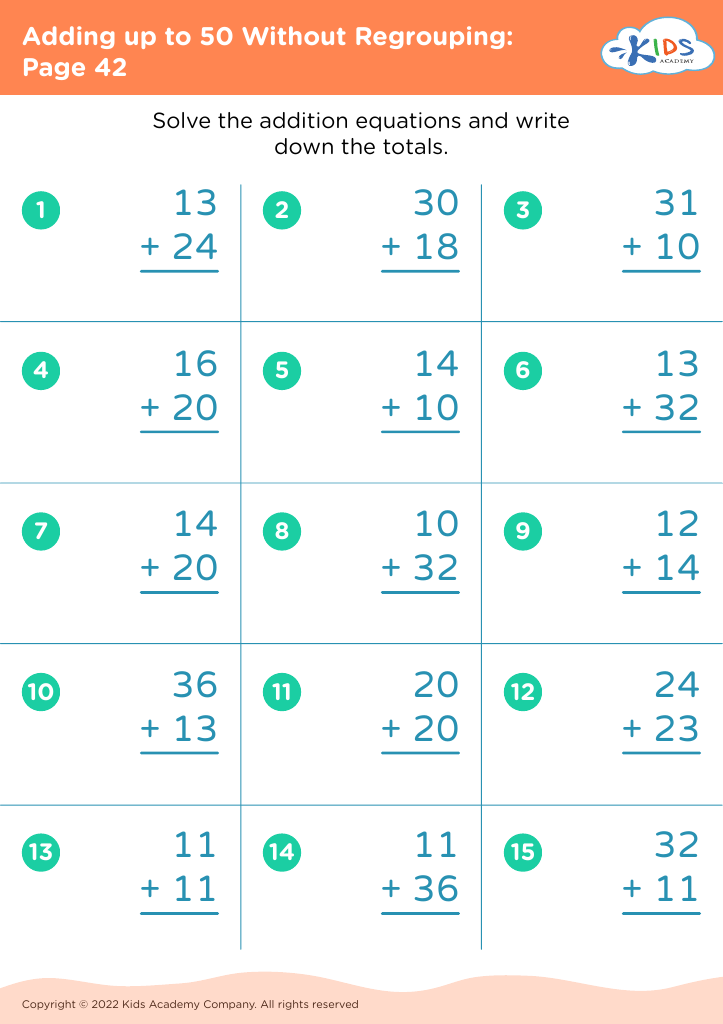
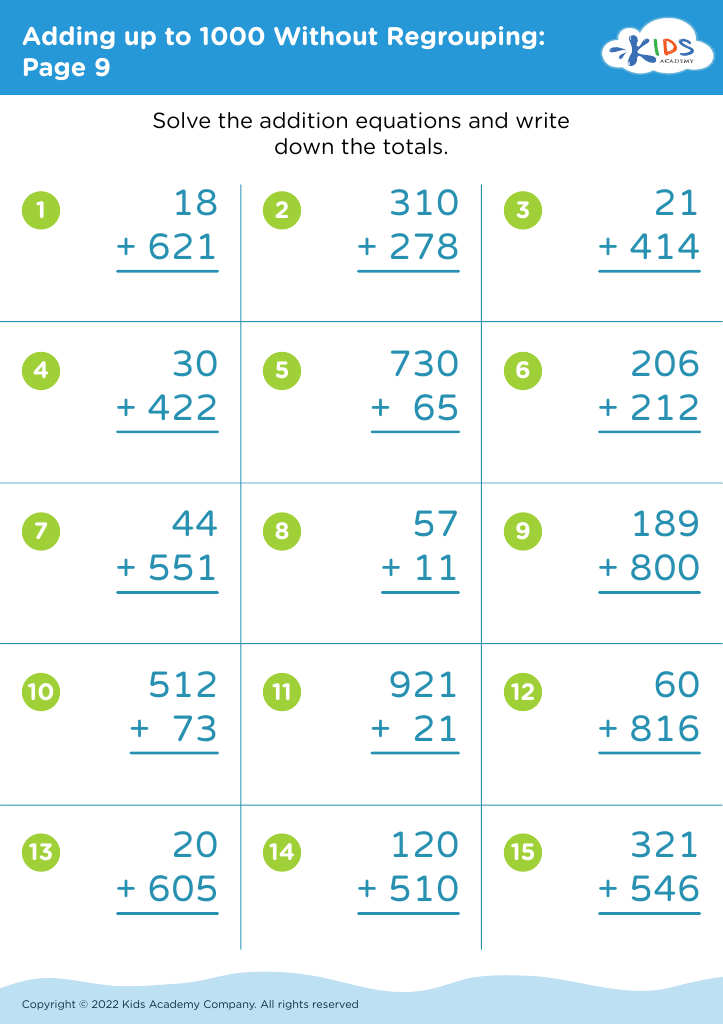








Understanding sequences in addition is crucial for young children aged 4-8 because it lays the groundwork for essential mathematical skills and cognitive development. Sequencing helps kids grasp the order and logic required to solve problems, enhancing their ability to follow steps and predict outcomes. By learning to identify patterns, children develop critical thinking skills that extend beyond mathematics.
Parents and teachers should prioritize this skill because it fosters a strong numerical foundation. Early mastery of addition sequences helps children understand more complex mathematical concepts in later grades. When children can recognize and predict the outcome of a number sequence (like 1+1, 1+2, 1+3), they develop confidence and proficiency in basic math operations.
Furthermore, understanding sequences aids in everyday tasks. From reading correctly numbered pages to following a series of instructions, sequencing skills translate into real-world benefits. It also contributes to better memory and organizational skills, which are important for academic achievement and day-to-day functioning.
Teaching addition sequences can be interactive and fun, using tools like number lines, puzzles, and games, engaging children in a manner that promotes both enjoyment and learning. Thus, investing time into understanding sequences not only enriches their mathematical knowledge but also supports their overall developmental growth.








