Understanding equality Addition Worksheets for Ages 4-8
3 filtered results
-
From - To
Unlock the concepts of equality and addition with our engaging worksheets designed for children aged 4-8. Our resources help young learners grasp the fundamental principle that both sides of an equation must balance. Through fun activities, colorful visuals, and guided exercises, children will practice identifying equal sets, solving simple addition problems, and understanding number relationships. These worksheets foster critical thinking and promote numerical confidence by reiterating that an equation represents a balance. Perfect for both classroom settings and home practice, these worksheets are a valuable tool for nurturing early math skills in a playful, effective way. Start exploring today!
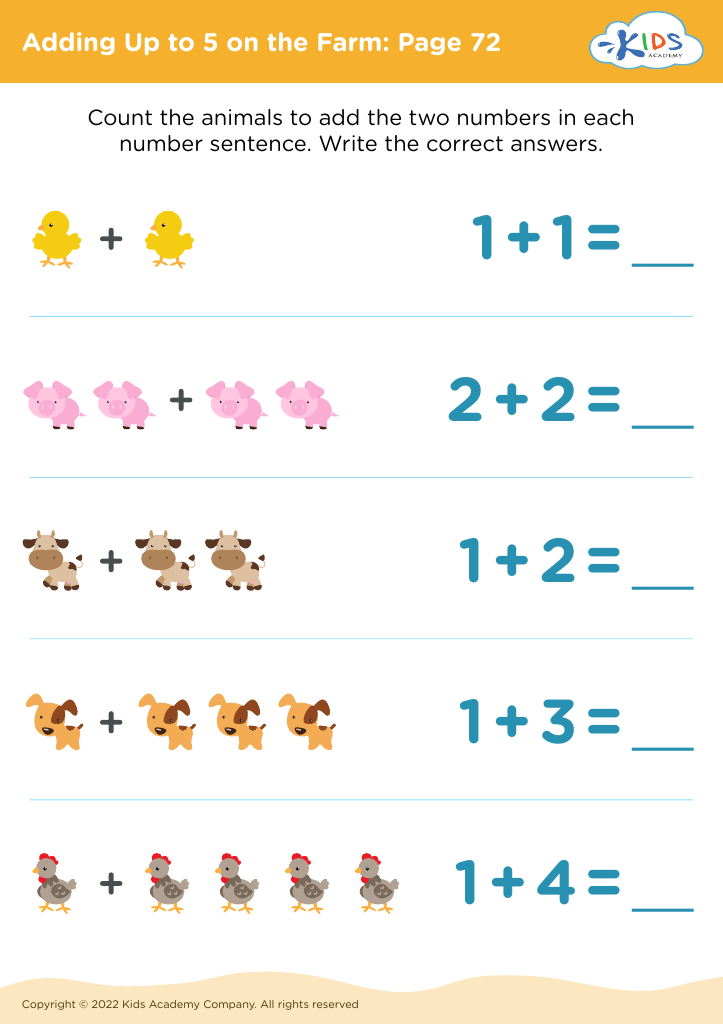
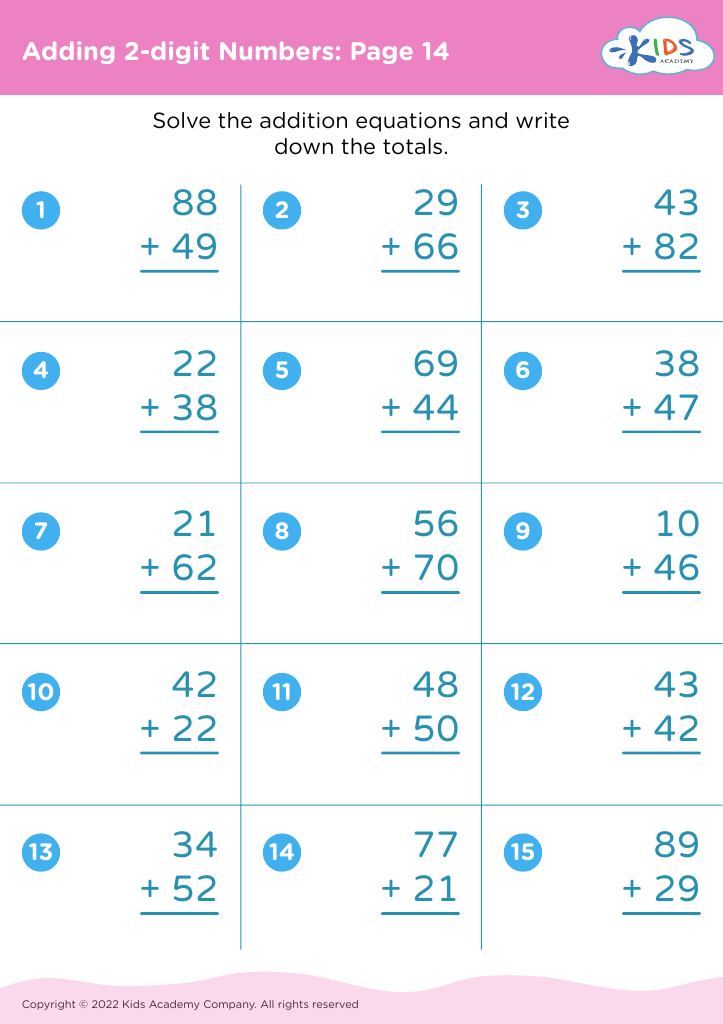
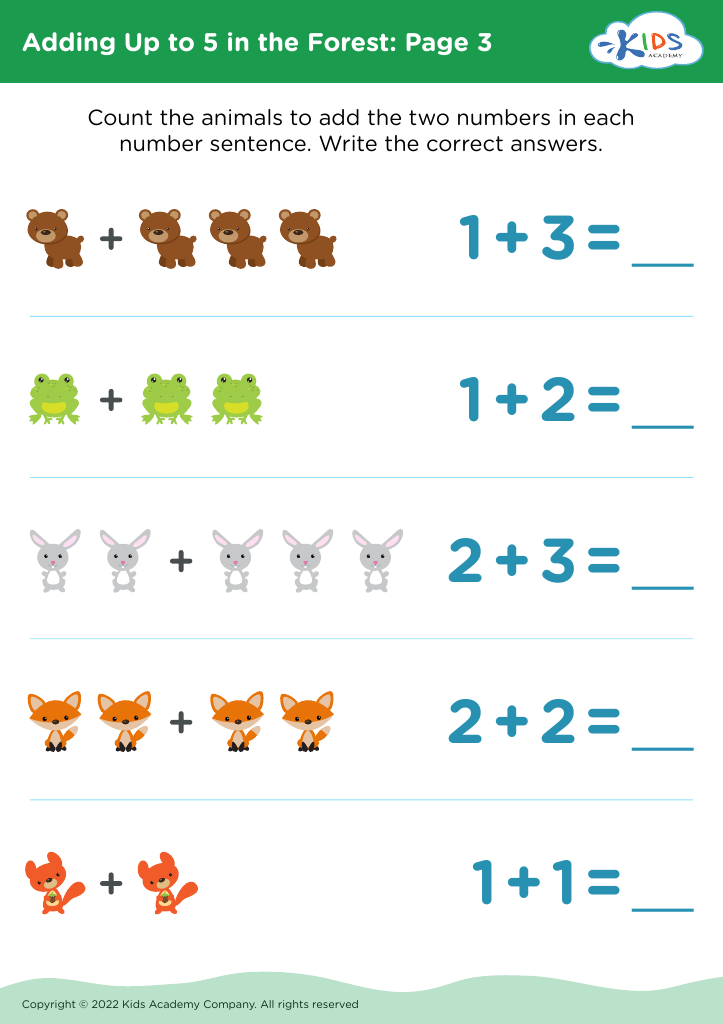








Understanding equality in addition is crucial for children aged 4-8. At this developmental stage, children are forming foundational mathematical concepts. When parents and teachers emphasize the concept of equality, they help children grasp the idea that both sides of an equation must balance, promoting logical reasoning and critical thinking skills. This understanding transcends mere number manipulation and lays the groundwork for more complex mathematical operations later on.
Moreover, early mastery of addition and the equality principle fosters confidence and enthusiasm in learning. Children who grasp these concepts early are more likely to engage with math in a positive way, reducing math anxiety as they progress in their education. Teachers and parents play a vital role in this by providing interactive and fun learning opportunities, such as games or practical exercises, that reinforce these ideas in a meaningful context.
Additionally, understanding equality promotes problem-solving skills. Children learn to look for relationships between numbers, enhancing their ability to analyze problems and devise solutions. Ultimately, instilling a solid understanding of addition and equality in young learners equips them not only with essential math skills but also with a mindset geared towards lifelong learning and exploration.








