Understanding number relationships Addition Worksheets for Ages 4-8
5 filtered results
-
From - To
Our "Understanding Number Relationships" addition worksheets are expertly designed for children aged 4-8. These engaging resources empower young learners to grasp basic addition concepts through fun and interactive activities. Each worksheet encourages kids to explore number relationships and develop strong foundational math skills, effectively preparing them for more advanced mathematical challenges. Tailored for early learners, the easy-to-follow exercises include visual aids and age-appropriate problems, boosting confidence and enhancing cognitive development. With these worksheets from Kids Academy, your child will embark on a rewarding journey of numerical discovery, ensuring a seamless progression in their math education.
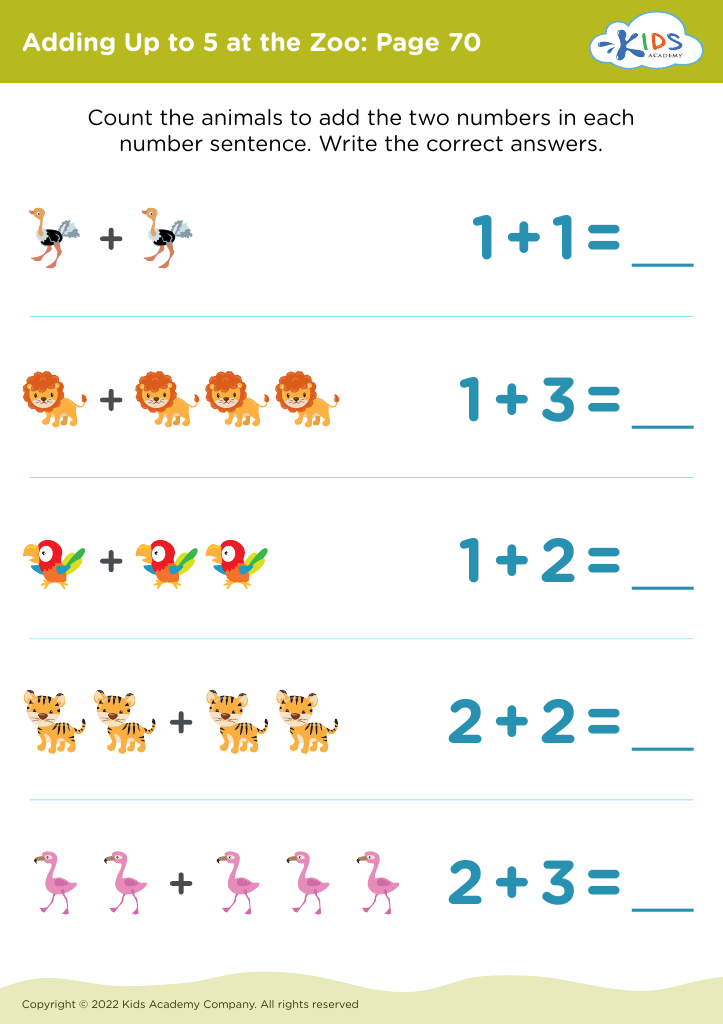
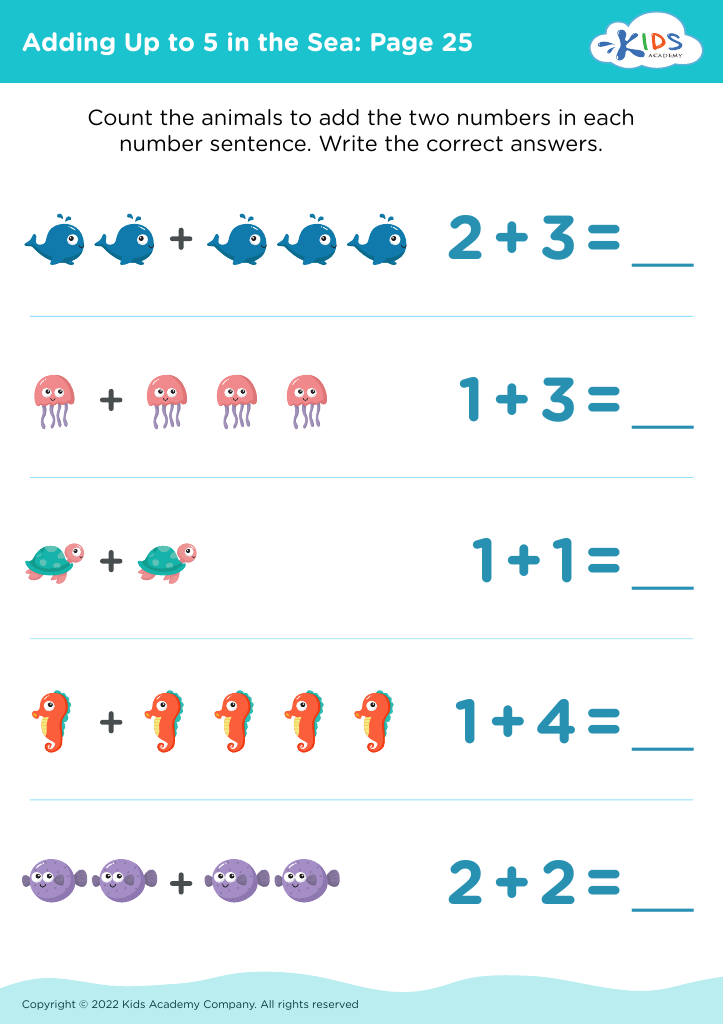
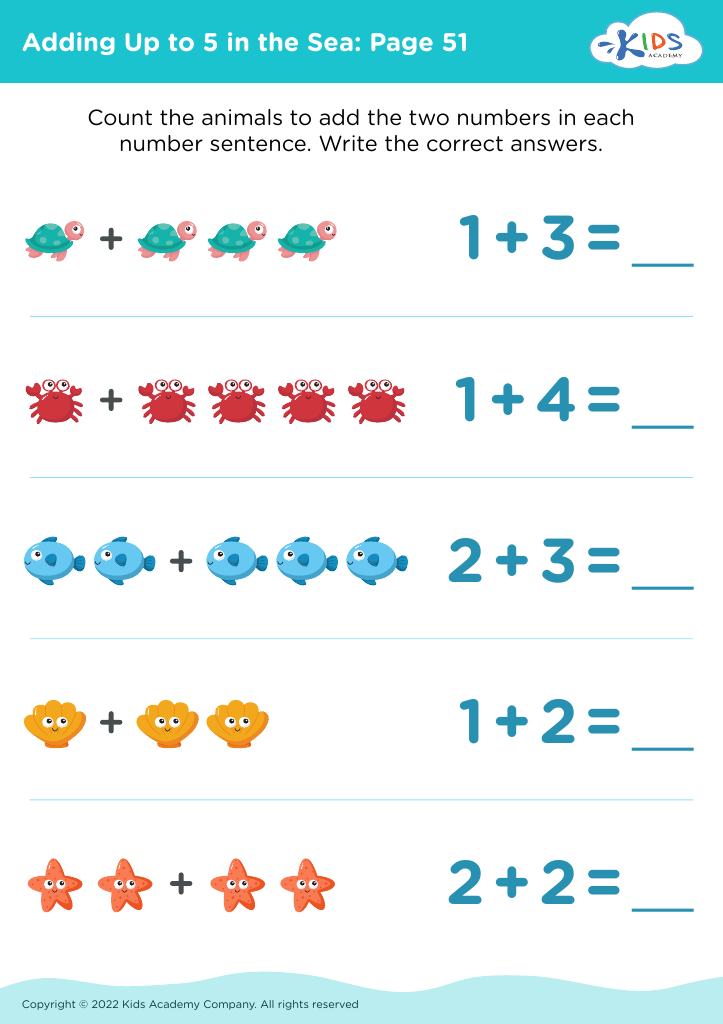
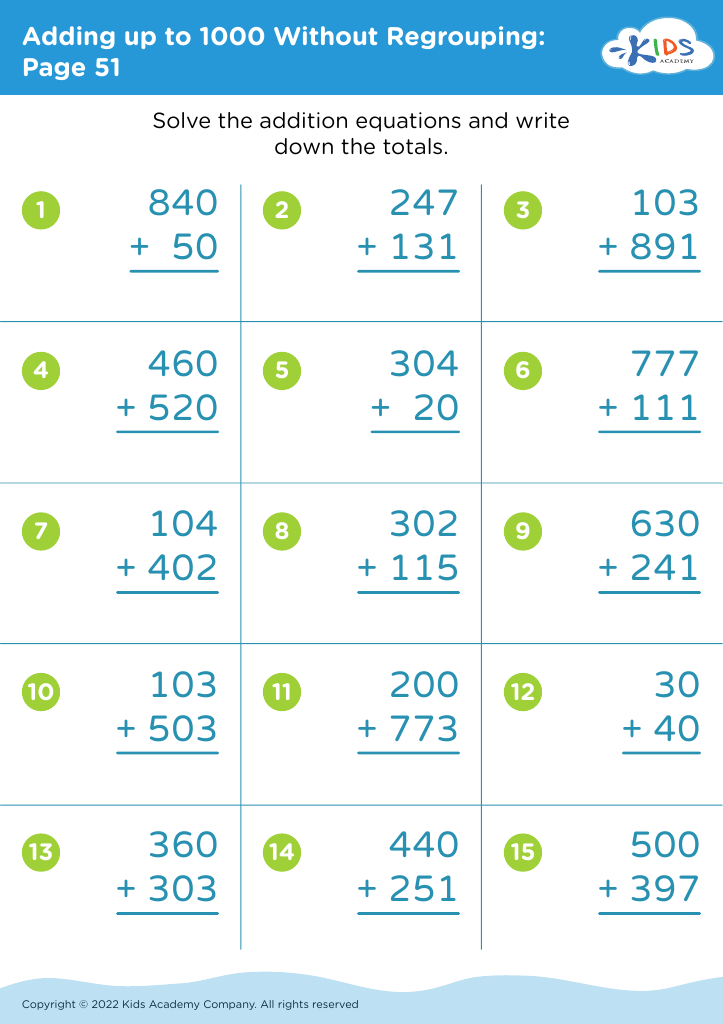
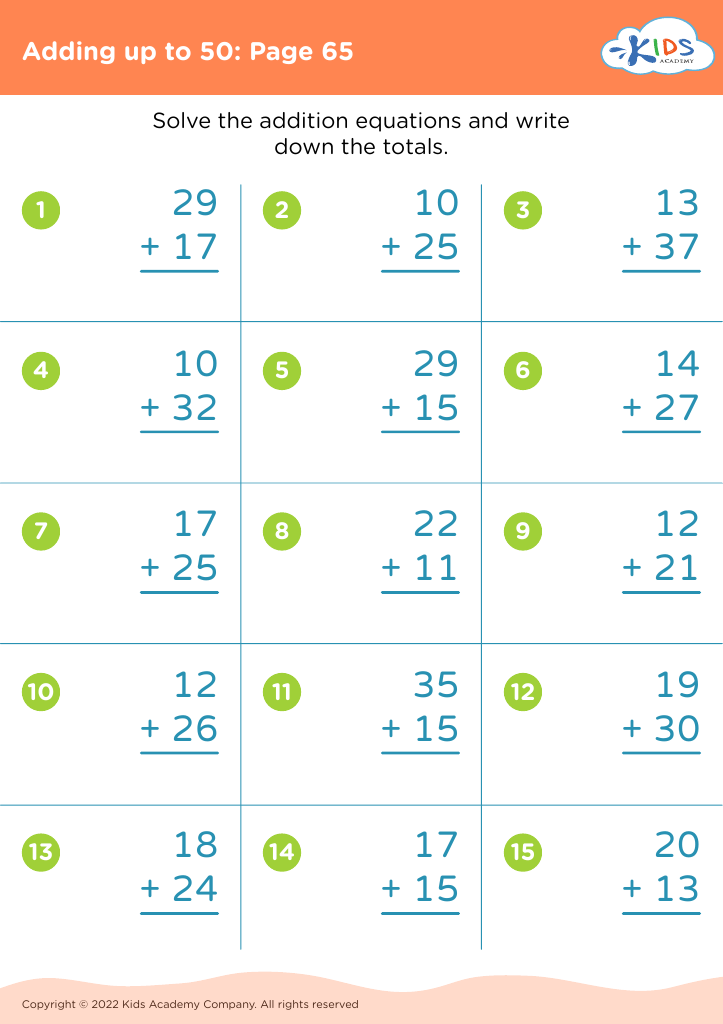








Understanding number relationships and addition is foundational for children aged 4-8, as it fosters essential cognitive skills that affect their future learning experiences. During these formative years, children's brains are highly receptive to mathematical concepts, embedding critical thinking and problem-solving skills into their mental framework.
When parents and teachers prioritize teaching addition and number relationships, they provide children with a robust platform for comprehending more complex mathematical concepts in later years. Mastering addition introduces youngsters to patterns, sequences, and the fundamental principles of arithmetic. By recognizing how numbers relate to each other, children develop number sense, which is the ability to understand, interpret, and work with numbers flexibly and efficiently.
Number relationships and addition also extend beyond mathematics. These concepts teach children how to think logically and make informed decisions, applicable in everyday life, such as handling money or measuring ingredients for a recipe. Furthermore, engaging with math early on boosts confidence and fosters a positive attitude towards learning, reducing math anxiety and promoting academic success across various subjects.
Incorporating fun, interactive activities such as games and practical exercises can make learning these concepts exciting and meaningful. Therefore, a focus on number relationships and addition during these early years is crucial for holistic development, laying the groundwork for future academic and life skills.








