Understanding number sequences Addition Worksheets for Ages 4-8
3 filtered results
-
From - To
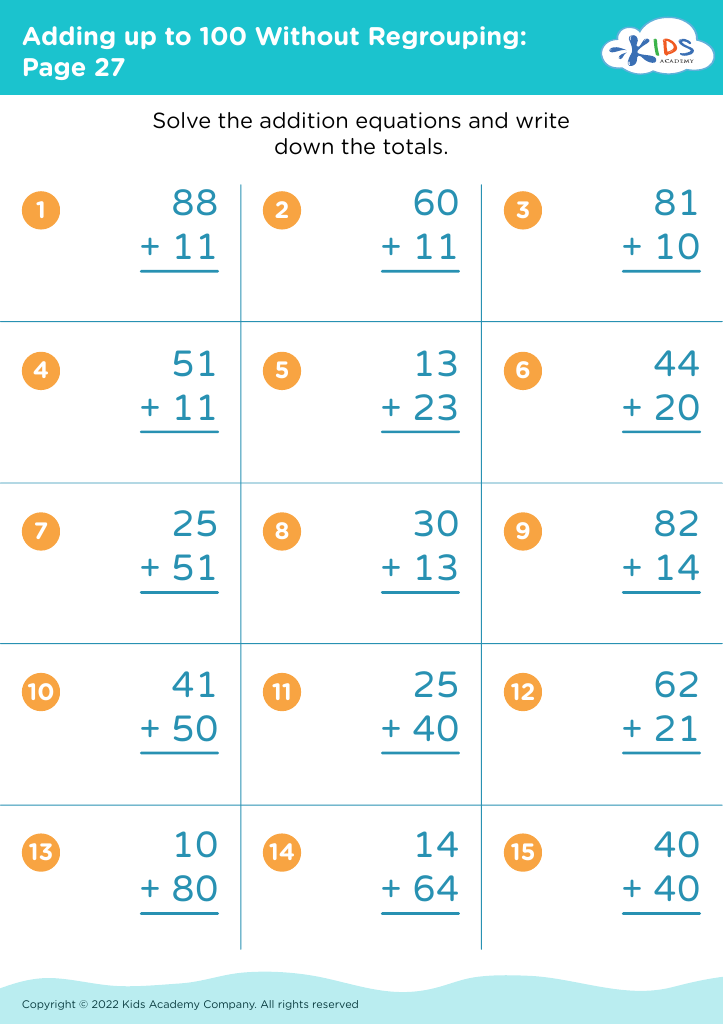
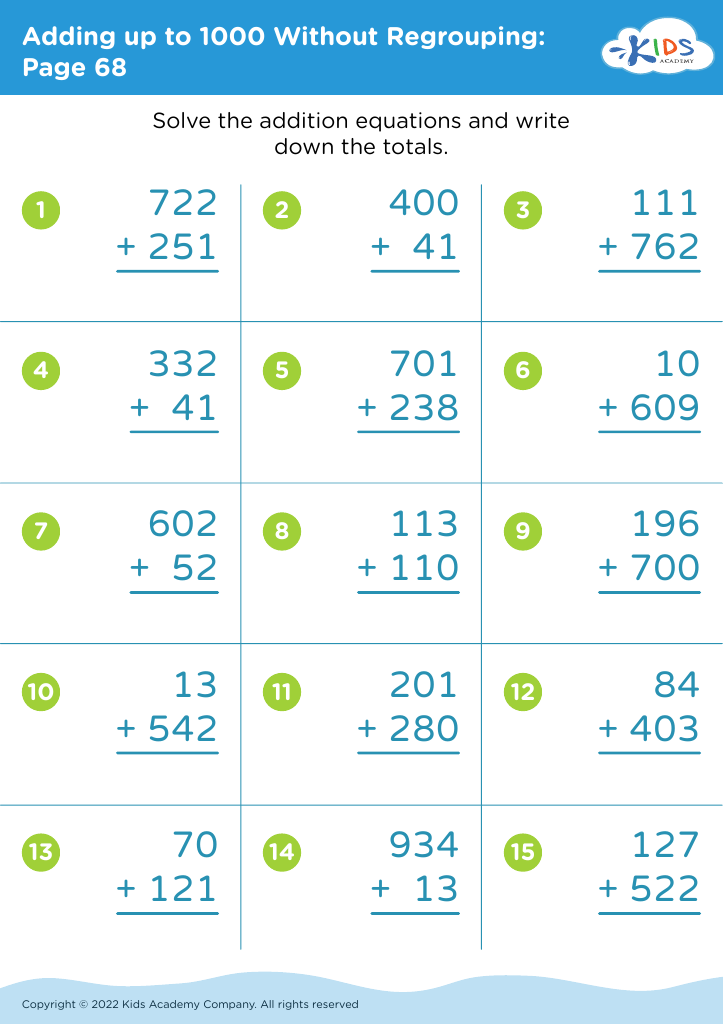
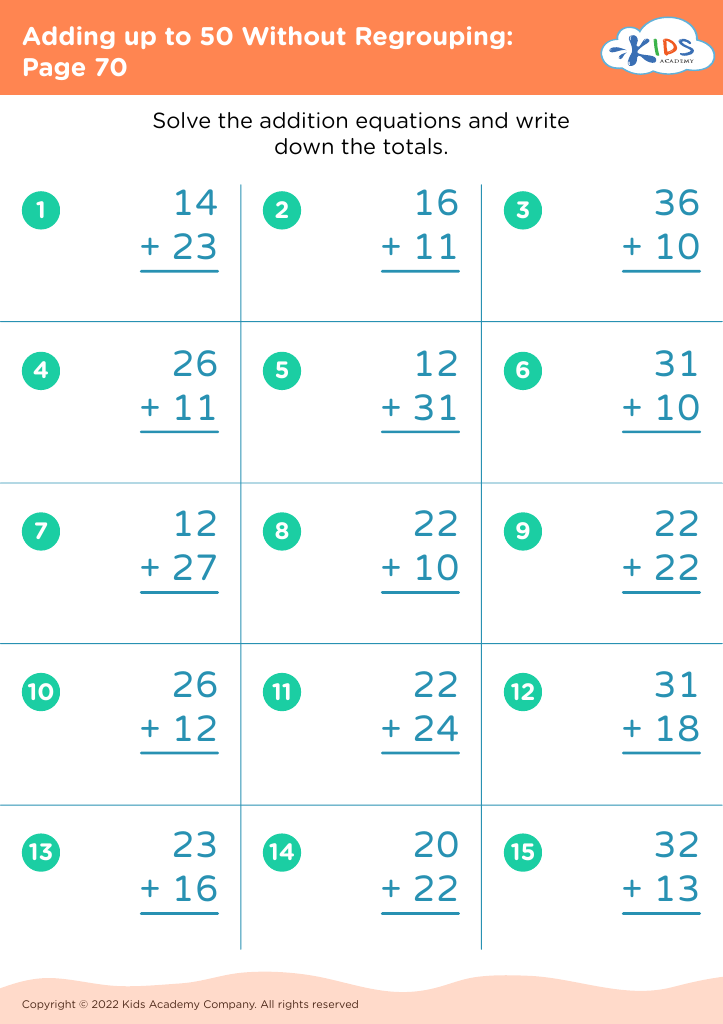
Help your child master math fundamentals with our "Understanding Number Sequences Addition Worksheets for Ages 4-8." Specially designed to engage young learners, these worksheets simplify the concept of number sequences through fun addition exercises. Each sheet offers a range of activities that develop number recognition, sequencing skills, and basic addition. Perfect for both teachers and parents, our printable worksheets make math a fun adventure, aiding cognitive growth and numerical fluency. Early learners will enjoy colorful visuals and rewarding challenges, building a strong foundation for future math success. Download and transform early math learning today!








Understanding number sequences and addition is critical for children aged 4-8 as it forms the basis of their future mathematical skills and cognitive development. At this early stage, children's brains are especially receptive to learning foundational concepts, which makes it an ideal time for them to grasp the logic and structure of numbers.
For parents and teachers, fostering an understanding of number sequences helps children recognize patterns, an essential skill not only in math but also in problem-solving and critical thinking. Mastery of addition, as one of the primary arithmetic operations, enables children to handle more complex mathematical operations later on.
The practice also promotes confidence and encourages a positive attitude towards math subjects, which is vital for long-term academic success. Fluidity in basic math can translate to improved performance in other subjects as well, given that numerical literacy is often interwoven across the curriculum.
Early competence in these areas sets a foundation for more complex mathematical concepts like multiplication and division. Moreover, practical applications—such as reading clocks, understanding money, and measuring quantities—remain useful life skills. Parents and teachers investing time in strengthening these skills pave the way for children to navigate daily tasks and future academic challenges more easily.








