Understanding number value Addition Worksheets for Ages 4-8
3 filtered results
-
From - To
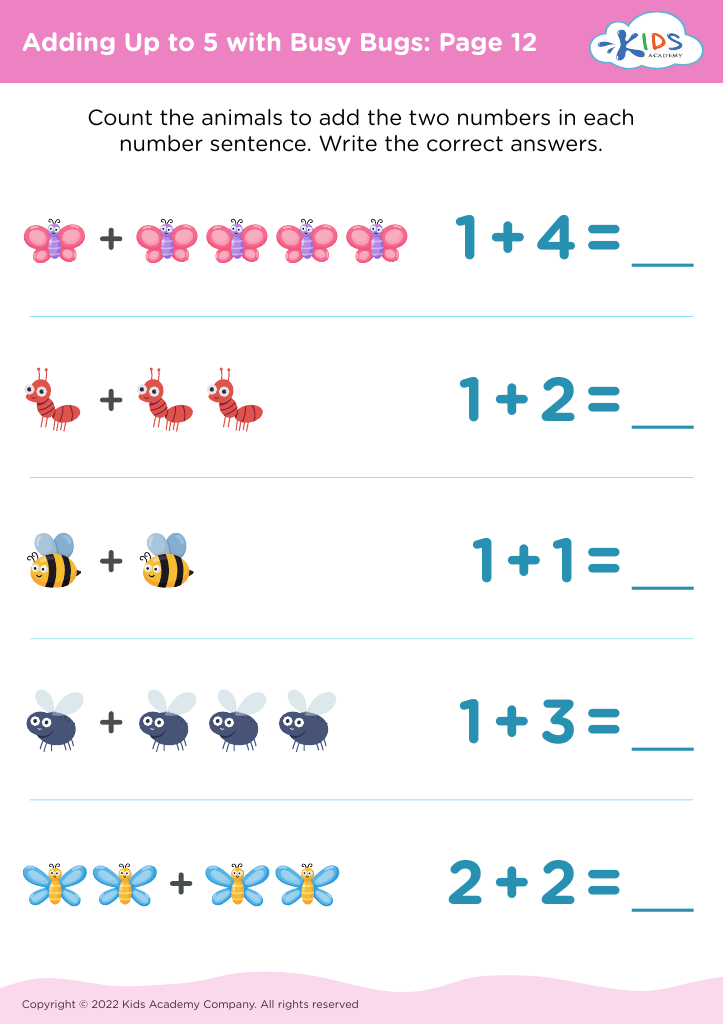
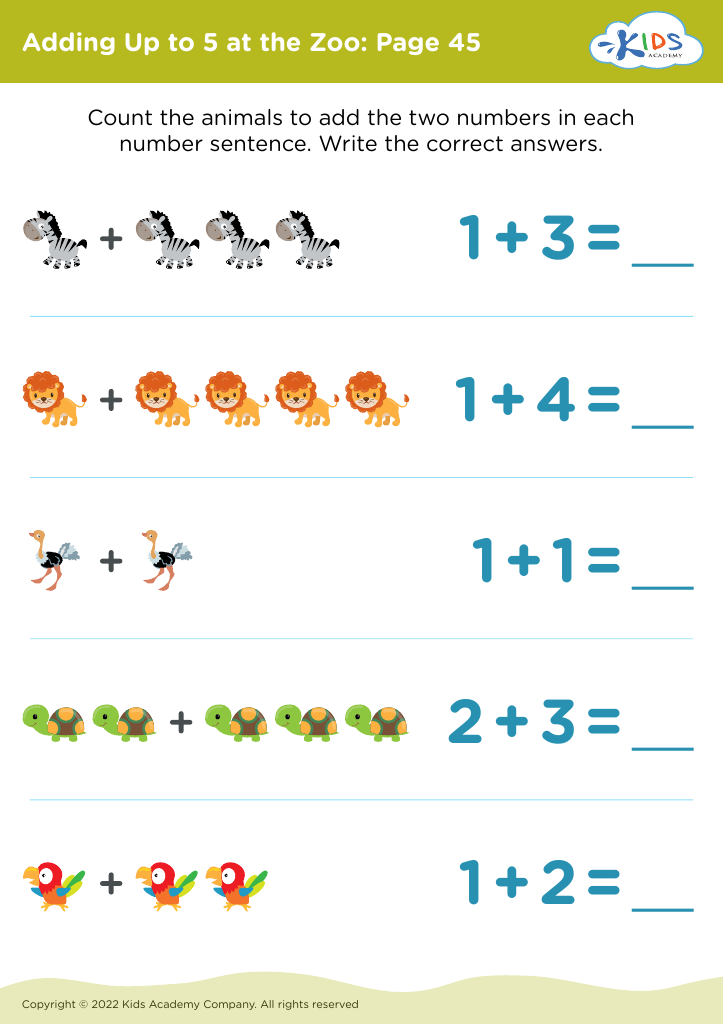
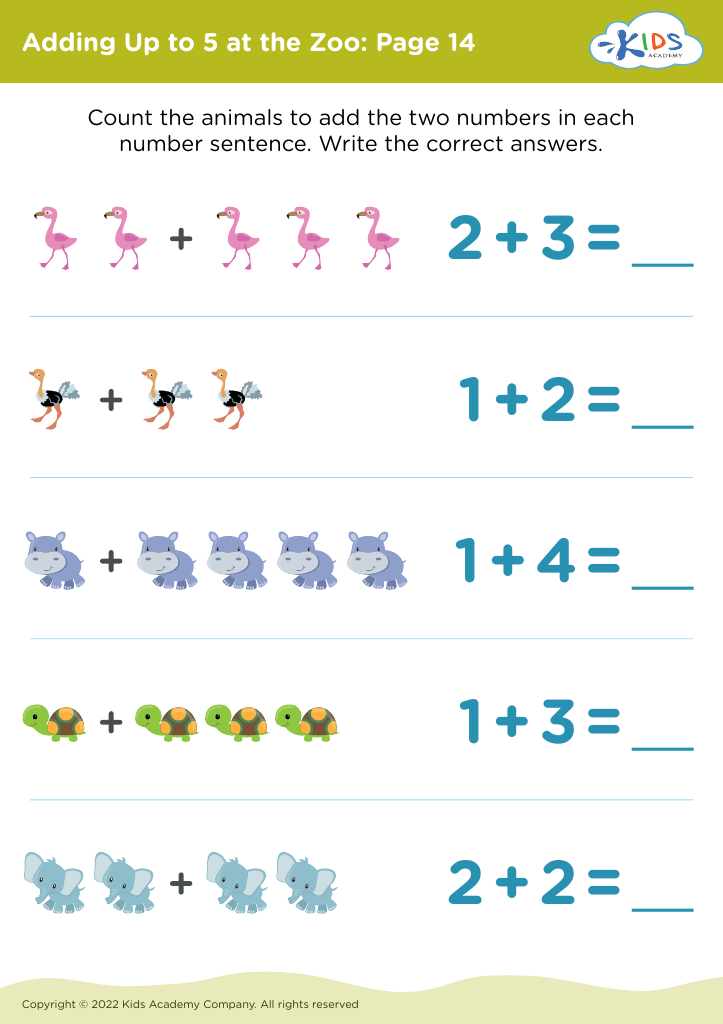
Dive into the world of numbers with our specially designed "Understanding Number Value Addition Worksheets" for ages 4-8. These engaging worksheets introduce young learners to the concepts of number value and addition through fun, colorful activities that boost mathematical proficiency. Perfect for reinforcing classroom learning or extra practice at home, each worksheet helps children grasp the fundamentals of number comparison and addition. Thoughtfully crafted by educational experts, our materials promote confidence and creativity in math for budding scholars. Equip your child with the skills they need for a solid mathematical foundation by exploring our collection today!








Understanding number value and addition is fundamental for children ages 4-8 because it lays the groundwork for subsequent mathematical and logical reasoning skills. At this early stage, children's brains are highly receptive to learning through tactile and visual experiences. Introducing number value helps them grasp the concept of quantities and how numbers relate to real-life scenarios. This understanding goes beyond memorizing digits; it enables kids to comprehend what the numbers actually represent.
Addition, on the other hand, is one of the most basic yet crucial mathematical operations. Mastering it at an early age serves as a building block for more complex math skills like subtraction, multiplication, and division. Through addition, children learn the concepts of 'more' and 'less,' which are essential for everyday problem-solving and decision-making.
Parents and teachers play a pivotal role in nurturing this understanding. Using engaging activities such as counting objects, playing number games, or even simple cooking recipes where adding ingredients links math to real life can make learning both fun and effective. Ignoring this foundational building block could lead to difficulties in later mathematical education and undermine a child's confidence in their ability to tackle academic challenges. Therefore, fostering an early and deep understanding of number value and addition sets the stage for long-term academic success.








