Understanding numeracy Addition Worksheets for Ages 4-8
4 filtered results
-
From - To
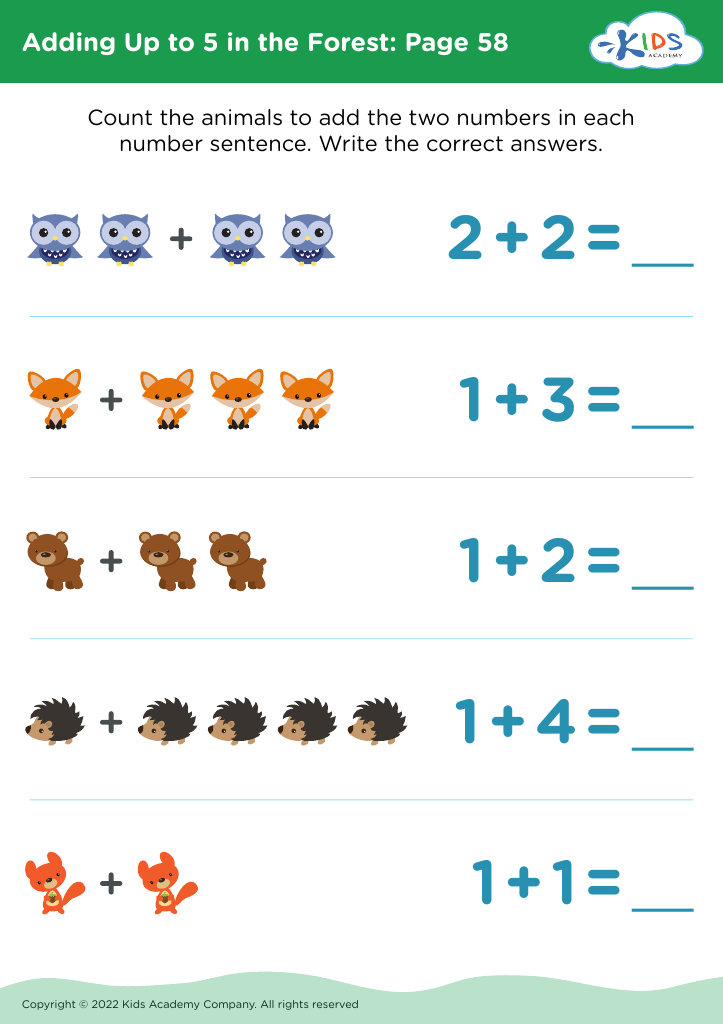
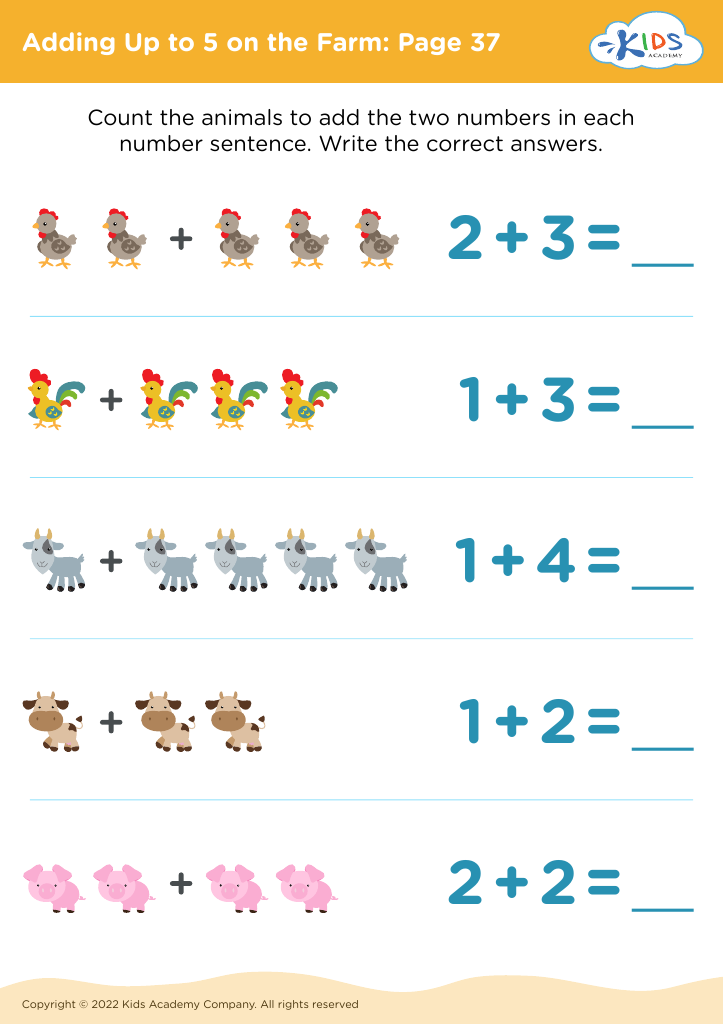
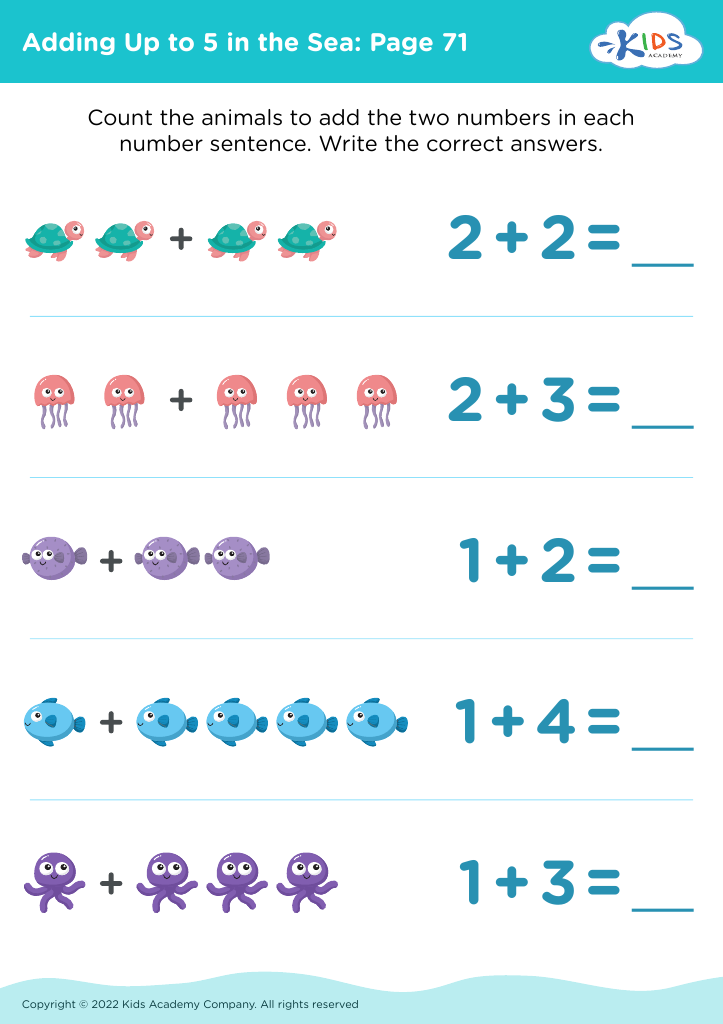
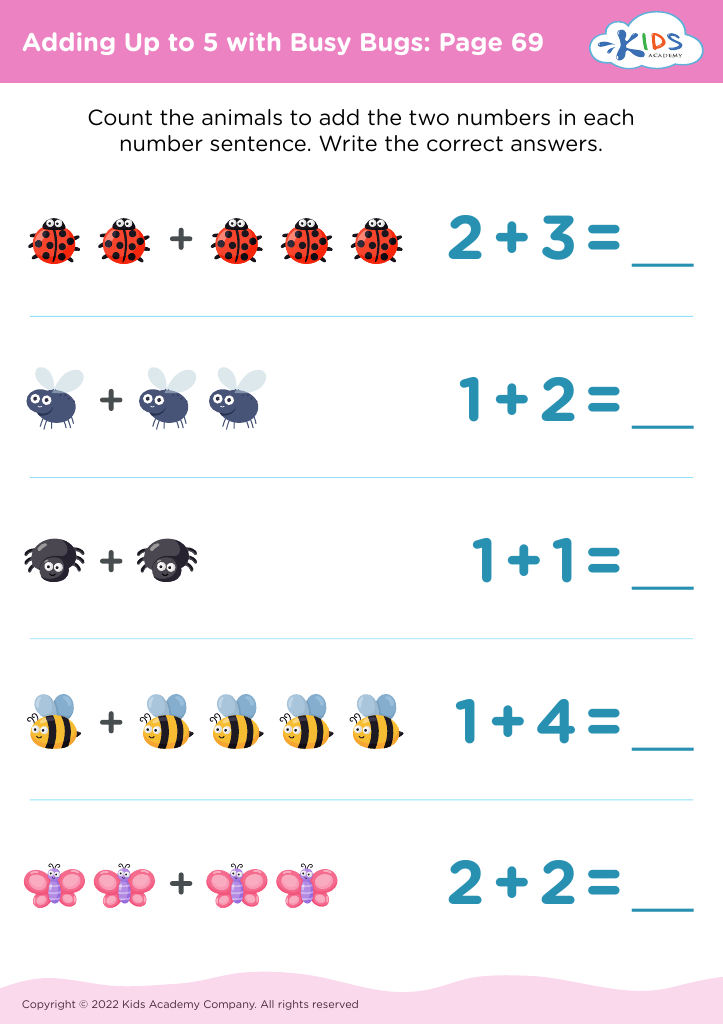
Explore our comprehensive "Understanding Numeracy Addition Worksheets" designed for children ages 4-8. These engaging resources help young learners grasp the fundamentals of addition through interactive exercises and fun activities. Each worksheet fosters essential skills, allowing kids to practice number recognition, counting, and simple addition problems in a visually appealing format. Ideal for reinforcing classroom learning or supporting homeschooling efforts, our worksheets cater to various learning styles and levels. Empower your child’s mathematical journey as they develop confidence in their numeracy skills with our thoughtfully crafted addition worksheets. Start their path to math mastery today!








Understanding numeracy, particularly addition, is crucial for children aged 4-8 as it lays the foundation for their future math skills and overall academic success. This early stage of learning is vital for several reasons. Firstly, addition fosters cognitive development, enhancing children's ability to think logically and problem-solve. It cultivates critical thinking skills that are essential not only in mathematics but in everyday life situations.
Secondly, mastering addition helps children build confidence in their mathematical abilities. When children grasp basic addition concepts, they become more enthusiastic about learning other math-related subjects and are more likely to engage actively in classroom activities. This eagerness enhances their overall learning experience.
Furthermore, numeracy skills are interconnected with literacy and other core subjects. A strong understanding of addition and numeracy can aid in better comprehension of statistics in science or economics in social studies.
Finally, by emphasizing addiction proficiency, parents and teachers can help identify potential learning challenges early, allowing for timely intervention. In today’s increasingly analytical world, equipping children with these fundamental skills is not just desirable but essential for fostering a generation that can think critically, solve problems creatively, and navigate complex information adeptly.








