Understanding sequence Addition Worksheets for Ages 4-8
4 filtered results
-
From - To
Our "Understanding Sequence Addition Worksheets for Ages 4-8" combine fun and education to help young learners master early math skills. Through engaging, age-appropriate exercises, children will develop a strong foundation in recognizing number sequences and improving their addition abilities. These printable worksheets integrate colorful images and hands-on activities to captivate and motivate students, ensuring they grasp the concepts of sequencing and addition effortlessly. Ideal for both classroom use and home practice, our worksheets are designed to enhance cognitive development and boost confidence in math from an early age. Unlock your child's potential with our expertly crafted educational resources!
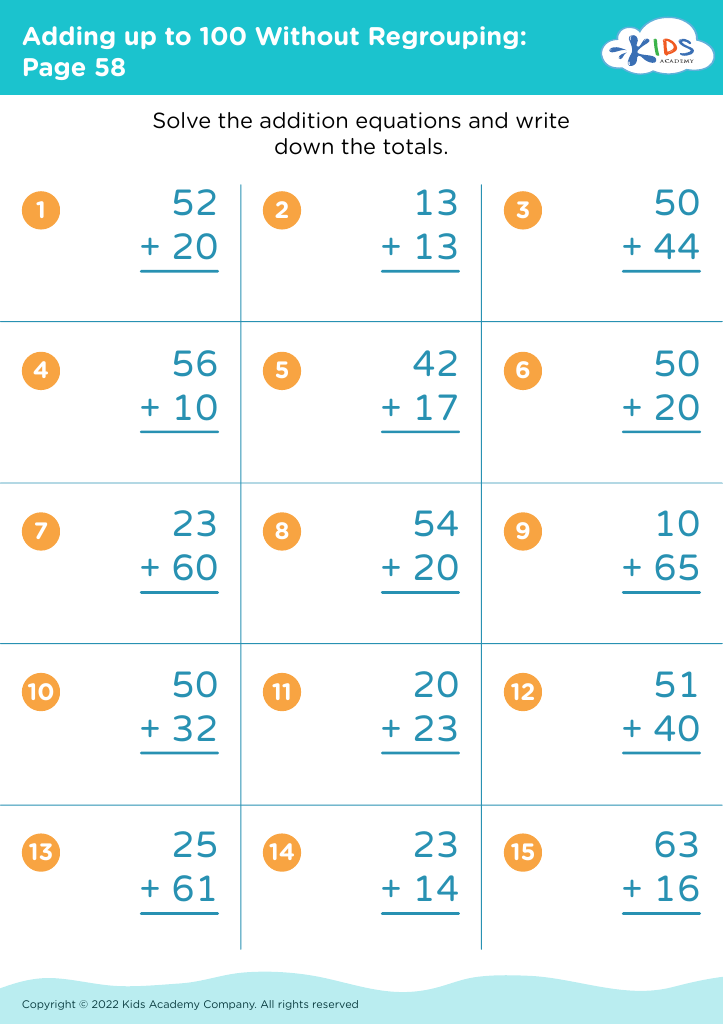
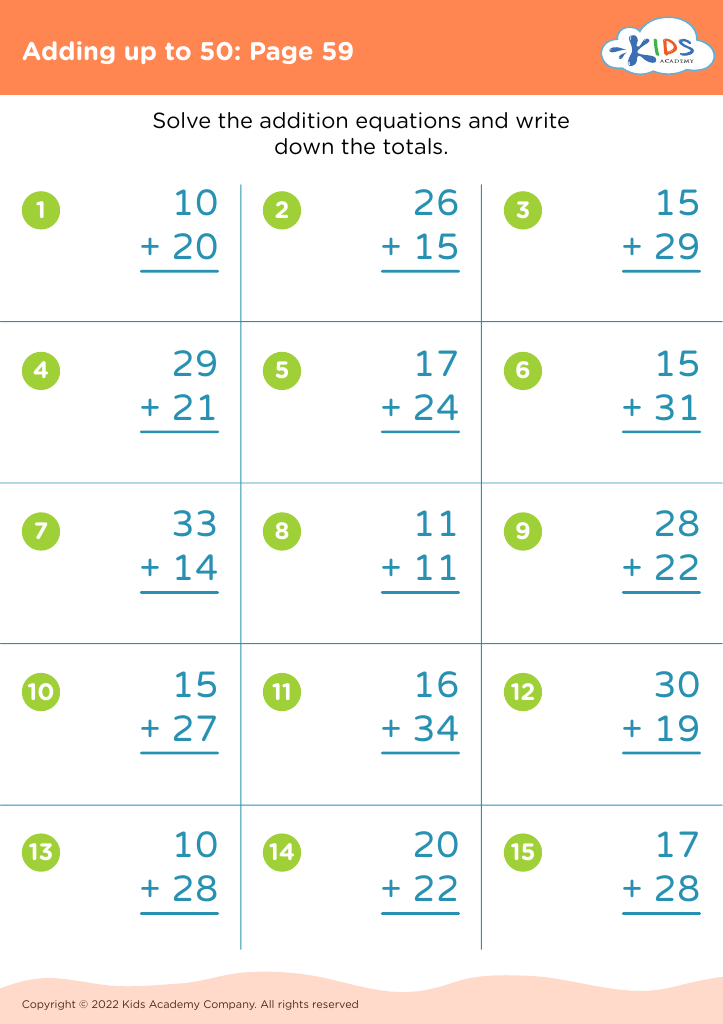
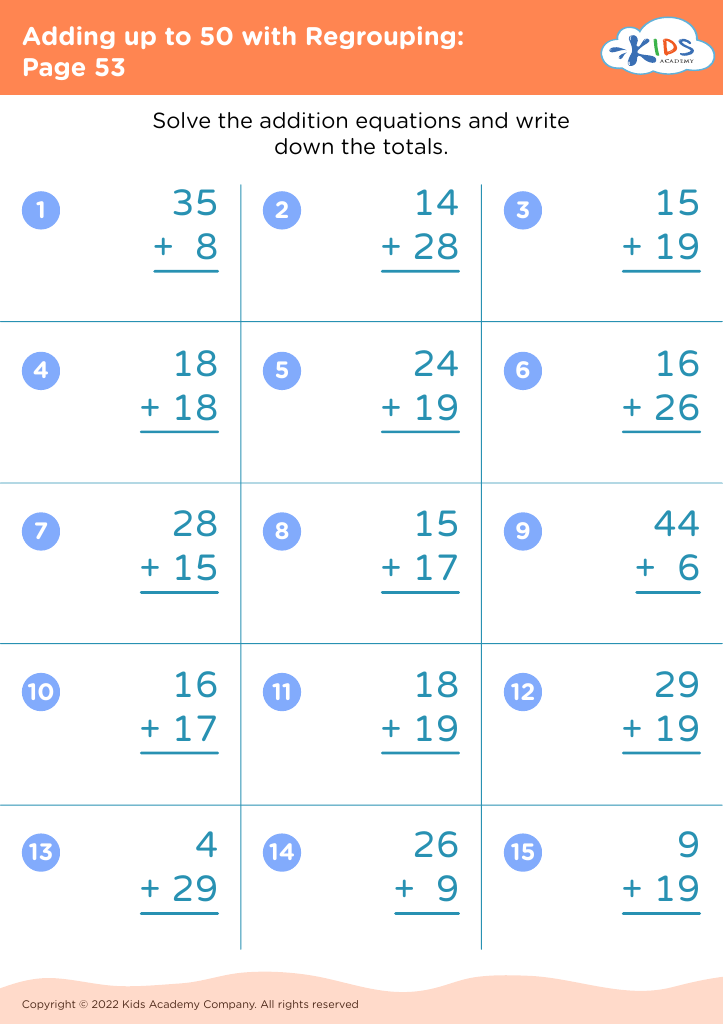
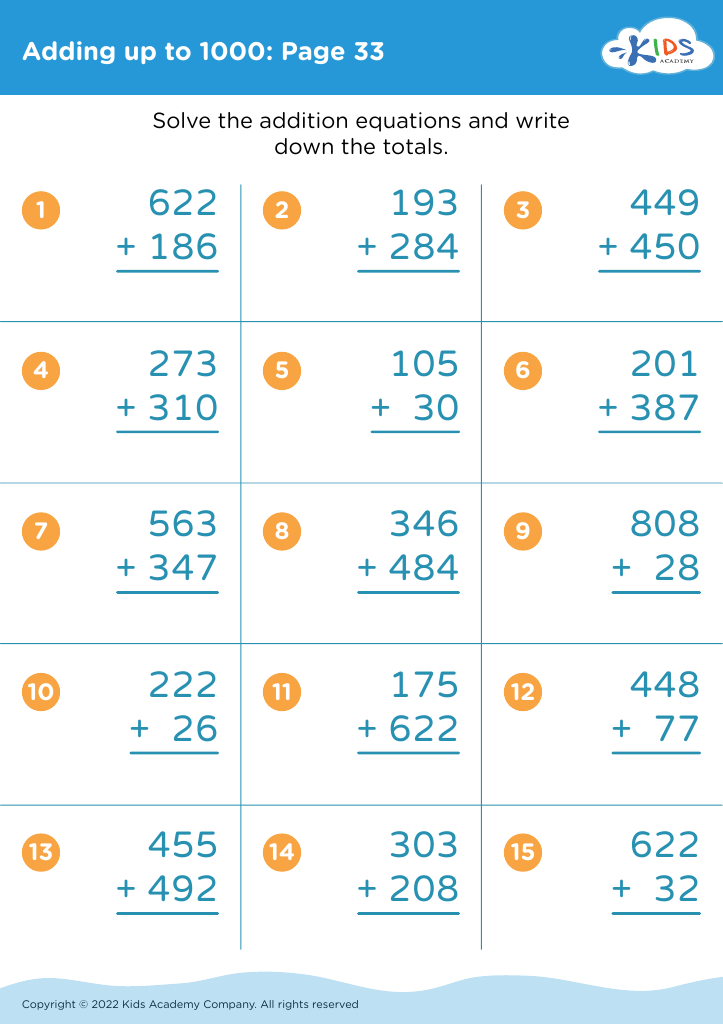








Understanding sequence addition is vital for children ages 4-8 because it lays the foundation for their future mathematical skills and cognitive development. At this crucial stage, kids are like sponges, absorbing new concepts quickly. Learning to sequence addition helps them grasp the concept of numbers, enhancing their ability to think logically and solve problems efficiently.
First, sequence addition teaches basic arithmetic, an essential life skill that children will use in everyday situations like telling time, handling money, and measuring ingredients while cooking. For young learners, mastering these fundamental operations early makes math less intimidating as they advance through school.
Second, it enhances cognitive abilities. Recognizing patterns and understanding sequences bolster memory, attention, and reasoning skills. For example, when kids learn that 2 + 2 equals 4, they can extend that principle to more significant numbers, ultimately helping them understand multiplication, division, and beyond.
Lastly, success in early math fosters a positive attitude towards learning. When children regularly experience achievement in sequence addition, it builds their confidence, encouraging a lifelong love for math. Teachers and parents play an essential role in making learning engaging and reassuring that mistakes are part of the learning process.
Investing time in teaching sequence addition can thus have long-lasting impacts on a child’s academic journey and intellectual growth, equipping them with essential problem-solving skills and a resilience that will benefit their overall learning trajectory.








