Underwater animal identification Addition Worksheets for Ages 4-8
3 filtered results
-
From - To
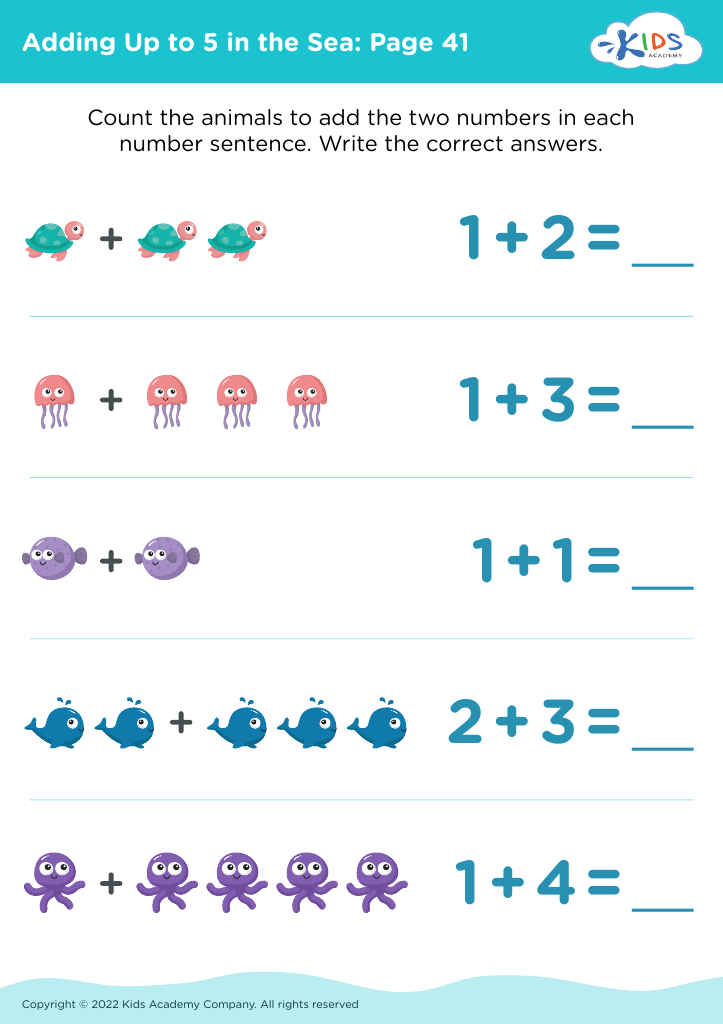
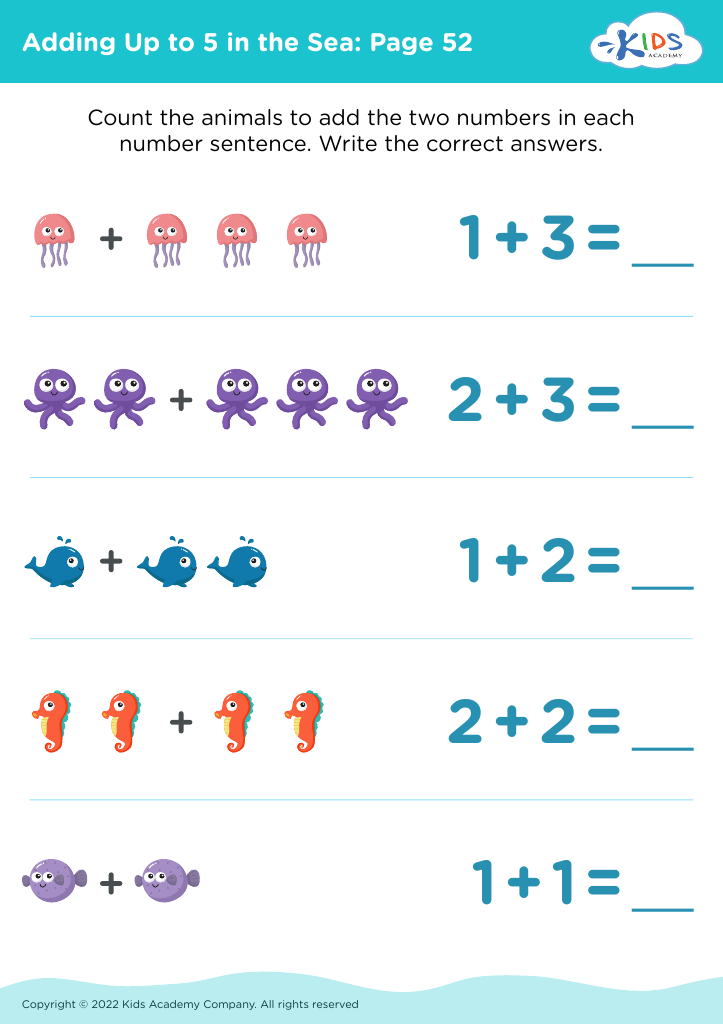
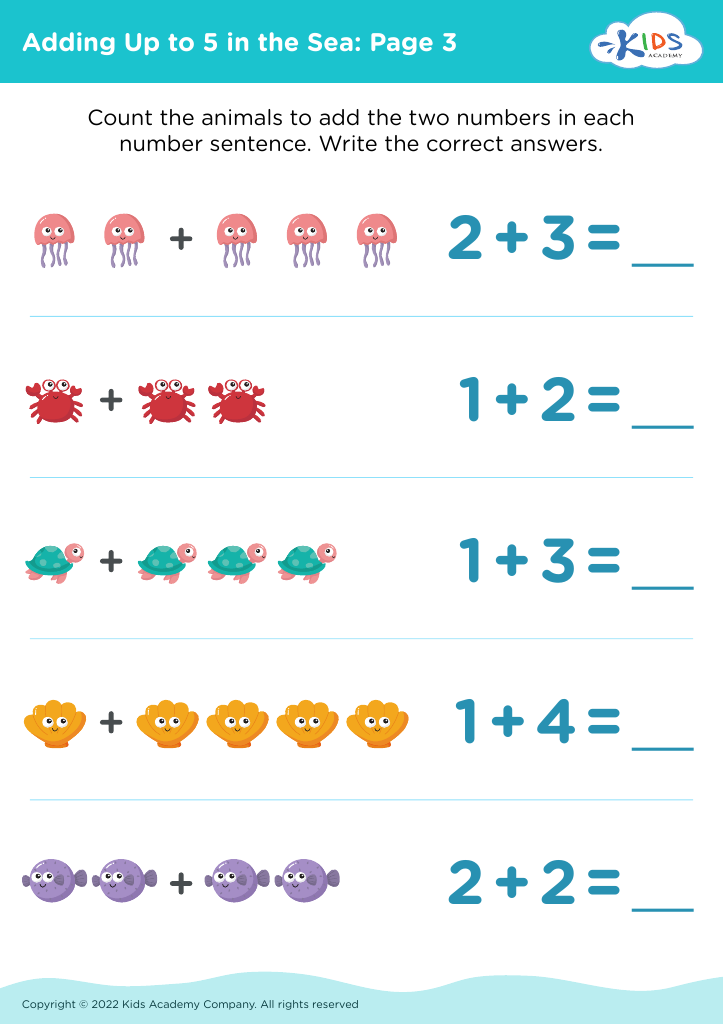
Dive into an ocean of learning with our Underwater Animal Identification Addition Worksheets designed for children aged 4-8! These engaging worksheets seamlessly combine the excitement of ocean life with foundational math skills. Young learners will not only practice addition but also identify various underwater animals, enhancing both math fluency and environmental awareness. With vibrant illustrations and interactive exercises, these worksheets inspire curiosity and make learning fun. Perfect for parents and teachers, our resources foster critical early math skills while deepening knowledge about marine biodiversity. Explore the depths of learning today and watch your child’s confidence soar with every addition problem!



.jpg)




Underwater animal identification activities for children aged 4-8 hold significant educational value, making them essential for both parents and teachers. Firstly, these activities stimulate curiosity about marine life, promoting a love for nature and environmental awareness from an early age. Understanding various underwater species fosters a sense of responsibility toward ocean conservation, encouraging children to respect their habitats.
Furthermore, engaging in identification activities enhances critical thinking and observational skills. Children learn to categorize animals based on characteristics such as color, shape, and habitat, which sharpens their analytical abilities and understanding of biodiversity. This foundational knowledge supports broader scientific learning later on.
Moreover, these activities can be incorporated with fun games and interactive learning methods, making the educational experience engaging and enjoyable. By combining play with learning, children develop social skills, teamwork, and communication as they share findings and participate in group activities.
Additionally, underwater animal identification aligns well with many early-grade curriculum goals, integrating subjects like science, art, and mathematics. This multidisciplinary approach enriches the learning experience, making it relevant and comprehensive. In summary, fostering underwater animal identification in young learners benefits their cognitive development and environmental stewardship.








