Visual interpretation Addition Worksheets for Ages 4-8
5 filtered results
-
From - To
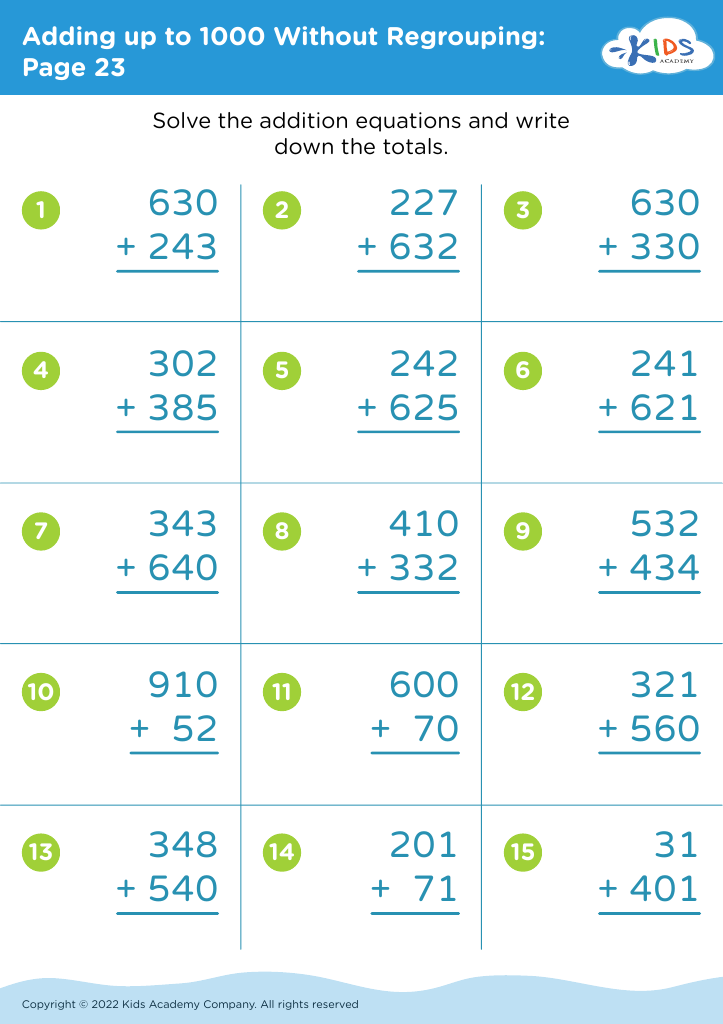
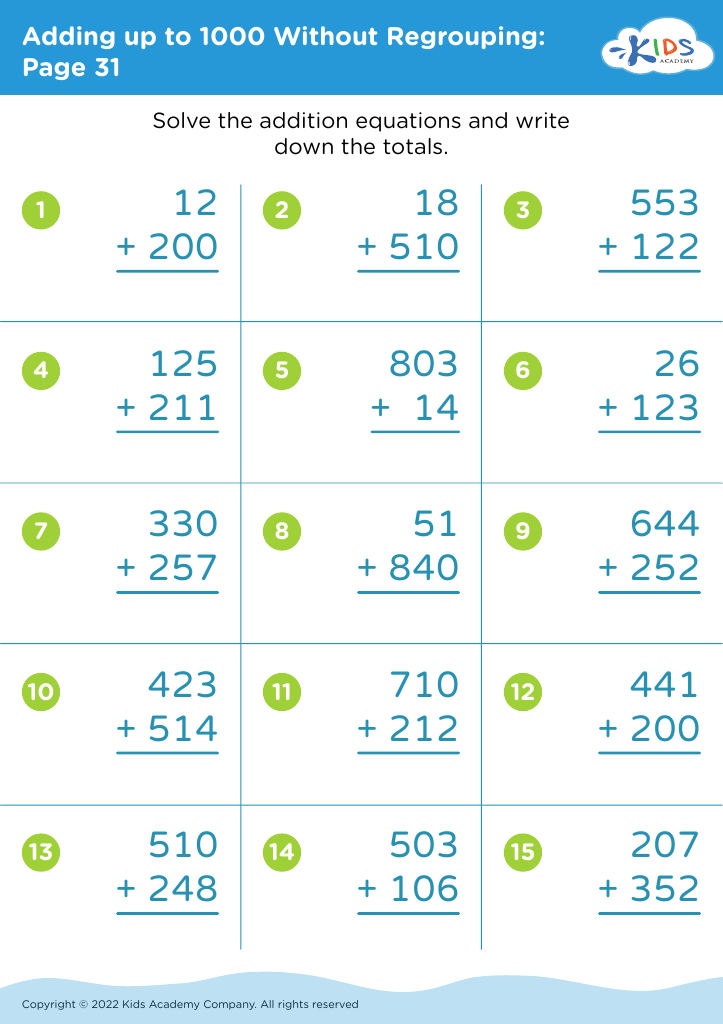
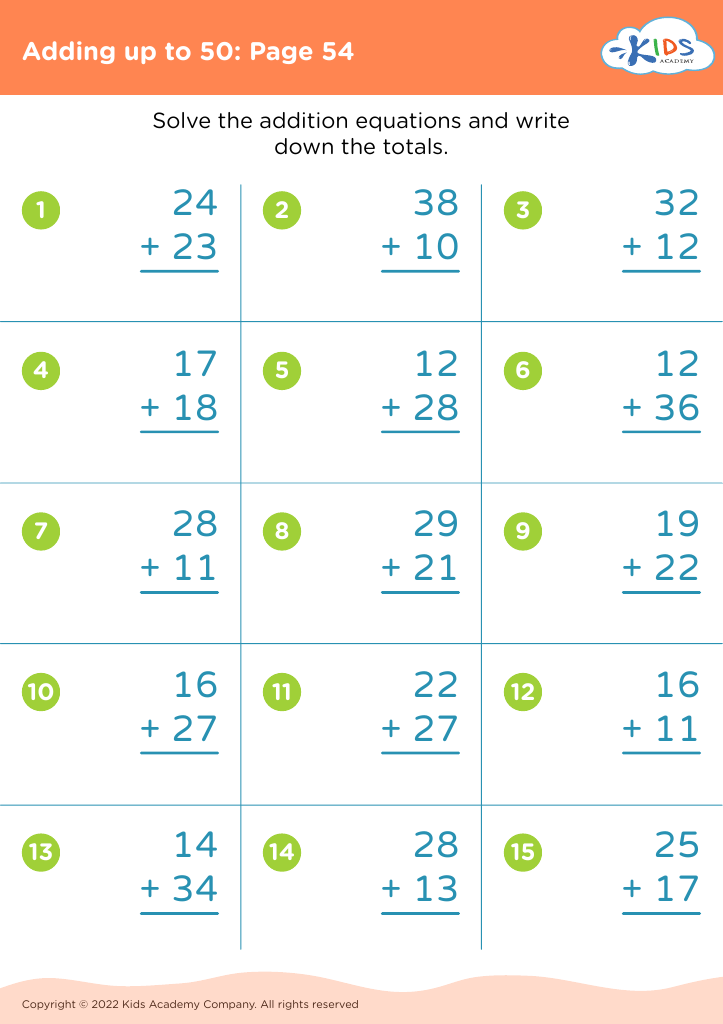
Discover our engaging Visual Interpretation Addition Worksheets designed specifically for children aged 4-8. These worksheets seamlessly combine visual learning methods with foundational math skills, allowing young learners to grasp addition concepts through colorful images and relatable scenarios. With a variety of exercises that encourage problem-solving and critical thinking, students can visualize numbers and quantities, enhancing their understanding of addition in everyday life. Perfect for classroom use or home learning, our worksheets provide educators and parents with valuable resources to foster a love for math while developing essential visual interpretation skills. Explore our collection today and watch confidence in math blossom!
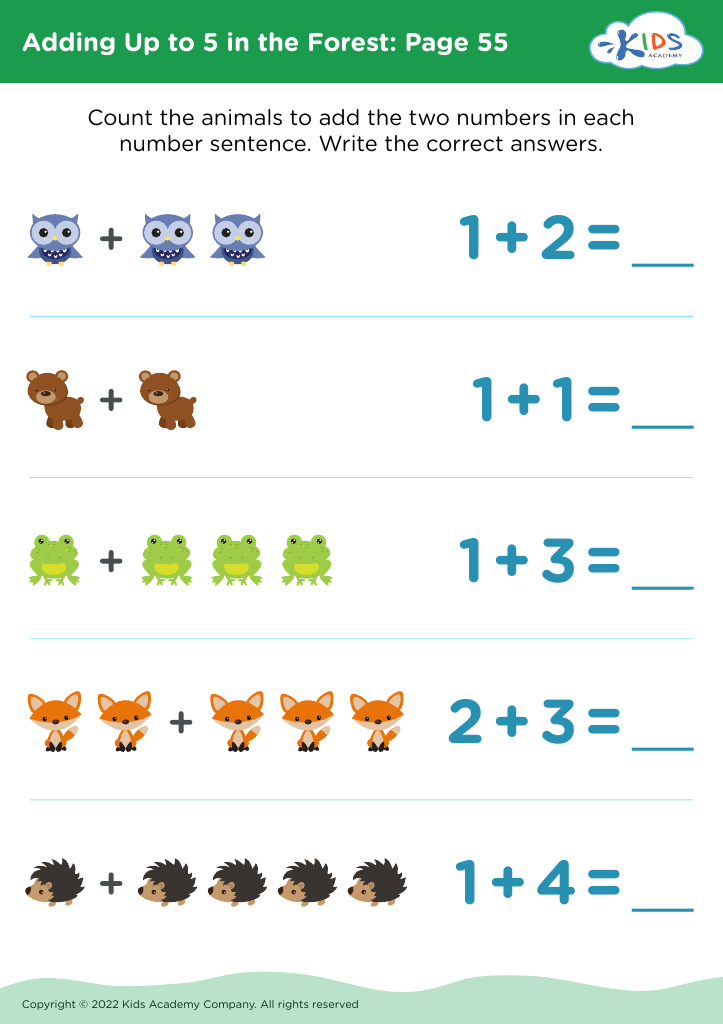
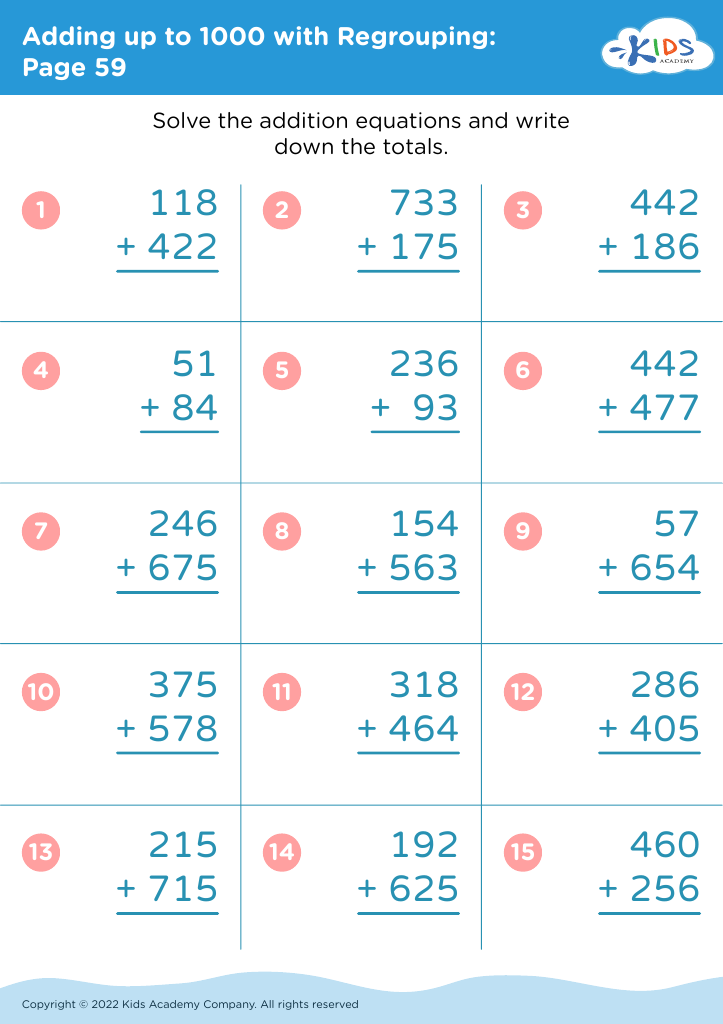








Visual interpretation of addition is a crucial skill for children aged 4-8, particularly because it forms the foundation of mathematical understanding and supports cognitive development. At this age, children are concrete thinkers and benefit from visual aids that make abstract concepts more tangible. Utilizing images, objects, or diagrams helps them understand quantities and relationships between numbers, making addition more accessible and engaging.
Moreover, visual interpretation enhances critical thinking skills. As children manipulate visual elements, they learn to problem-solve and make connections, which stimulates their cognitive development. It reinforces the idea that mathematics is not just about numbers but also about patterns, shapes, and relationships in the world around them.
Parents and teachers play a vital role in cultivating these skills by providing opportunities for exploration and discovery. When children engage with visual aids, they are more inclined to enjoy the learning process while developing positive attitudes toward math. Encouraging visual interpretation in addition also prepares them for more complex mathematical operations in the future. Therefore, by recognizing its importance, parents and teachers can foster a supportive environment that nurtures children's mathematical abilities and overall confidence in learning.








