Visual learning enhancement Addition Worksheets for Ages 4-8
4 filtered results
-
From - To
Explore our engaging Visual Learning Enhancement Addition Worksheets designed for children ages 4-8. These specially crafted worksheets make learning addition fun and interactive, using colorful visuals and relatable themes to boost comprehension and retention. Our resources cater to various learning styles, ensuring that every child can grasp essential math concepts through easy-to-follow illustrations and activities. Ideal for homeschooling or classroom use, these worksheets help develop critical thinking and problem-solving skills while fostering a love for math. Encourage your child’s mathematical journey with our vibrant visual aids, empowering them to master addition with confidence and enthusiasm!
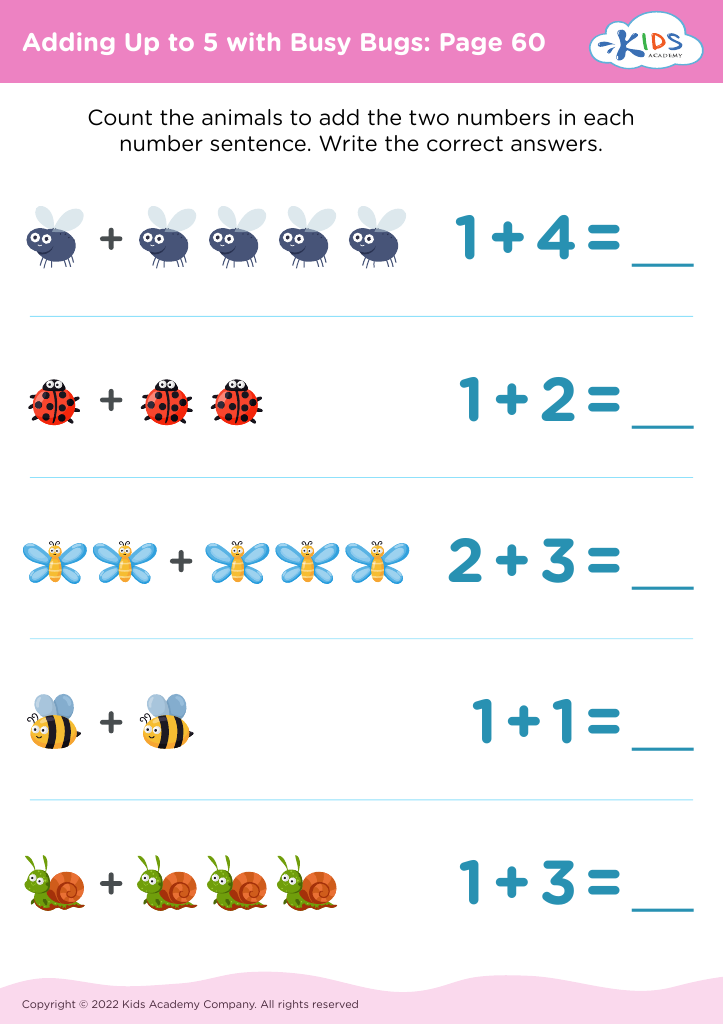
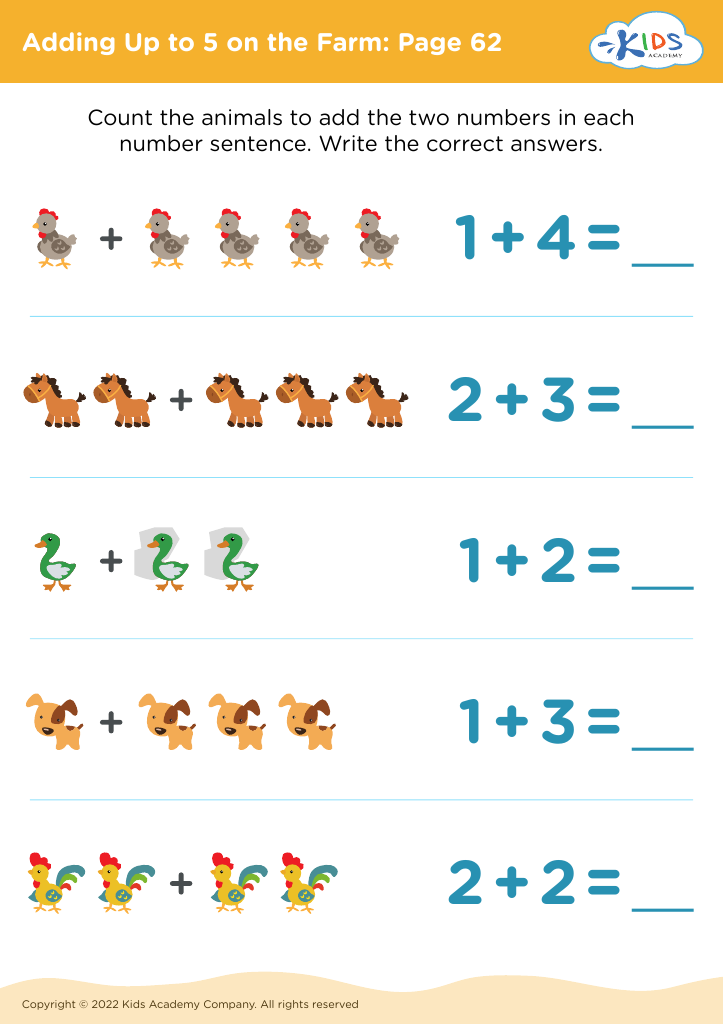
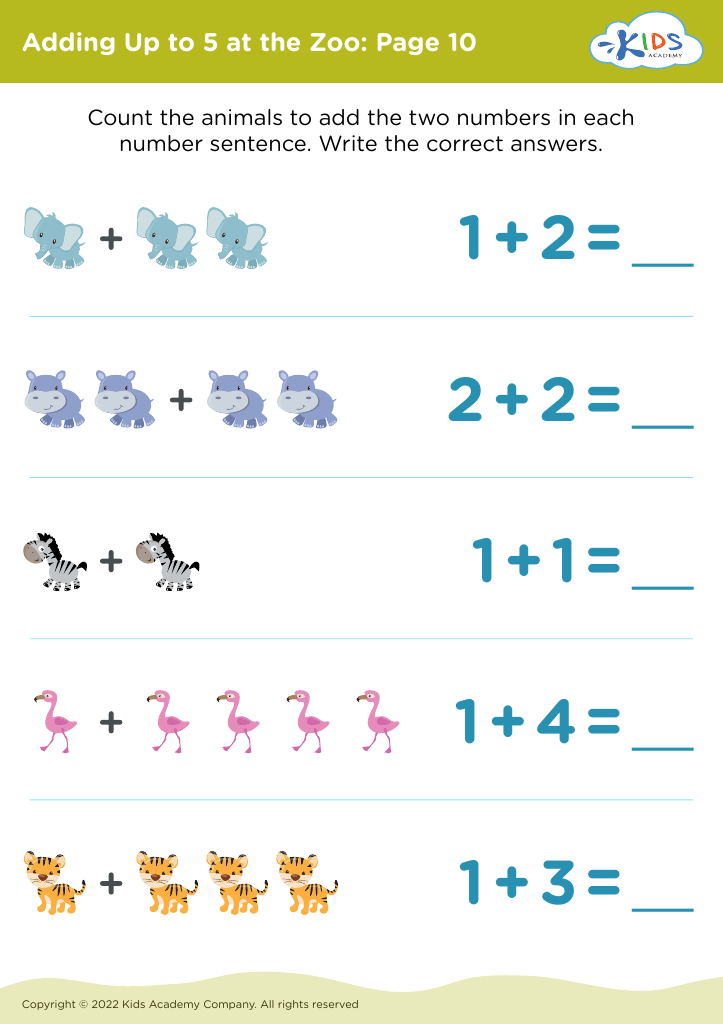
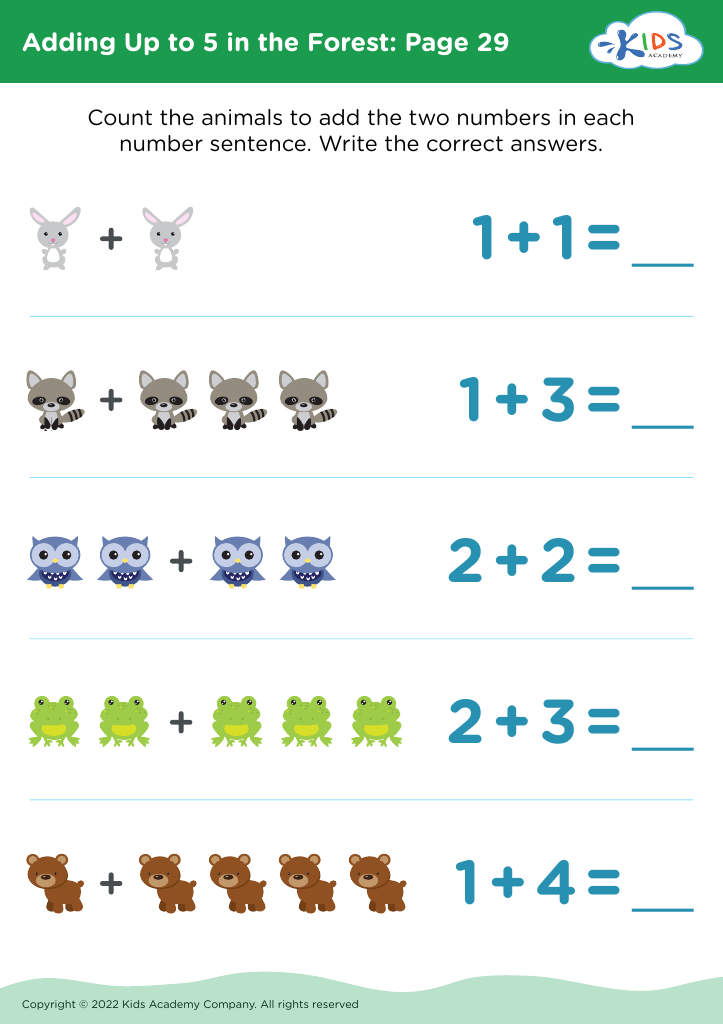








Visual learning enhancement for children ages 4-8 is crucial because it aligns with their natural tendencies to learn through observation and imagery. At this stage, children are often more engaged and retain information better when it is presented visually, as their cognitive development heavily involves exploring their environment and making sense of visual stimuli. With the introduction of addition concepts, employing visual aids—like charts, drawings, or manipulatives—can simplify abstract ideas, making them concrete and relatable.
Moreover, visual learning not only aids in basic mathematics but fosters critical thinking and problem-solving skills. As children manipulate objects to understand addition, they develop spatial awareness and improve fine motor skills. This approach also enhances memory retention, as visual associations are often more memorable than abstract numbers or equations.
Parents and teachers should be actively involved in integrating visual learning strategies to build a solid mathematical foundation. Engaging students visually makes learning more enjoyable, building their confidence and enthusiasm for math. Ultimately, promoting visual learning in early education can lead to a higher level of academic achievement and a lifelong love for learning, setting children on the path toward future success in various subjects beyond math.








