Visual representation comprehension Addition Worksheets for Ages 4-8
5 filtered results
-
From - To
Explore our engaging Visual Representation Comprehension Addition Worksheets designed specifically for children ages 4-8. These worksheets utilize vibrant visuals and illustrations to help young learners grasp basic addition concepts effectively. By connecting numbers with pictures, children can enhance their understanding of addition in a fun and interactive way. Our resources promote critical thinking and problem-solving skills, ensuring that kids learn through creativity and imagination. Perfect for at-home learning or classroom use, these worksheets provide a foundational math skillset that prepares children for future challenges. Start your child’s math journey with our captivating visual worksheets today!
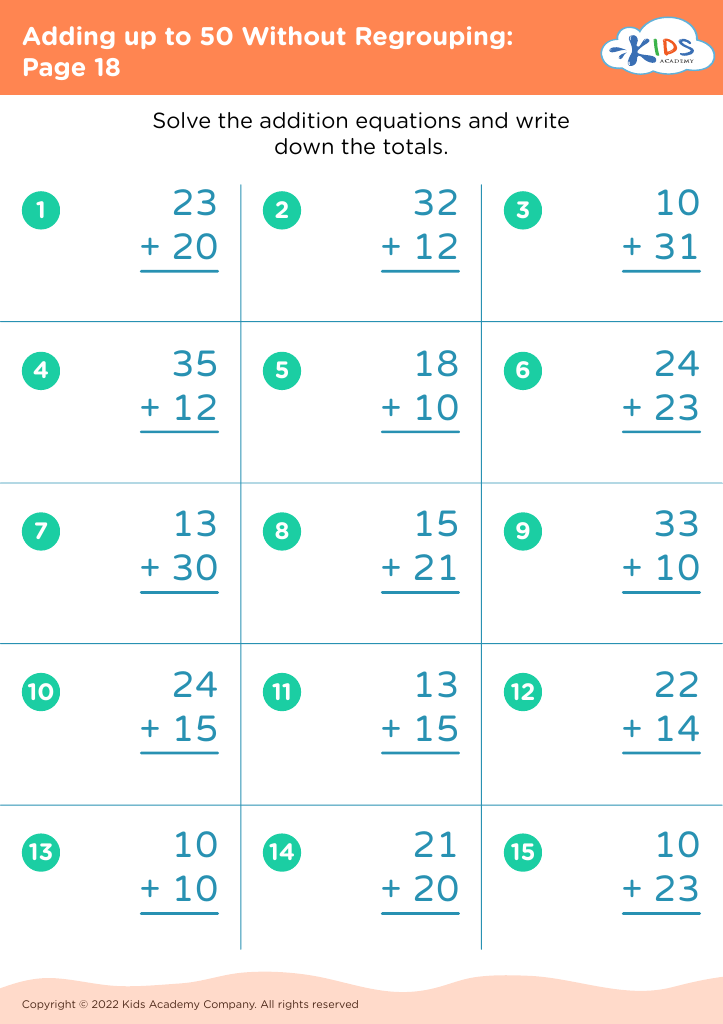
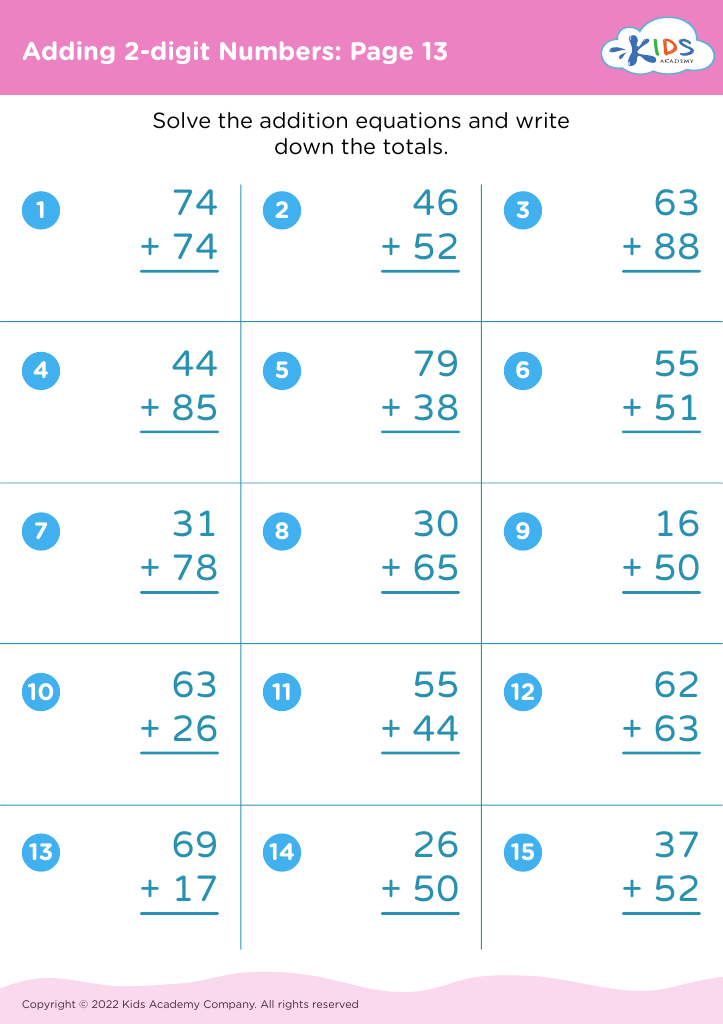
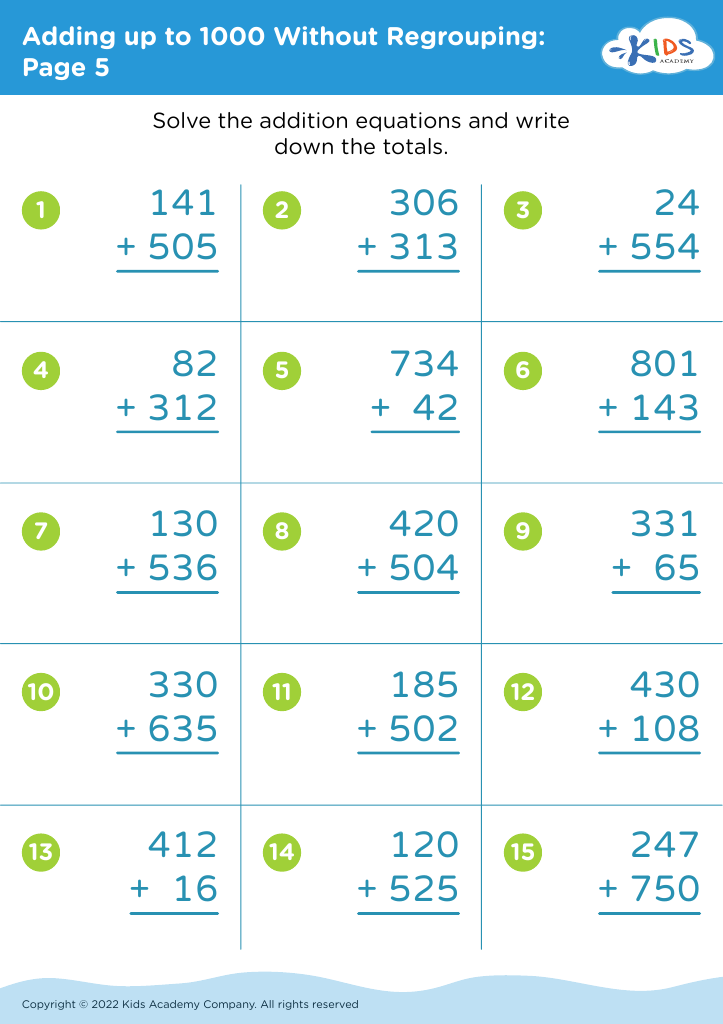
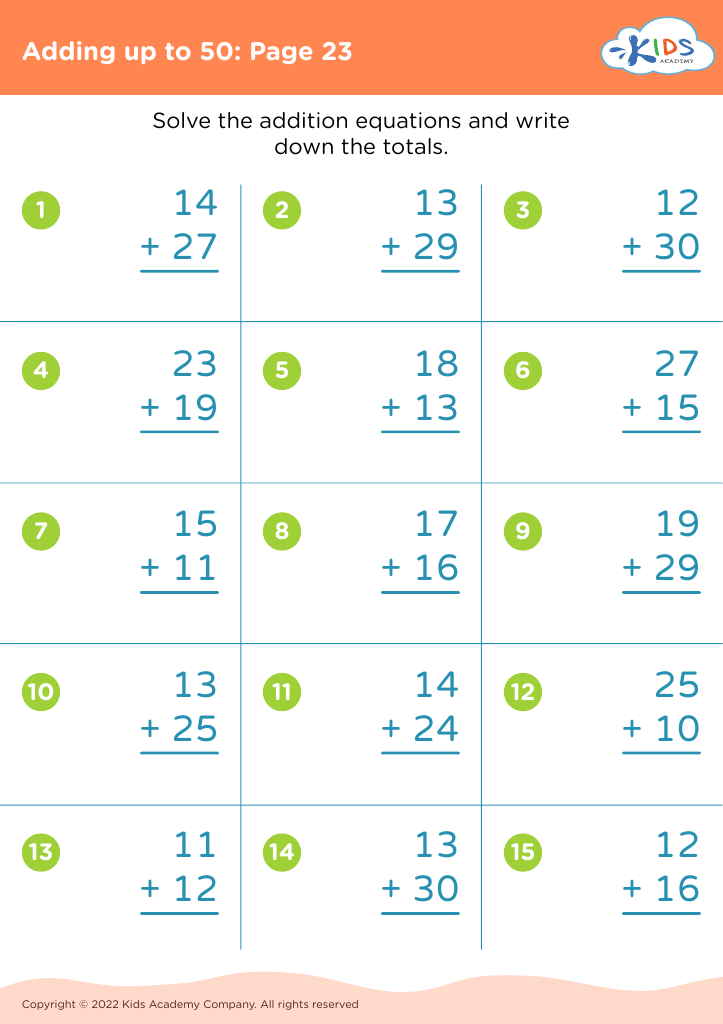
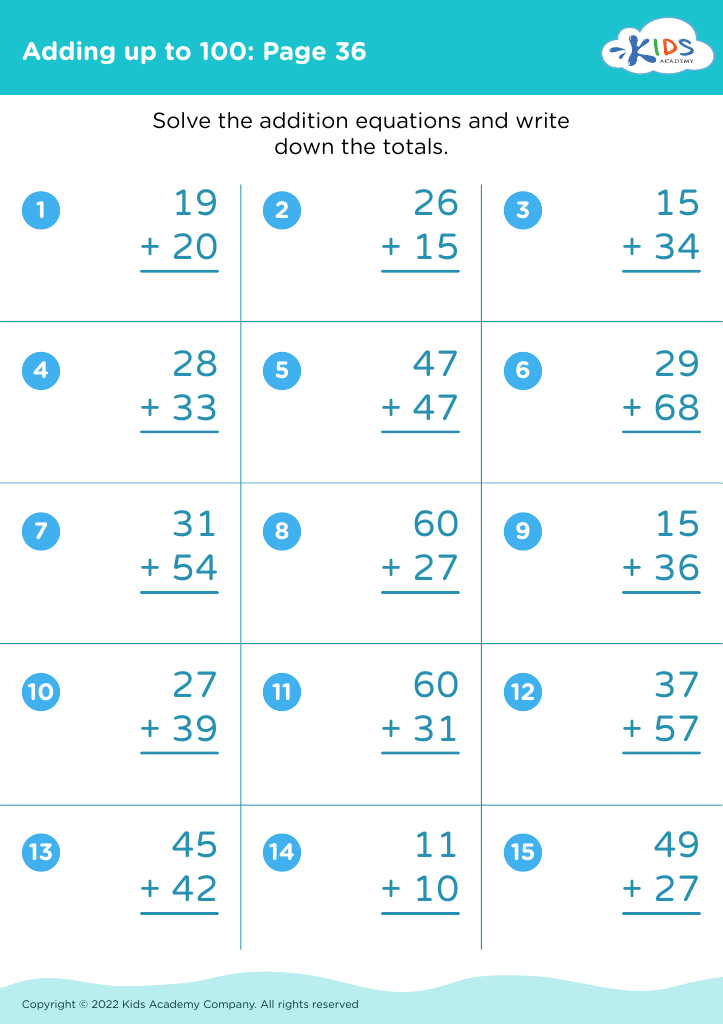








Visual representation comprehension in addition is crucial for children aged 4-8 as it lays the foundational skills necessary for mathematical understanding and problem-solving. At this stage, children are developing their cognitive abilities, and incorporating visual aids, such as number lines, manipulatives, and drawings, helps make abstract concepts more tangible and comprehensible.
When parents or teachers focus on visual representation in addition, they support multiple learning styles, particularly for young learners who may struggle with traditional arithmetic methods. Visual aids can simplify complex ideas, making it easier for children to grasp addition as combining quantities and understanding relationships between numbers.
Furthermore, enhancing visual comprehension fosters critical thinking and reasoning skills. Children learn to visualize problems and interpret data, which can benefit them in various subjects beyond math. By engaging with visual representations, they develop confidence and a positive attitude towards learning, transforming math into a fun and interactive experience.
Importantly, early mastery of visual comprehension in addition helps prevent future difficulties in math, encouraging continued academic success. Therefore, investing time and resources in teaching these skills is essential for parents and teachers who aim to equip children with a strong mathematical foundation.








