Historical Knowledge Arrays Worksheets for Ages 4-8
4 filtered results
-
From - To
Discover the engaging Historical Knowledge Arrays Worksheets designed specifically for children aged 4-8! These interactive resources blend essential math skills with captivating historical themes, offering young learners a fun way to understand arrays while exploring famous historical events and figures. With vibrant illustrations and age-appropriate challenges, these worksheets help develop critical thinking and foundational math abilities, making learning an enjoyable experience. Perfect for parents, teachers, and homeschoolers, our collection not only fosters numerical fluency but also cultivates a love for history. Dive into enriching activities that empower children to connect mathematical concepts with the fascinating stories of our past!
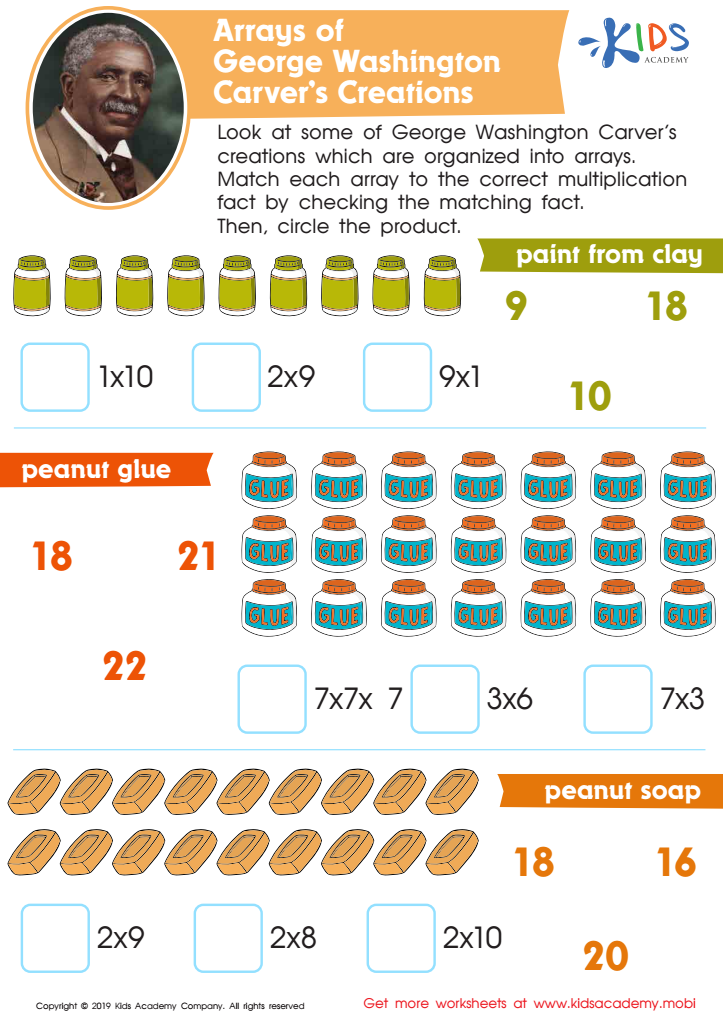
Arrays of George Washington Carver’s Creations Worksheet
 Assign to My Students
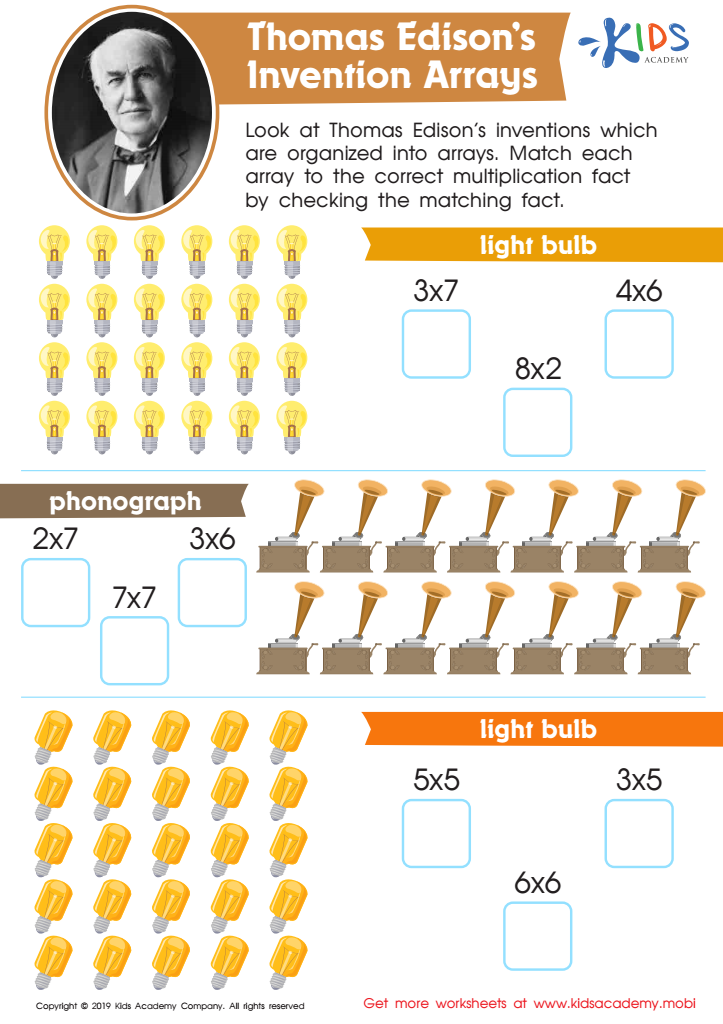
Thomas Edison’s Invention Arrays Worksheet
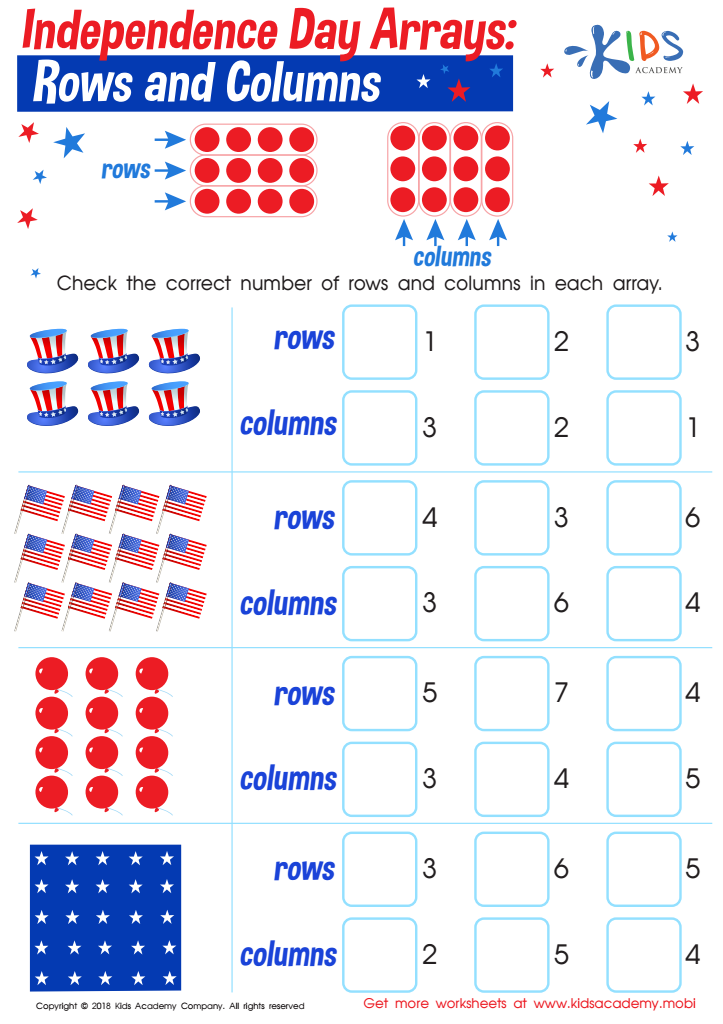
Independence Day Arrays: Rows and Columns Worksheet
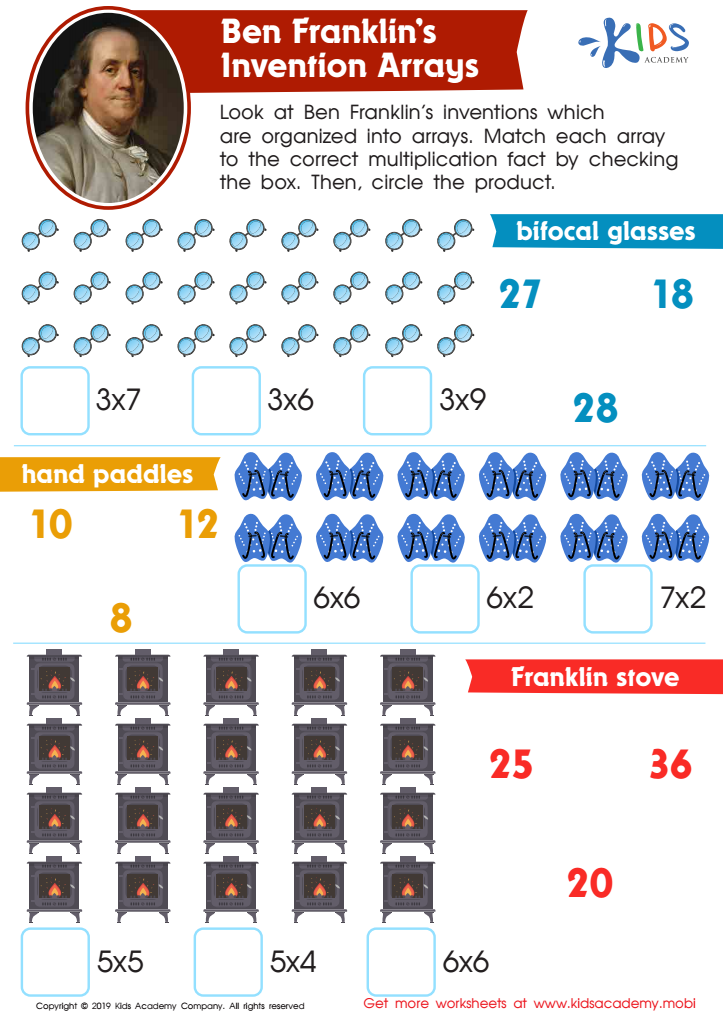
Ben Franklin’s Invention Arrays Worksheet








Historical Knowledge Arrays are essential tools for teaching young learners, ages 4-8, about history in an engaging and comprehensible manner. At this developmental stage, children are naturally curious and eager to explore the world around them. By introducing historical concepts through relatable frameworks, these arrays help foster a sense of time, place, and context in young minds.
Understanding historical knowledge aids children in developing critical thinking and analytical skills. It encourages them to ask questions about causality and perspective, paving the way for deeper learning in later years. Furthermore, history teaches empathy and respect for diverse cultures and experiences, which are vital components of social development.
For parents and teachers, incorporating Historical Knowledge Arrays can create an enriching learning environment that piques children's interests and connects them to their own heritage and legacy. It helps them recognize the relevance of historical events to their lives today. Engaging with history not only complements core subjects like science and language arts but also cultivates informed, empathetic citizens in the future. By prioritizing historical knowledge, parents and educators equip children with the tools to understand their world and its narratives better, fostering a lifelong love of learning.








