Problem-Solving Skills Arrays Worksheets for Ages 4-8
4 filtered results
-
From - To
Unlock your child's mathematical potential with our Problem-Solving Skills Arrays Worksheets for ages 4-8! Designed to make learning fun and engaging, these worksheets introduce young learners to the basics of arrays and multiplication. Through visual and hands-on activities, kids develop critical problem-solving skills, enhance their understanding of patterns, and build a strong mathematical foundation. Perfect for early learners, these worksheets are ideal for both classroom use and homeschooling. Boost your child's confidence and help them excel in math with Kids Academy's expertly crafted, age-appropriate resources. Start your child’s journey to mastering arrays today!
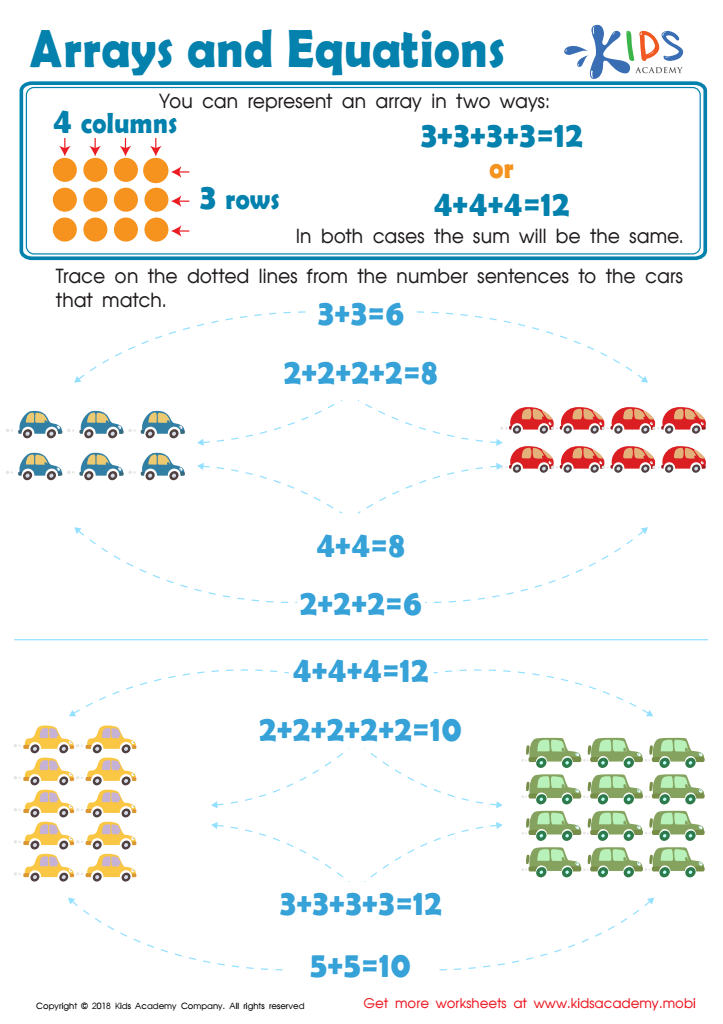
Arrays and Equations Worksheet
 Assign to My Students
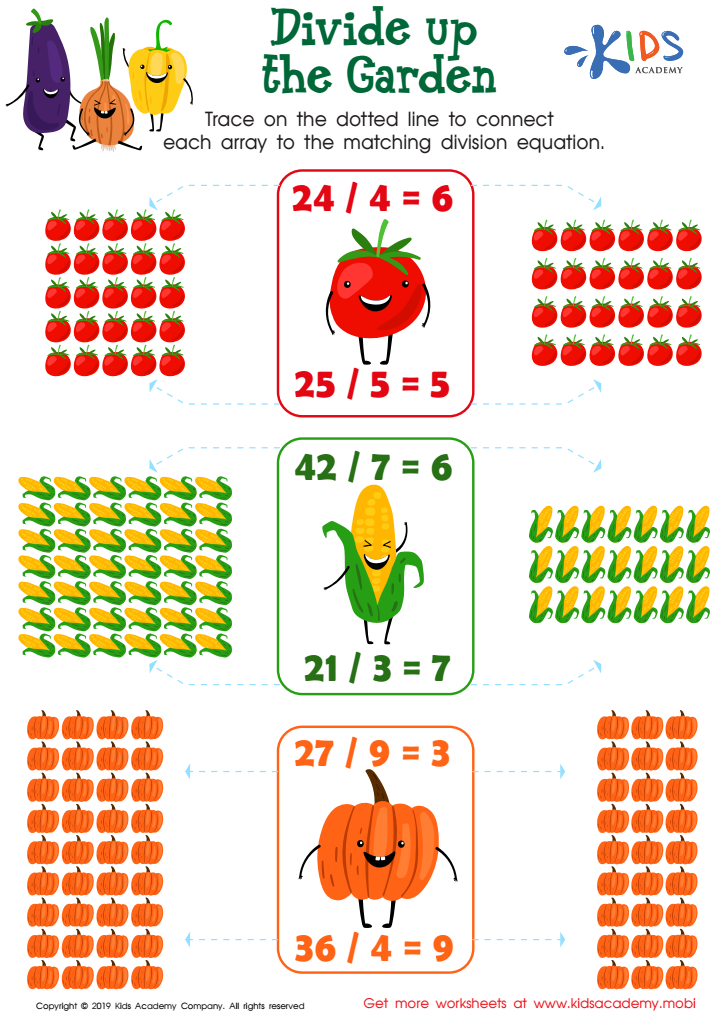
Divide up the Garden Worksheet
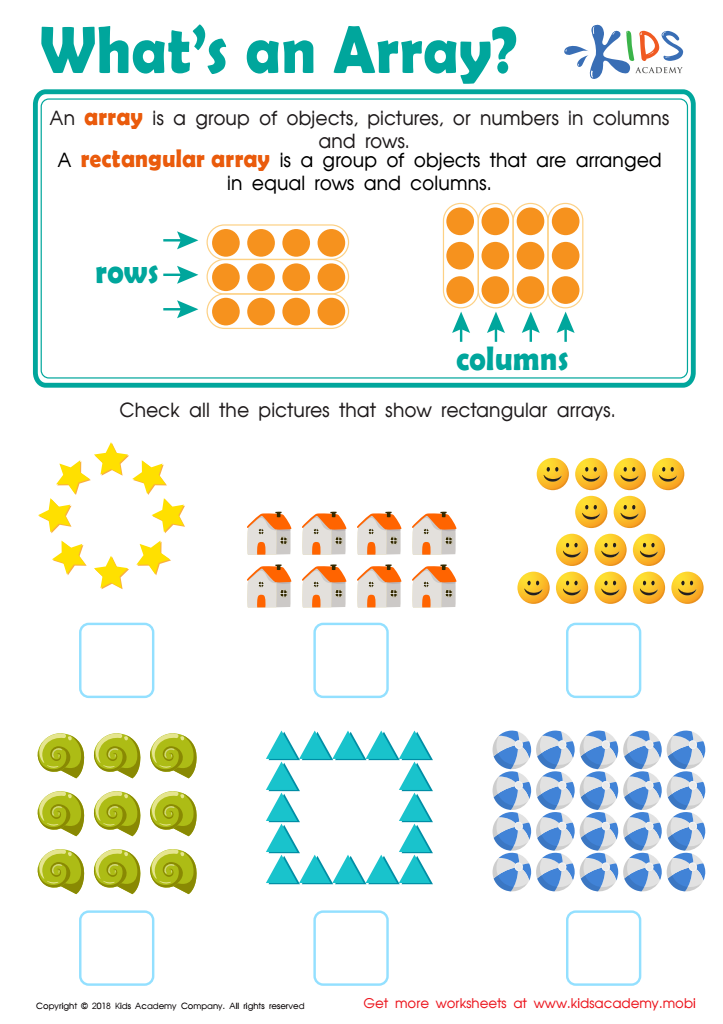
What's an Array? Worksheet
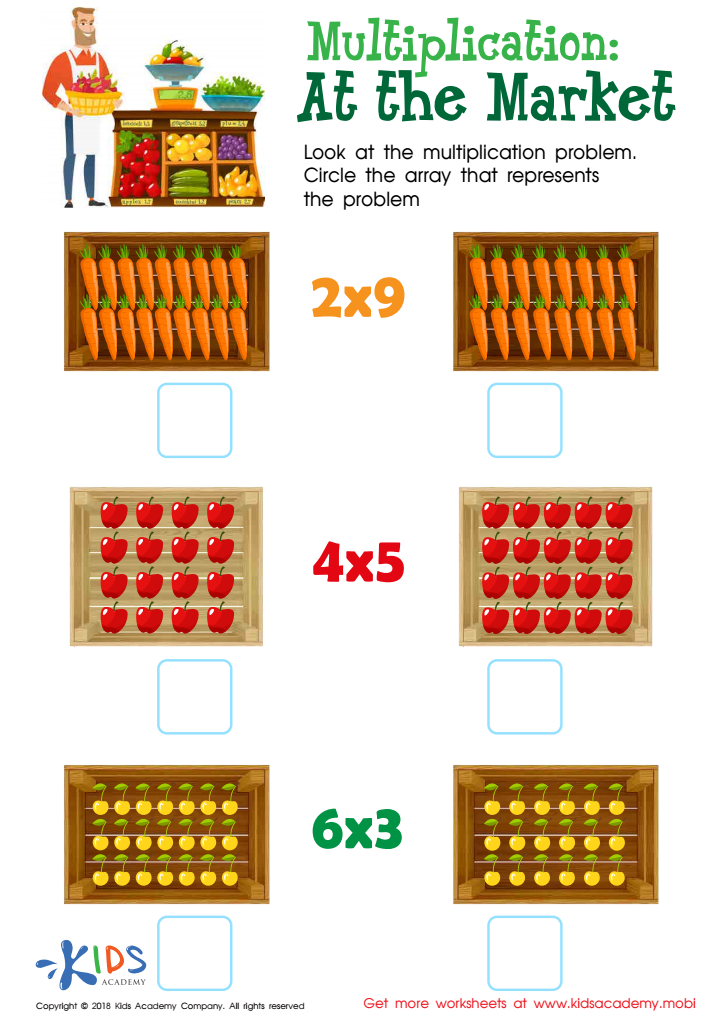
At the Market Worksheet








Problem-solving skills are crucial for young children as they provide a foundation for critical thinking, independence, and confidence. Parents and teachers should prioritize cultivating these abilities in children aged 4-8 for several key reasons.
Firstly, problem-solving helps children learn to navigate challenges and setbacks with resilience and creativity. When kids encounter various problems, whether in the form of puzzles, social interactions, or everyday tasks, they develop cognitive flexibility by exploring different solutions and learning from mistakes. This adaptability is essential for their academic and personal growth.
Secondly, strong problem-solving skills foster independence. Children who can identify problems, analyze situations, and devise solutions are better equipped to manage their own activities and responsibilities. This reduces their reliance on adults for constant guidance, promoting self-sufficiency and a sense of achievement.
Lastly, effective problem-solving integrates multiple areas of learning including math, science, literacy, and social skills. It encourages critical thinking and application rather than rote learning. Children learn to question, hypothesize, experiment, and reflect, which enhances their overall understanding of concepts taught in school.
In essence, nurturing problem-solving skills in early childhood prepares children for future challenges, promoting lifelong learning and competence in various life aspects. This early investment reaps substantial long-term benefits for their emotional, social, and intellectual development.








