Reading comprehension Arrays Worksheets for Ages 4-8
5 filtered results
-
From - To
Discover our engaging Reading Comprehension Arrays Worksheets designed specifically for children aged 4-8! These worksheets seamlessly combine essential reading skills with fun activities that focus on understanding arrays in a visual and interactive way. Kids will enhance their comprehension abilities as they explore colorful graphics, relatable scenarios, and practical examples tailored to their reading level. Perfect for home schooling or classroom settings, our resources encourage critical thinking and spark a love for learning. Help your young learners develop their reading proficiency and mathematical reasoning all in one place! Dive into our collection today for a delightful educational experience.
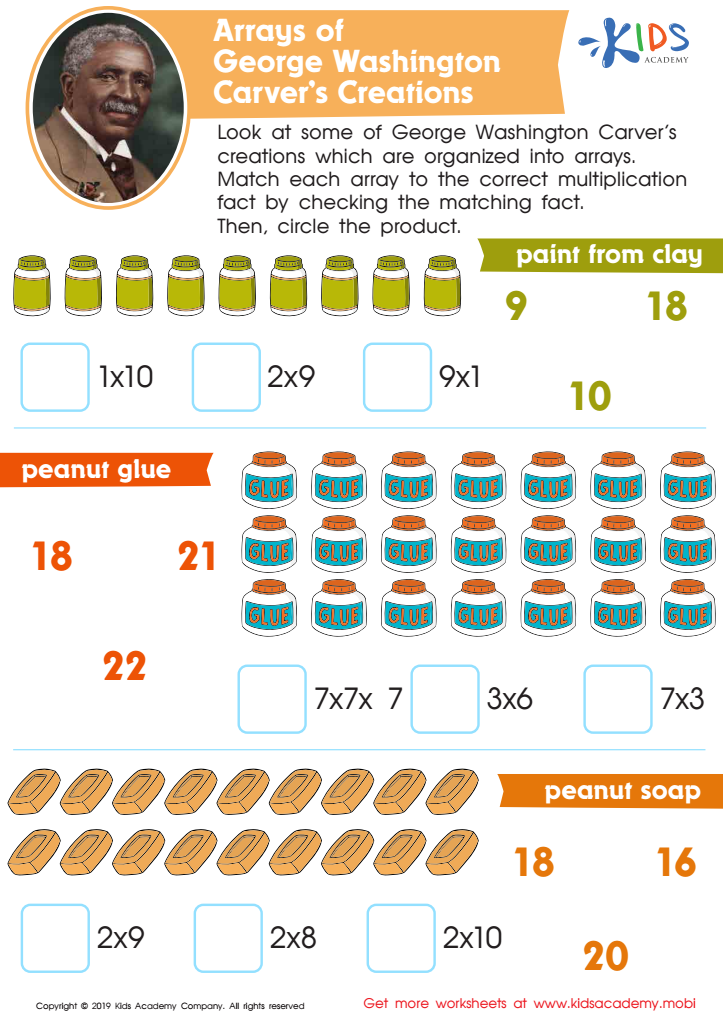
Arrays of George Washington Carver’s Creations Worksheet
 Assign to My Students
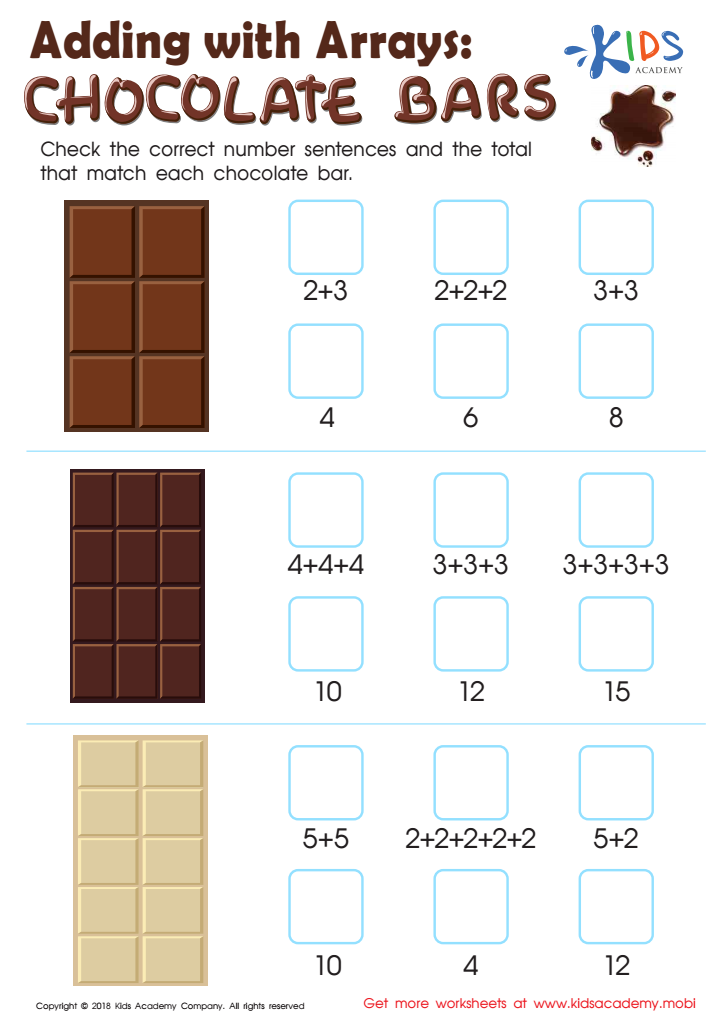
Adding with Arrays: Chocolate Bars Worksheet
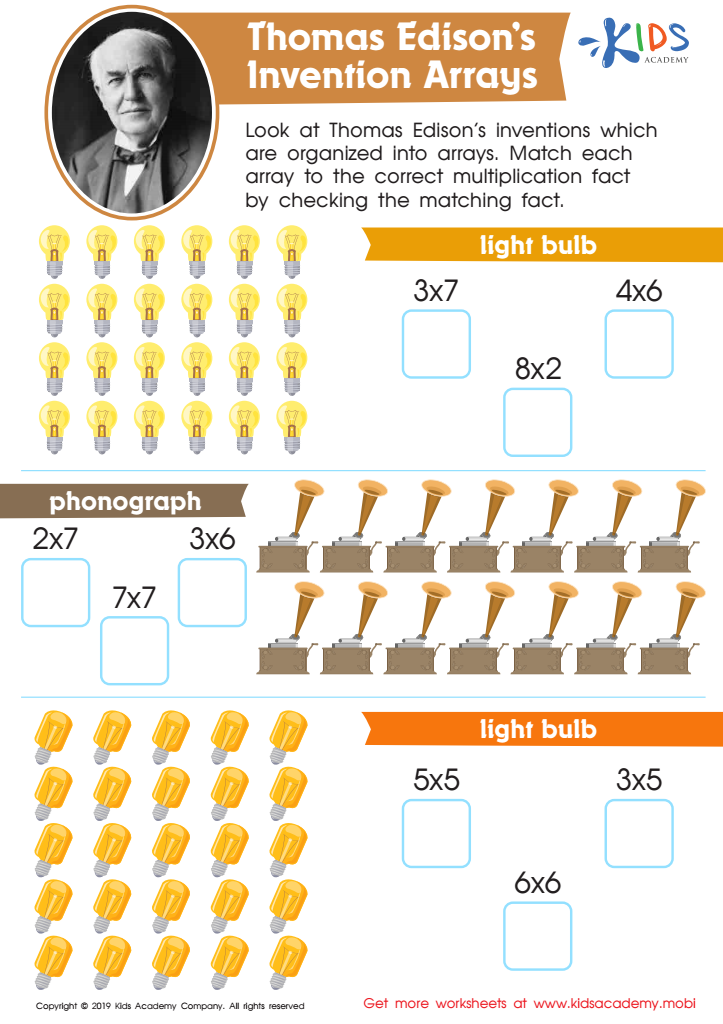
Thomas Edison’s Invention Arrays Worksheet
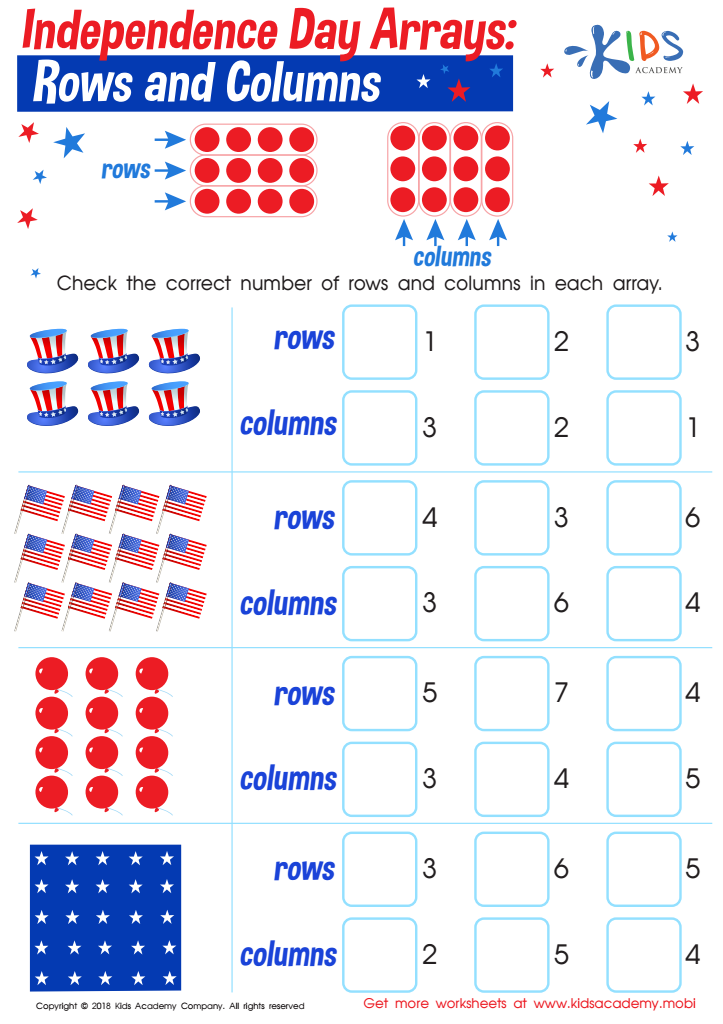
Independence Day Arrays: Rows and Columns Worksheet
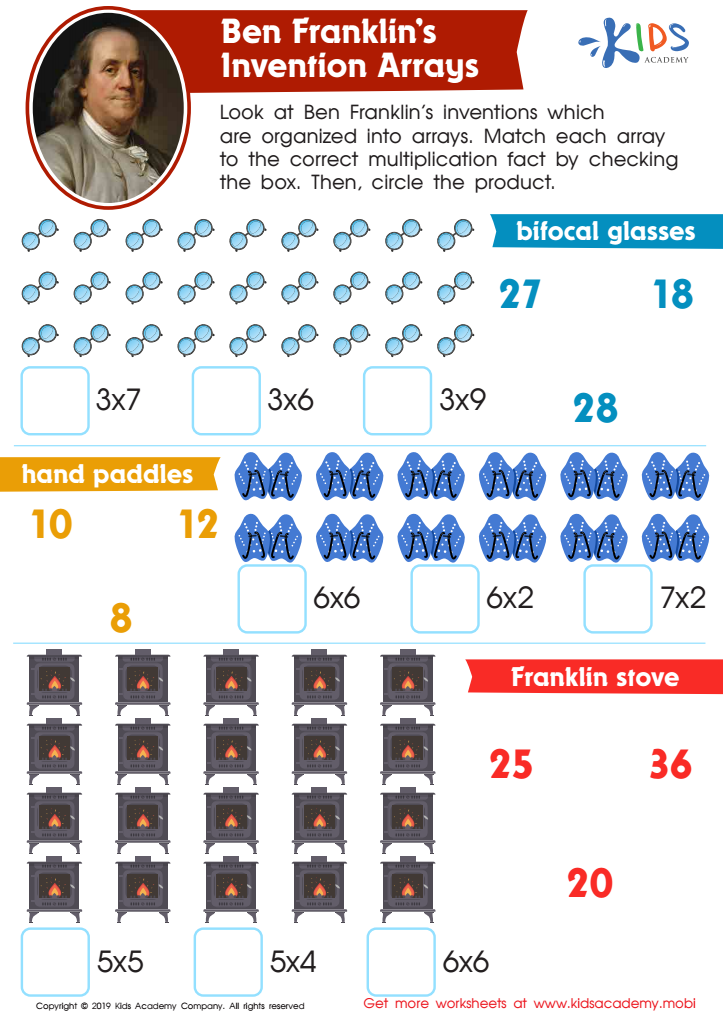
Ben Franklin’s Invention Arrays Worksheet







Reading comprehension arrays are vital tools for enhancing the literacy skills of children aged 4-8. These arrays—visual organizers that map out key elements of a story—help young learners develop a deeper understanding of texts. For parents and teachers, promoting reading comprehension is critical; it not only fosters a love for reading but also enhances cognitive skills necessary for academic success.
Understanding narratives improves vocabulary, encourages critical thinking, and aids in making connections between texts and the world around them. Comprehension arrays guide children in identifying main ideas, details, characters, and settings, making reading a more interactive and engaging experience. As children visualize these elements, they become active participants in their learning.
Moreover, strong reading comprehension lays the foundation for future academic achievement across subjects. Parents should incorporate these strategies at home, collaborating with teachers to reinforce skills taught in the classroom. By prioritizing reading comprehension, both parents and educators can instill confidence in children, helping them express their thoughts and ideas effectively. Early investment in these literacy building blocks will not only prepare children for higher learning but also equip them with essential life skills like empathy and analytical thinking that extend beyond academics.








