Understanding patterns Basic Times Tables up to 12 Worksheets for Ages 4-8
3 filtered results
-
From - To
Unlock your child's mathematical potential with our "Understanding Patterns Basic Times Tables up to 12" worksheets, designed for ages 4-8. These engaging resources make learning foundational math concepts exciting and accessible! Through fun activities and engaging visuals, children will discover the patterns that form the backbone of multiplication, building confidence and fostering a love for math. Perfect for home or classroom use, these worksheets provide a structured yet playful approach to mastering times tables. Help your young learners develop essential skills while enjoying the process—setting them up for future success in mathematics. Explore our worksheets today and watch your child thrive!
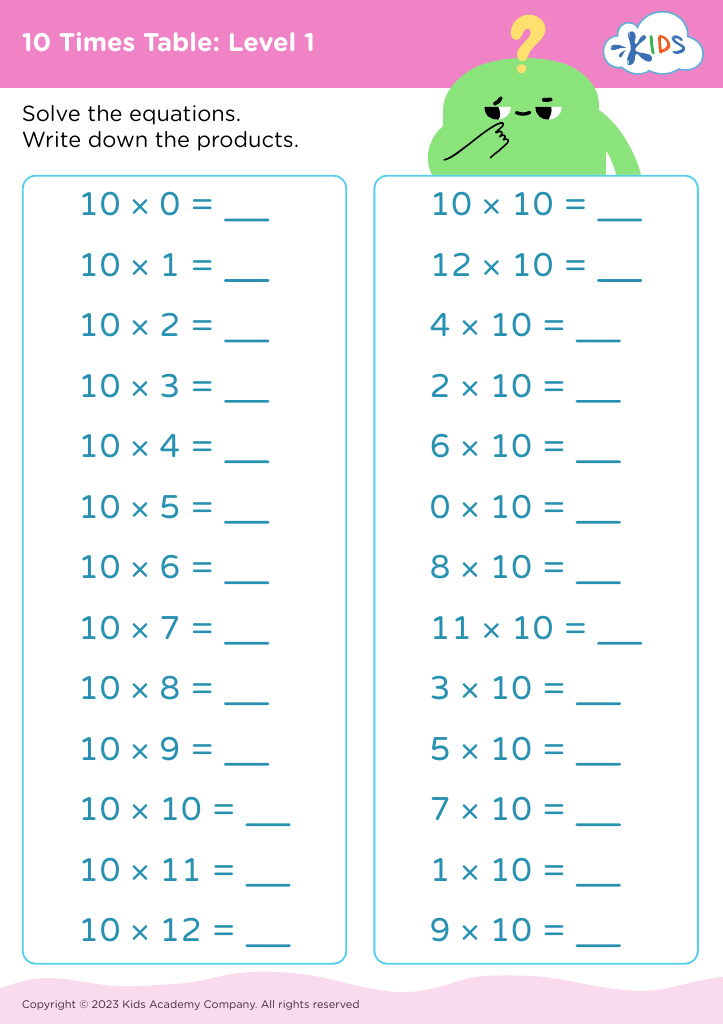
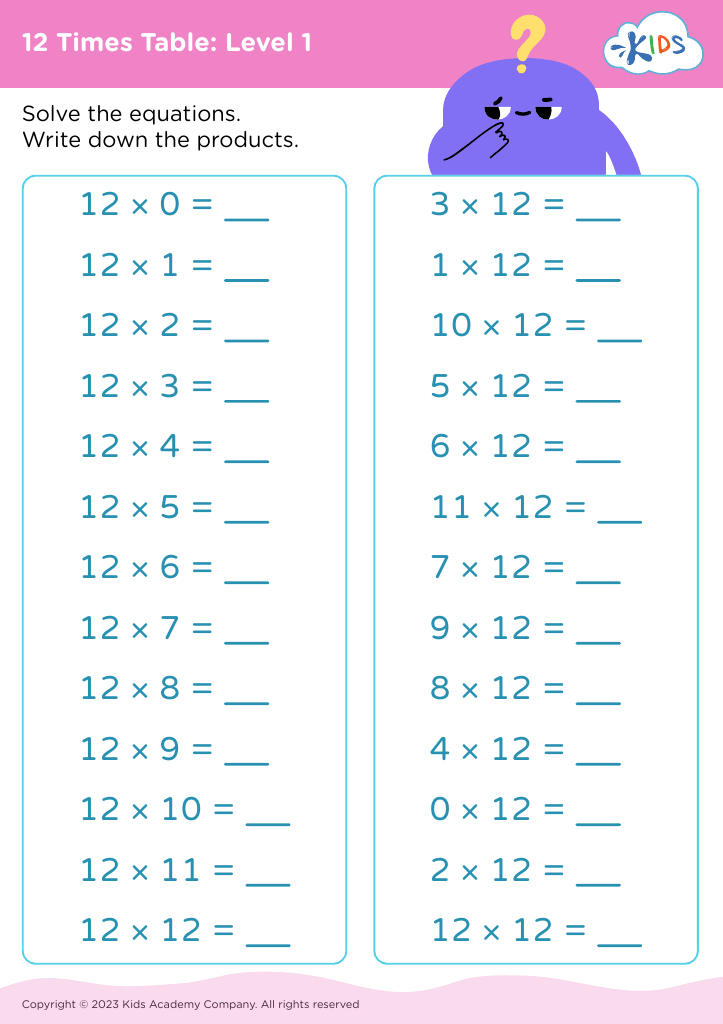
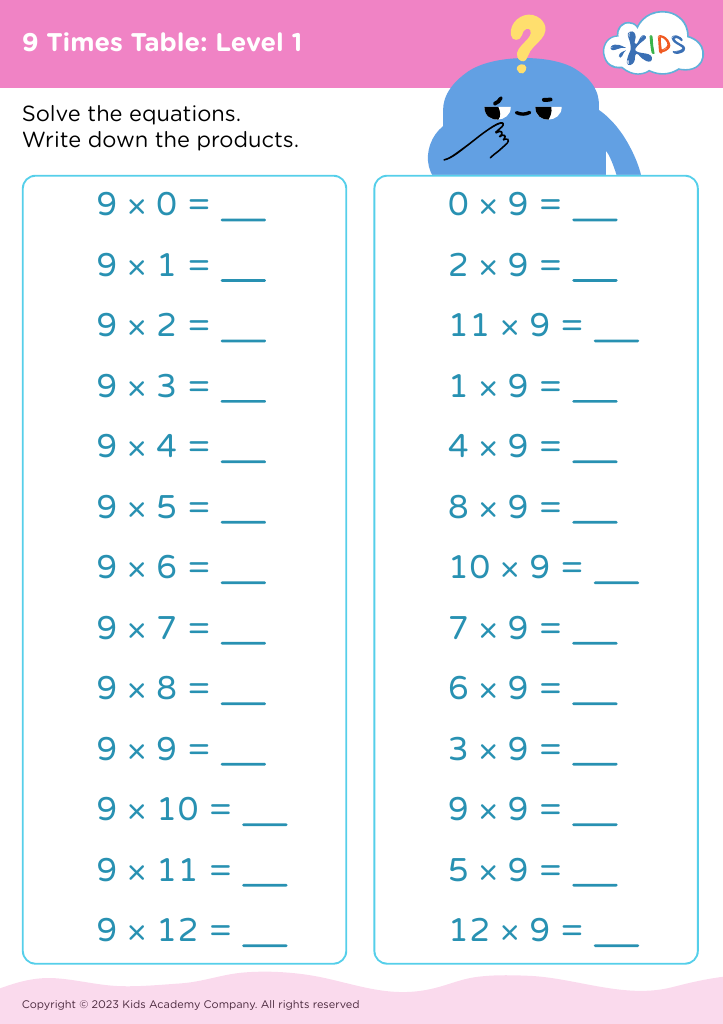


Understanding patterns and mastering basic times tables up to 12 is crucial for children aged 4-8 for several reasons. First, it lays a solid foundation for mathematical proficiency. Times tables are the building blocks for more complex arithmetic concepts, such as multiplication and division, which they will encounter in higher grades. Recognizing the inherent patterns in these tables, like the repeated addition concept, helps children grasp the concept of multiplication more intuitively.
Moreover, developing pattern recognition skills enhances critical thinking and cognitive development. Kids begin to see relationships between numbers and can use this skill across various subjects. For instance, patterns play a significant role in science, music, and art, fostering a well-rounded intellectual growth.
Additionally, confidence in mathematics significantly affects a child's overall enthusiasm for learning. Mastering multiplication can reduce math anxiety and promote a positive attitude towards future math-related tasks. Lastly, engaging with times tables can provide a fun bonding experience between parents and children, making learning enjoyable. For all these reasons, it is vital for both parents and teachers to prioritize understanding patterns in basic times tables, ensuring a strong mathematical foundation that supports lifelong learning.








