Money recognition Money Worksheets for Ages 4-8
5 filtered results
-
From - To
Discover fun and educational Money Recognition Worksheets designed for children ages 4-8! These engaging activities help young learners grasp the basics of currency by identifying and counting coins and bills. Perfect for early grade students, each worksheet reinforces math skills and real-life money handling through interactive exercises. Developed by educational experts, our resources enhance your child's confidence and financial literacy essentials. Ideal for home or classroom use, our printable money worksheets make learning enjoyable and effective. Set your child on a path to financial savvy with Kids Academy’s Money Recognition Worksheets. Visit us for a brighter learning journey!
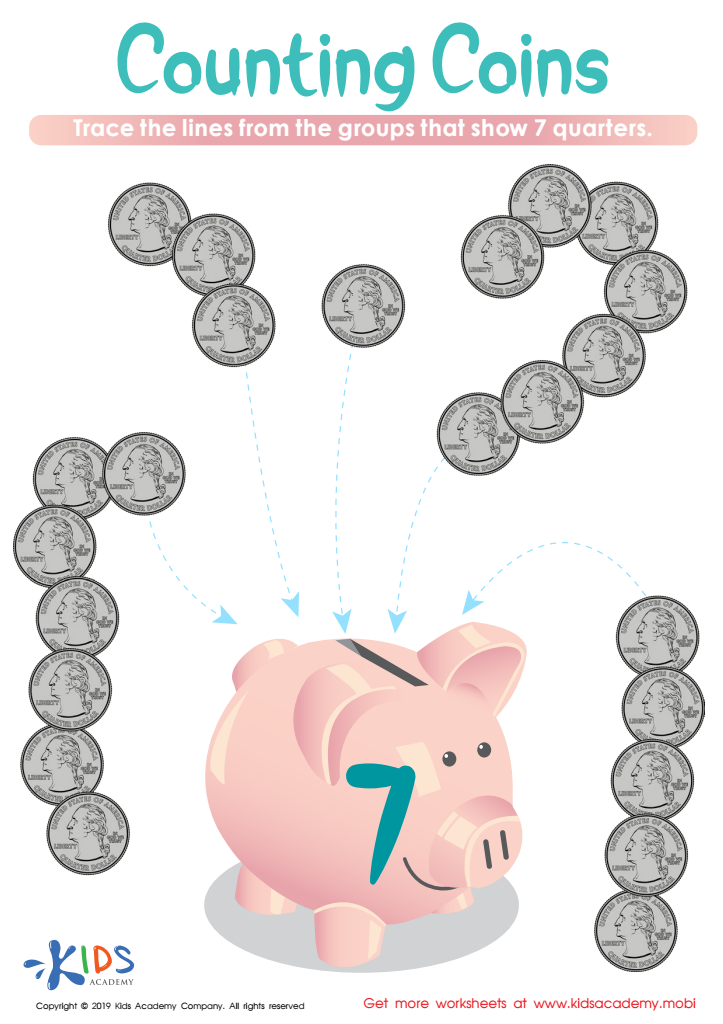
Counting Coins Worksheet
 Assign to My Students
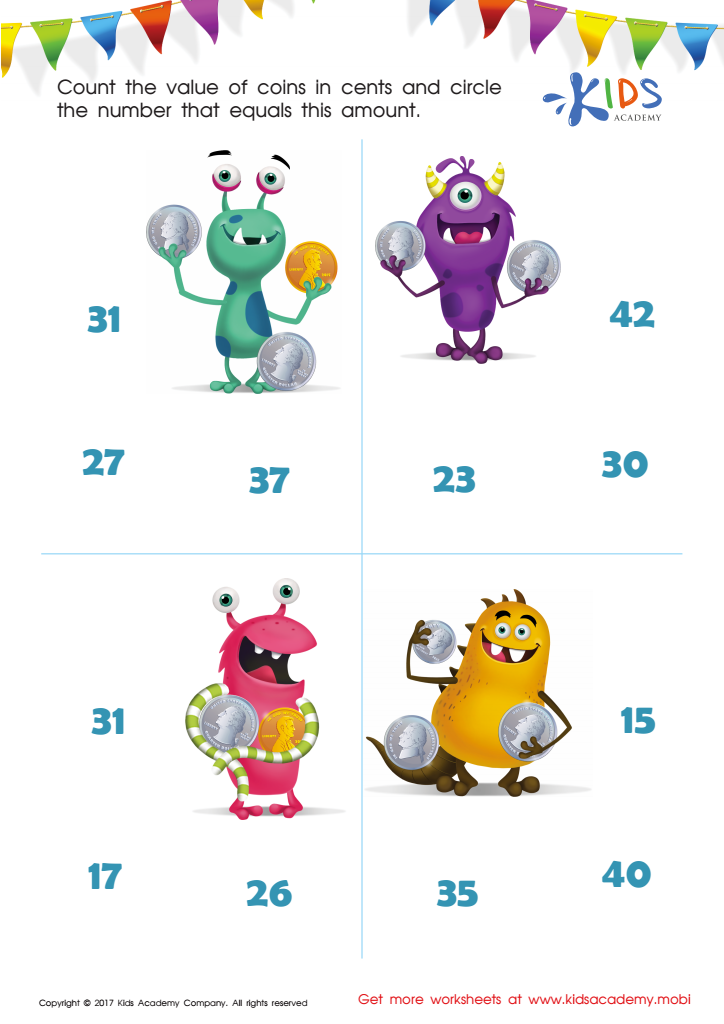
How Many Coins Money Worksheet
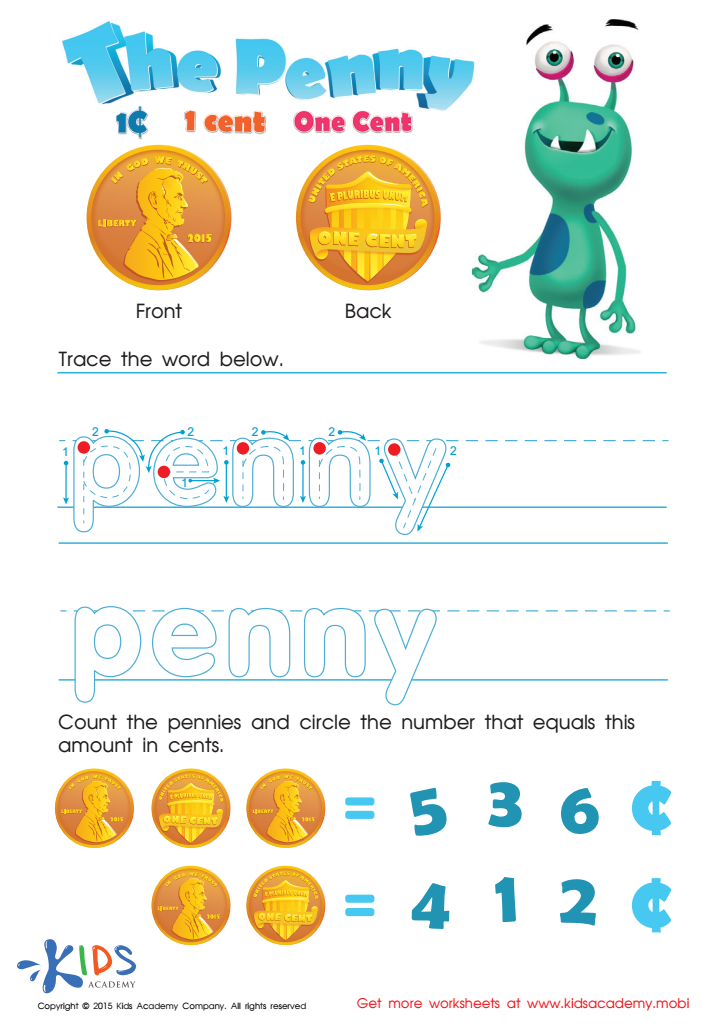
One Cent or the Penny Money Worksheet
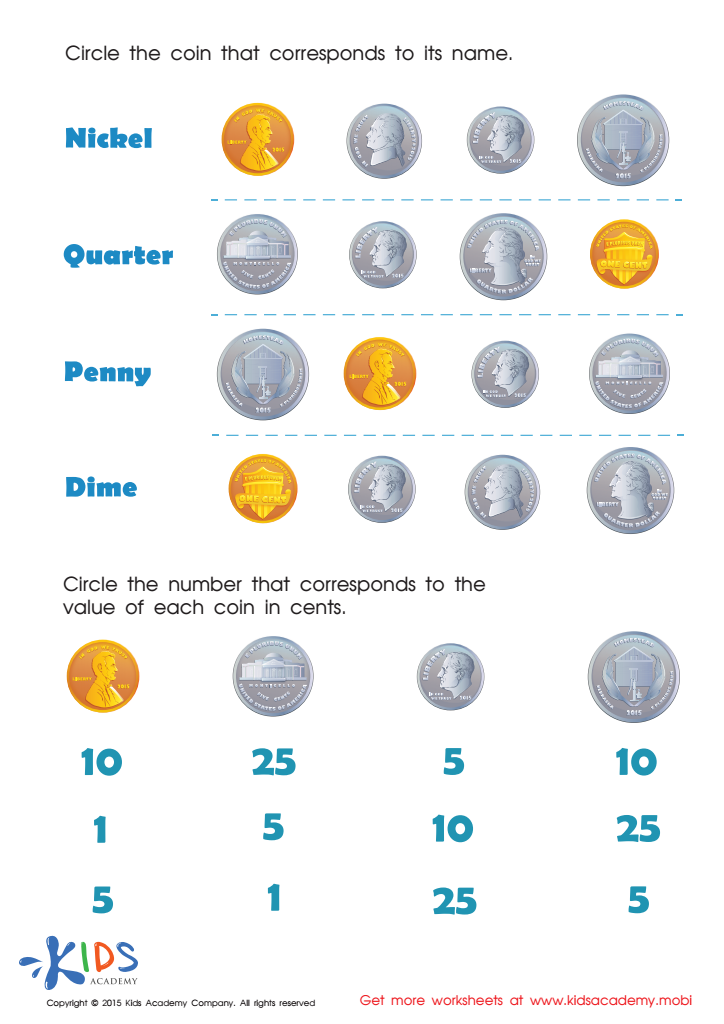
Coin Names and Values Money Worksheet
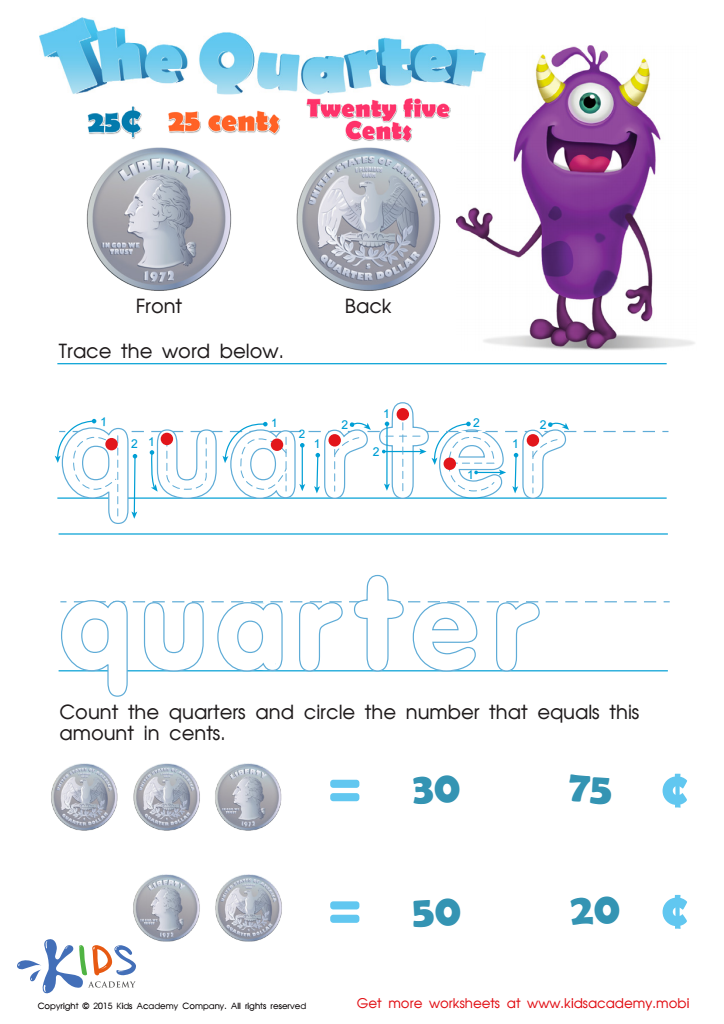
Twenty Five Cents or the Quarter Money Worksheet








Teaching money recognition to children aged 4-8 is essential for several reasons. Firstly, early financial literacy builds a foundation for future money management skills. Young children learn basic concepts such as identifying different coins and their values, which eventually help them understand more complex ideas like saving, budgeting, and spending wisely.
Secondly, recognizing money promotes mathematics skills. Introducing coins and bills helps young learners practice counting, addition, and subtraction in a tangible way. For example, adding pennies or nickels provides concrete, hands-on experience with numbers and arithmetic.
Additionally, understanding money fosters independence and responsibility. When children grasp the value of money, they can make informed choices—such as deciding how to spend allowance or gift money—which teaches them the consequences of financial decisions.
Moreover, early money recognition enhances social skills. Activities like playing store or trading coins include aspects of negotiation, cooperation, and communication.
Finally, learning about money at a young age demystifies economic concepts that children will encounter throughout their lives. Parents and teachers who place emphasis on this skill set their students up for long-term success, encouraging a sense of confidence and prepared, literate adults in managing their personal finances.








