Filters

7 filtered results

Clear all filters
Favorites
With answer key
Interactive

7 filtered results

Difficulty Level

Grade


Enhance your child's arithmetic and spatial skills with our Counting Practice Geometry Worksheets designed for ages 4-8! These engaging worksheets combine essential counting exercises with geometric concepts, making learning fun and interactive. Young learners will explore shapes, recognize patterns, and develop numeracy skills through various activities that promote critical thinking and problem-solving abilities. With colorful visuals and age-appropriate challenges, our worksheets encourage creativity while reinforcing key math concepts. Ideal for classroom use or at-home practice, these worksheets provide a valuable resource for parents and educators aiming to support early math development in a playful and productive way. Get started today!

Check out this FREE Trial Lesson on Geometry for age 4-8!

Counting Faces 3D

Favorites
With answer key
Interactive
  • 4-8
  • Counting practice
  • Geometry
Let's Count Faces! Worksheet

Let's Count Faces! Worksheet

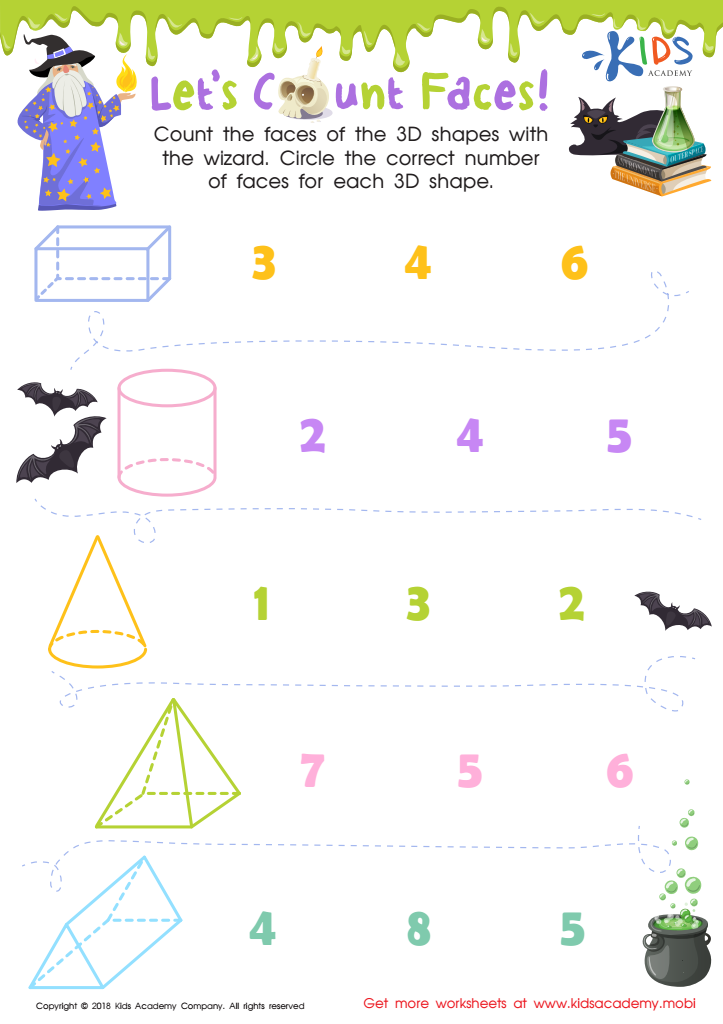
Help the wizard count the faces of 3D shapes! Ask your kids to identify the shapes before beginning, then have them circle the correct number of faces. Enjoy this fun wizard-themed worksheet with your kids!
Let's Count Faces! Worksheet

Worksheet
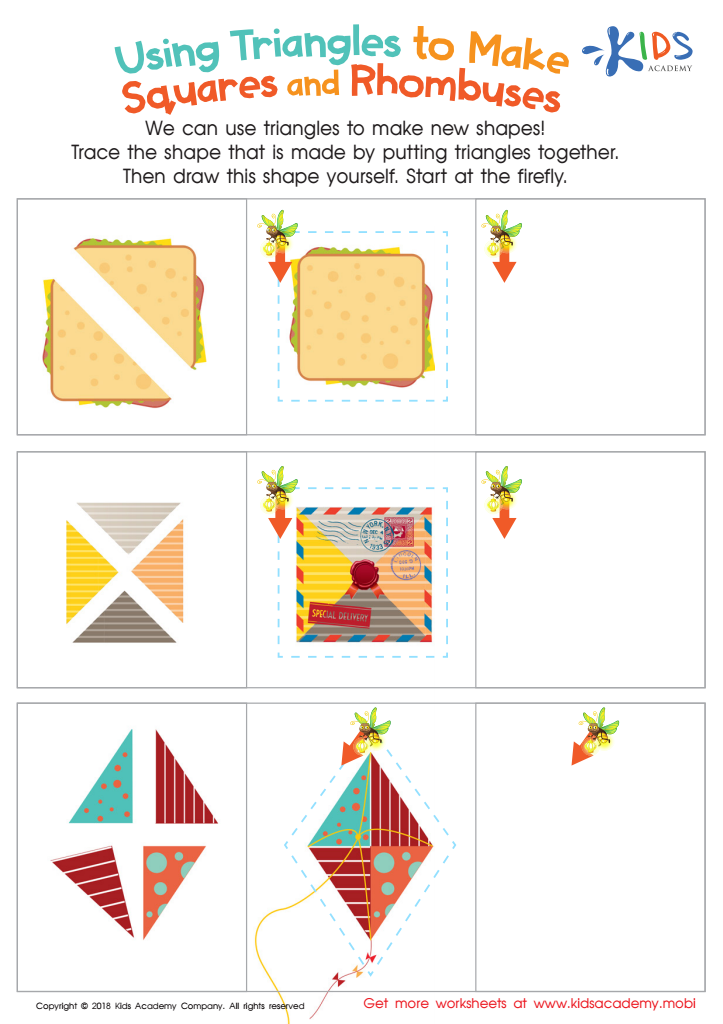
Using Triangles to Make Squares and Rhombuses Worksheet

Using Triangles to Make Squares and Rhombuses Worksheet

Learning shapes is a fun way to boost spatial skills and critical thinking. This worksheet shows children how to use triangles to construct squares and rhombuses. Clear illustrations and a printout help children draw the new shape. A great activity for the math classroom! 80 words.
Using Triangles to Make Squares and Rhombuses Worksheet
Worksheet
Robot Fun Worksheet
Robot Fun Worksheet

Robot Fun Worksheet

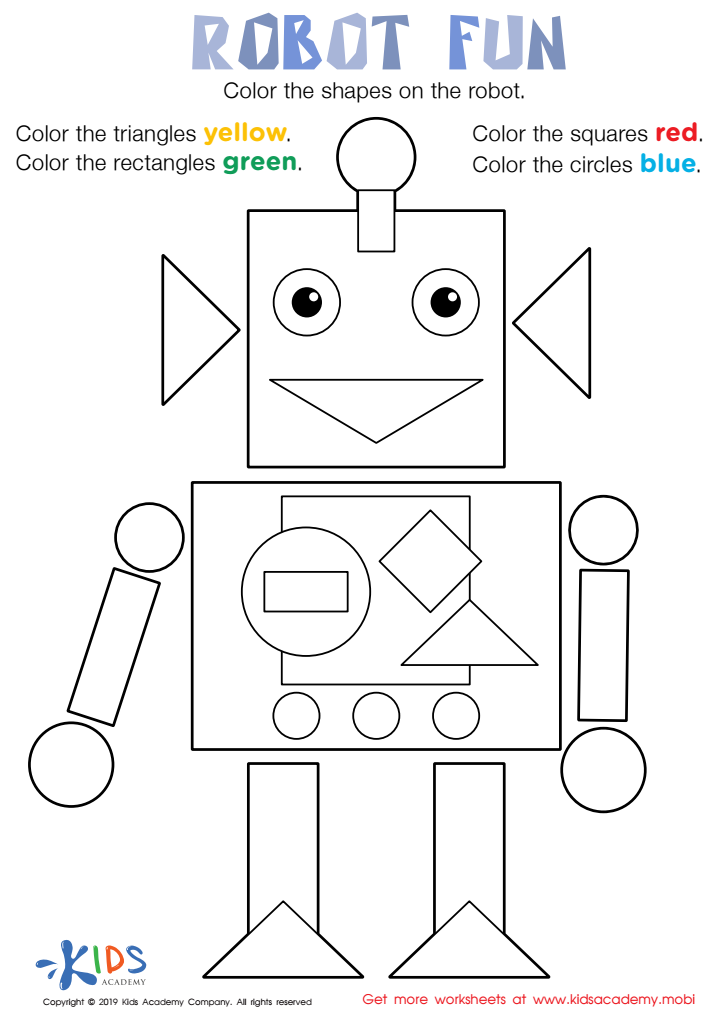
Help your child learn about basic shapes with this fun robot worksheet! Kids practice identifying circles, squares, rectangles and triangles, then color each shape according to directions. Make math practice enjoyable with this coloring page that teaches all four basic shapes - it's an important math skill!
Download (PDF)
Assign to My Students
Robot Fun Worksheet
Worksheet
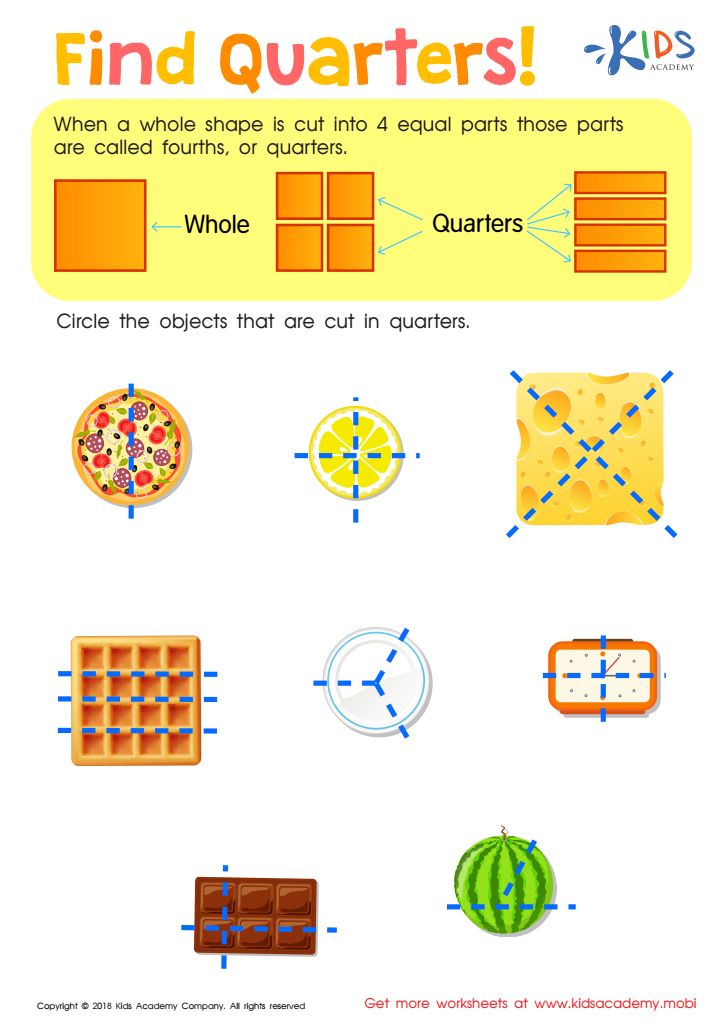
Find Quarters Worksheet

Find Quarters Worksheet

Ask your child if they know what it is called when a shape is cut into two equal parts. If yes, introduce them to quarters. Tell them that when a shape is cut into 4 equal parts, each part is called a quarter. Have them do this exercise by finding and circling objects split into quarters.
Find Quarters Worksheet
Worksheet
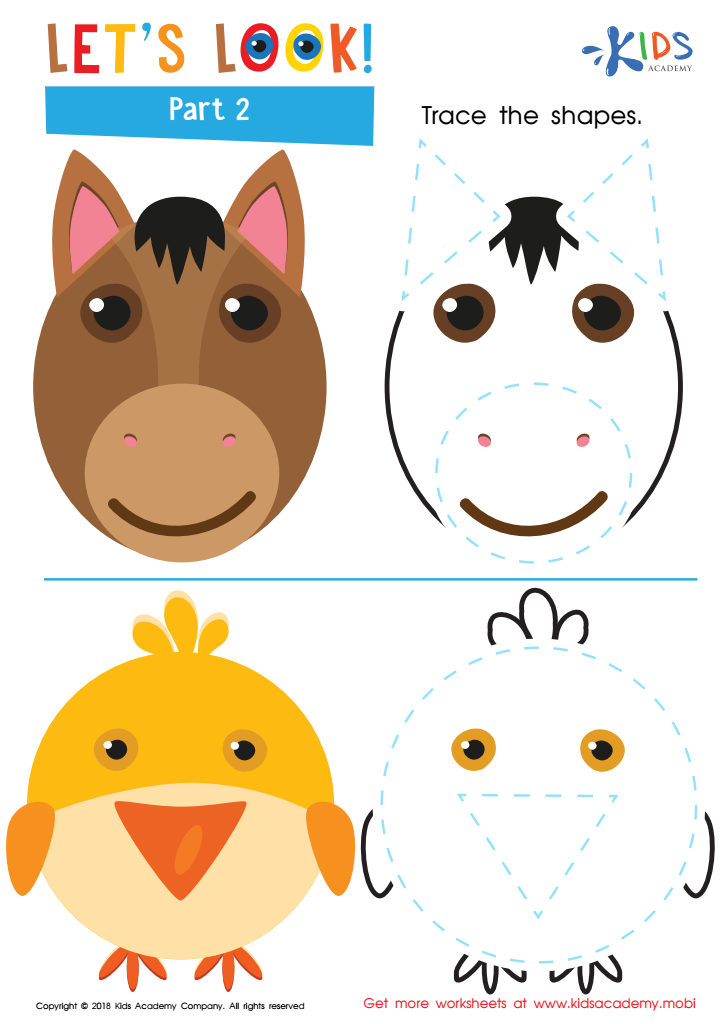
Let's Look! Part 2 Worksheet

Let's Look! Part 2 Worksheet

This tracing sheet helps your little ones develop their skills. Ask them to identify the animals, then trace the shapes in the space provided, following the dotted lines. It's a simple task that can help them grow and have fun!
Let's Look! Part 2 Worksheet
Worksheet
Geometry Matching Worksheet

Fun Geometry Worksheet

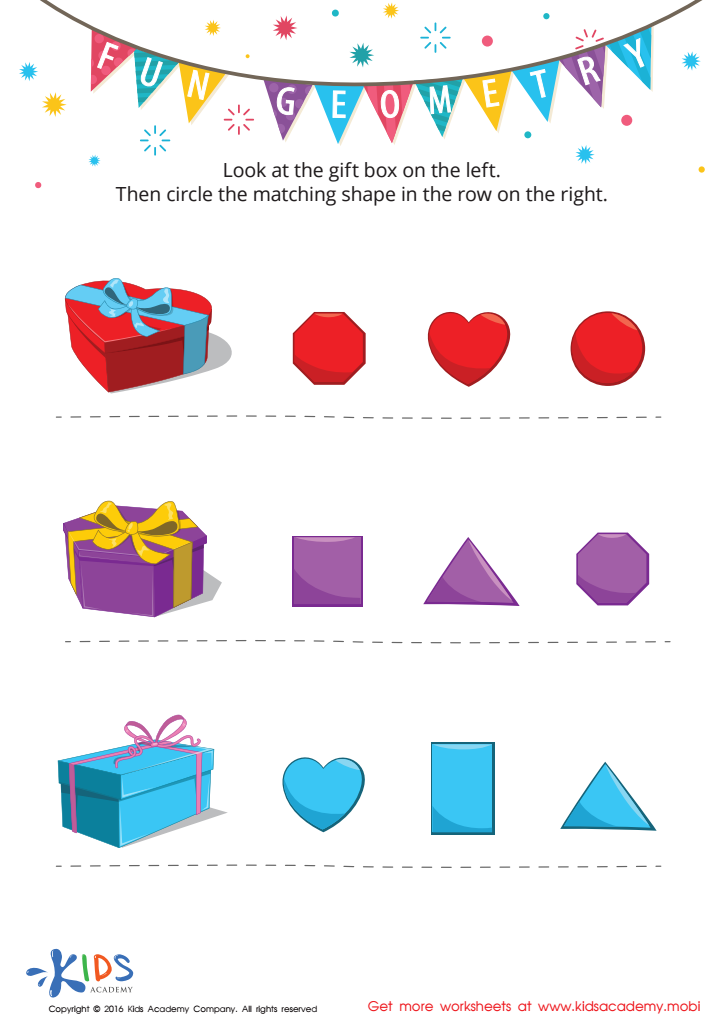
Give your child the gift of learning with this fun and educational geometry matching worksheet! It'll help them develop essential matching and problem-solving skills while having fun. Vibrant pictures will excite them to complete it and get a better grasp of the world around them.
Fun Geometry Worksheet
Worksheet
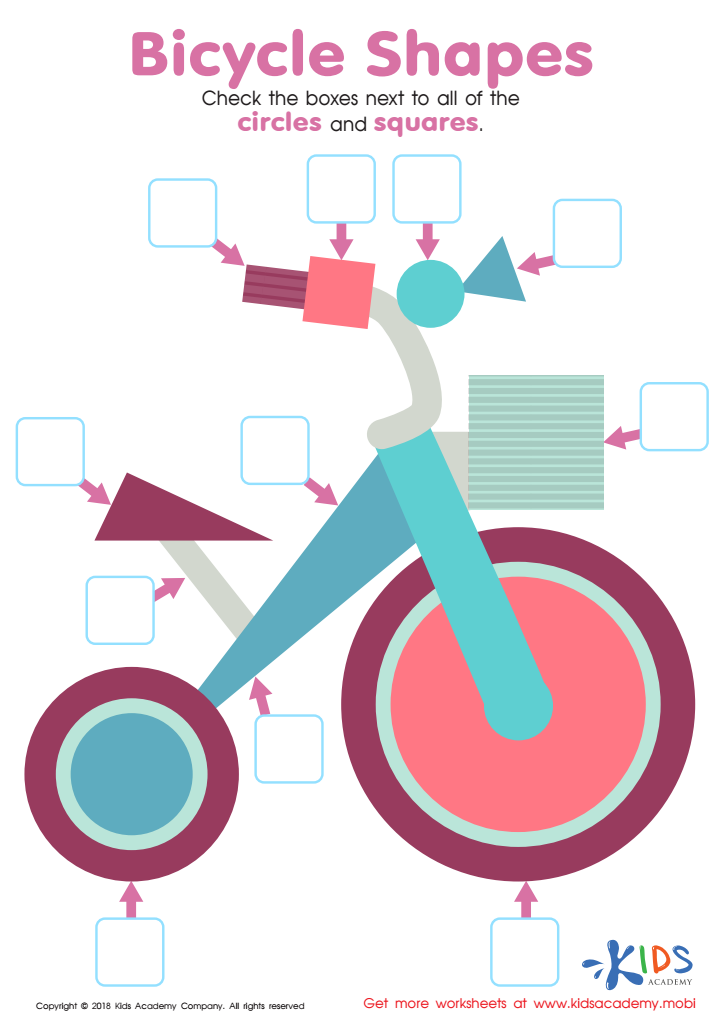
Bicycle Shapes Worksheet Preview


Bicycle Shapes Worksheet

This fun geometry worksheet for preschoolers asks the child to spot hidden shapes (circles, squares) in a colorful bicycle. Each shape varies in size and the child checks the box when it's found. It's a visual way to teach shapes.
Bicycle Shapes Worksheet
Worksheet


Counting practice and early geometry skills are foundational elements for young learners aged 4-8, and it's crucial for both parents and teachers to prioritize these areas in education. Countless studies demonstrate that early mathematical experiences shape a child's cognitive development, laying the groundwork for future academic success.

Firstly, counting practice develops numeracy skills critical for everyday tasks and advanced mathematical concepts. Children learn to recognize numbers, understand quantity, and develop problem-solving skills, which are essential as they progress in school.

Geometry, on the other hand, introduces young learners to spatial awareness, shapes, and their properties. Recognizing shapes and understanding spatial relationships help foster creativity and critical thinking. By integrating geometry with counting, children can explore concepts such as symmetry, patterns, and measurement in a hands-on, engaging manner.

Moreover, instilling a strong foundation in these skills can boost a child's confidence and enthusiasm for learning. Engaging with math in early education can help dispel anxiety surrounding the subject in later years.

Ultimately, parents and teachers play a vital role in nurturing an environment that values counting and geometry, as these skills are not only integral to academic success but also essential for functioning effectively in a world increasingly governed by mathematical reasoning.