Data interpretation Graphs Worksheets for Ages 4-8
3 filtered results
-
From - To
Introduce young learners to the world of data with our Data Interpretation Graphs Worksheets, perfect for ages 4-8. These fun, engaging, and educational worksheets focus on teaching early math skills using colorful bar graphs and pictograms. Children will develop critical thinking and analytical abilities as they interpret data, compare quantities, and answer questions based on simple graphs. Aligned with common core standards, each worksheet is designed to be age-appropriate, ensuring that learning is both effective and enjoyable. Enhance your child’s mathematical skills and confidence with our printable graph worksheets at Kids Academy. Unlock the potential to make understanding data simple and fun!
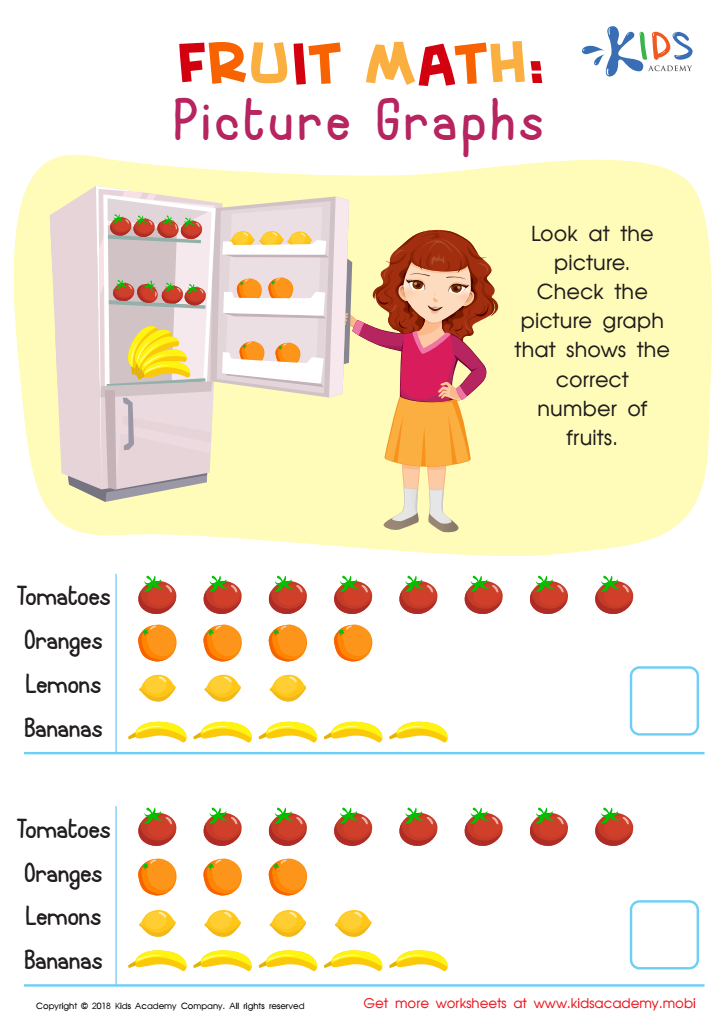
Fruit Math: Picture Graphs Worksheet
 Assign to My Students

Aircraft Carrier Picture Graphs Worksheet
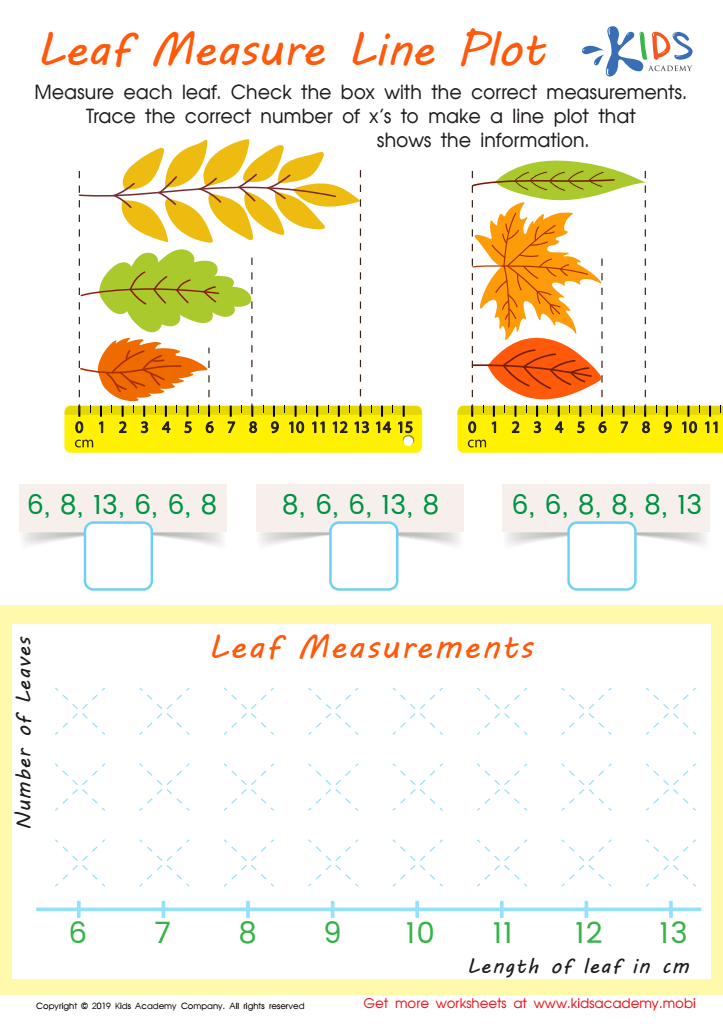
Leaf Measure Line Plot Worksheet








Parents and teachers should care about data interpretation graphs for children ages 4-8 because these skills lay the foundation for critical thinking and problem-solving abilities vital in their future education. At this early age, engaging with graphs helps young learners develop an understanding of how to organize and interpret information visually, a key component of analytical skills. Data interpretation activities can make abstract concepts more concrete, aiding comprehension in subjects like math and science.
Furthermore, using graphs enhances cognitive development by encouraging kids to observe patterns, make predictions, and understand relationships among data points. This fosters curiosity and a questioning mindset, essential traits for lifelong learning. Graphs also present information with a visual appeal, which can be particularly engaging for young children who often learn best with visual and hands-on activities.
Additionally, familiarity with data interpretation encourages early development of technological literacy, a crucial skill in our data-driven world. By supporting comprehension of how information is presented and analyzed, parents and teachers equip children with the tools needed to thrive in an information-rich environment, setting a strong academic foundation for their future. This proactive step ensures that children are not just passive consumers of information but active interpreters, empowered to draw meaningful conclusions from the world around them.








