Interpreting data Graphs Worksheets for Ages 4-8
3 filtered results
-
From - To
Unlock your child’s potential with our "Interpreting Data Graphs Worksheets for Ages 4-8" from Kids Academy. Designed to make learning fun, these engaging worksheets teach young learners essential skills in reading and interpreting a variety of graphs, including bar graphs and pictographs. Perfectly catered for kids aged 4 to 8, these worksheets help enhance critical thinking, boost analytical skills, and foster a true love for math. Whether it’s counting, comparing quantities, or understanding patterns, our well-crafted resources provide a solid foundation for future academic success. Empower your child to become a confident data interpreter today!
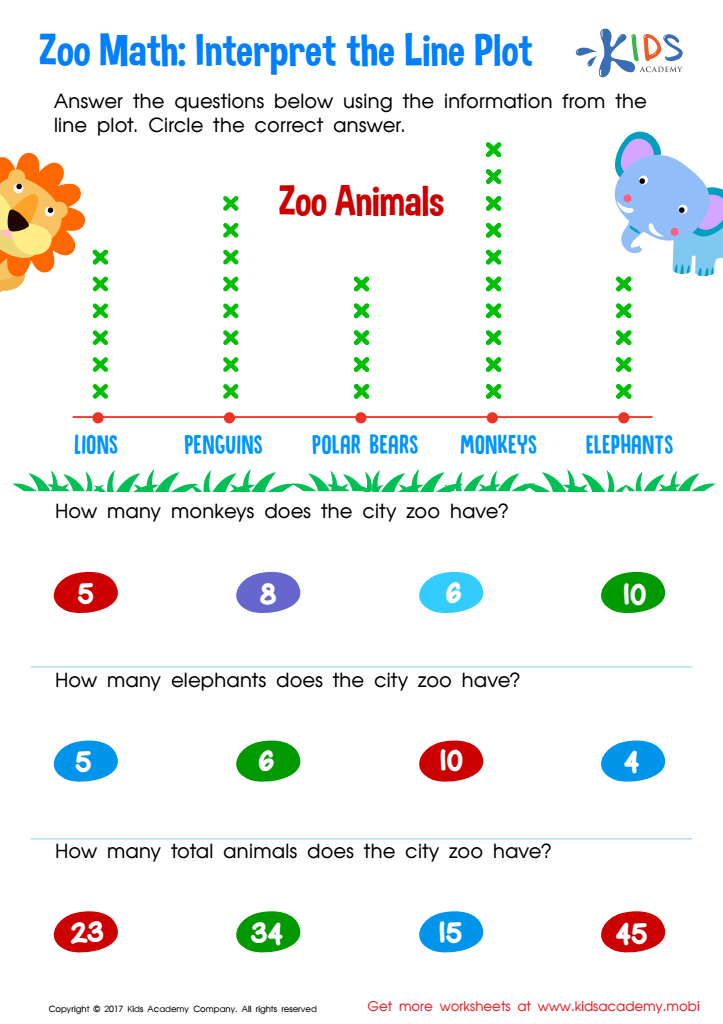
Interpret Line Plot Worksheet
 Assign to My Students
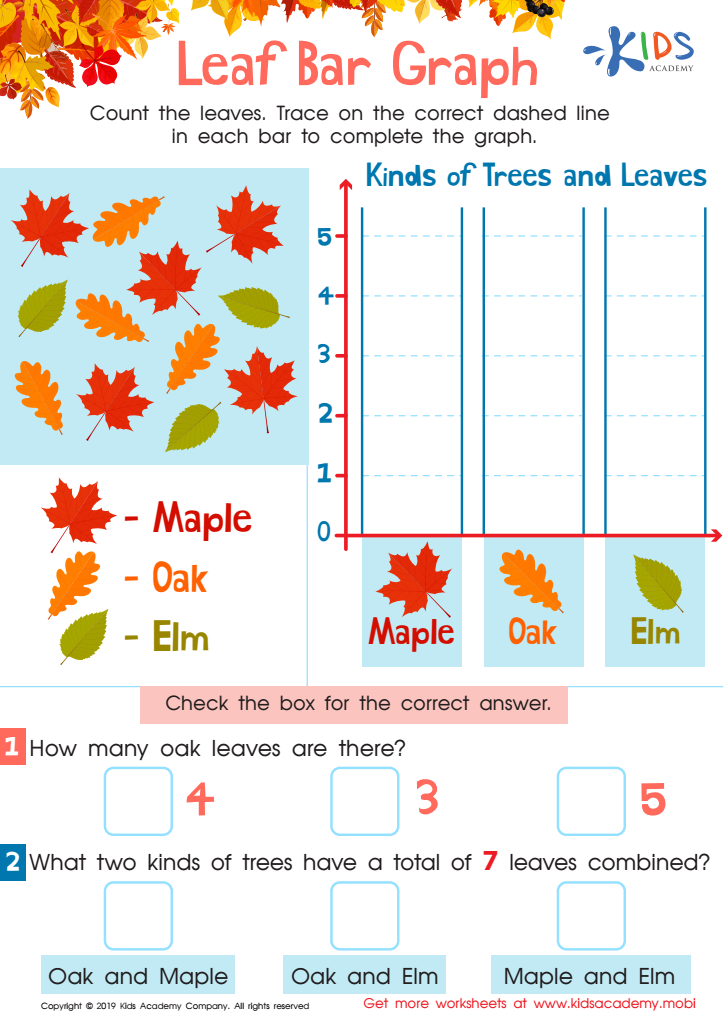
Leaf Bar Graph Worksheet
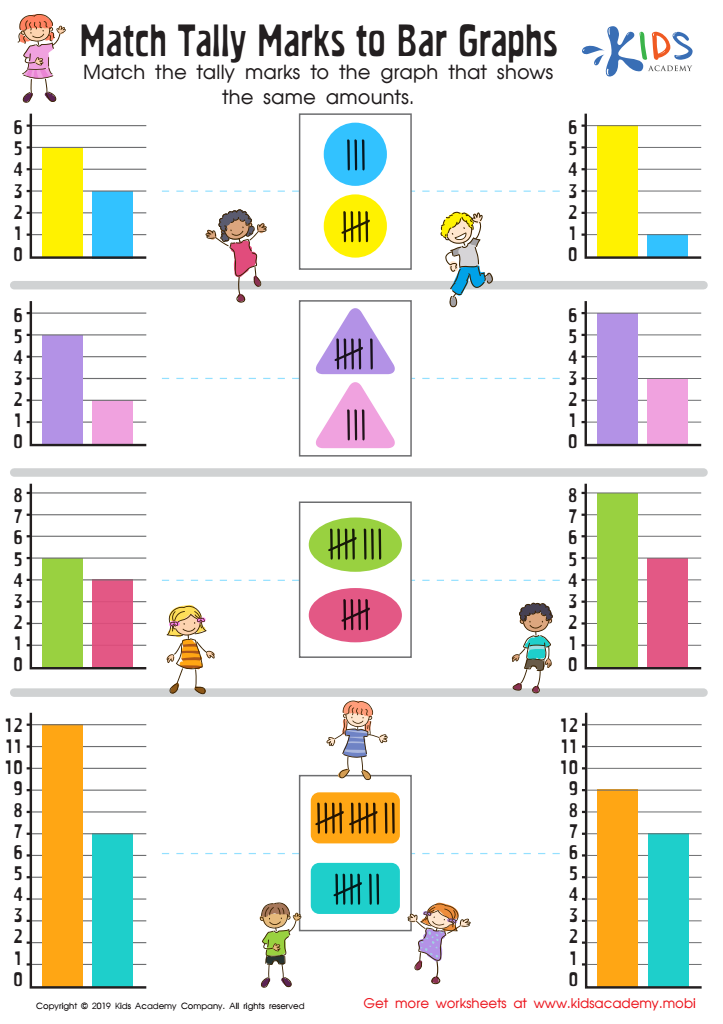
Match Tally Marks to Bar Graphs Worksheet








Interpreting data graphs for children aged 4-8 is crucial because it lays the foundation for their mathematical and analytical thinking. At this formative stage, young learners are highly impressionable and capable of understanding basic concepts with appropriate guidance. Parents and teachers play a pivotal role in this developmental phase by introducing graphs, a visual representation of information, which can significantly enhance learning.
Engaging children with graphs helps them recognize patterns, make comparisons, and understand relationships between different sets of data. This early exposure fosters critical thinking and problem-solving skills. For instance, children can learn to identify which category has more or less, understand sequences, and even pick up early numeracy skills as they count and sort.
Moreover, interpreting data graphs supports cross-curricular learning. It can be integrated with subjects like science, social studies, and literacy, making learning more engaging and meaningful. Graphs can depict various data, from weather charts to favorite storybook characters, enabling children to connect new knowledge with their daily experiences.
Ultimately, by prioritizing the interpretation of data graphs, parents and teachers help young learners build confidence and an analytical mindset that will serve them well in advanced grades and everyday life. Children equipped with these skills are more apt to excel academically and develop a lifelong appreciation for inquiry and information evaluation.








