Mental math skills Numbers Worksheets for Ages 4-8
5 filtered results
-
From - To
Boost your child's math abilities with our engaging "Mental Math Skills Numbers Worksheets" designed specifically for ages 4-8. These fun and interactive worksheets aim to enhance number recognition, addition, and subtraction skills, fostering a solid foundation in mental math. Suitable for both classroom and home use, our resources promote critical thinking and problem-solving through creative activities like number games and puzzles. Perfect for emerging mathematicians, these worksheets help improve speed and accuracy in calculations while building confidence. Explore our extensive collection today to make learning math an enjoyable adventure for your little ones!
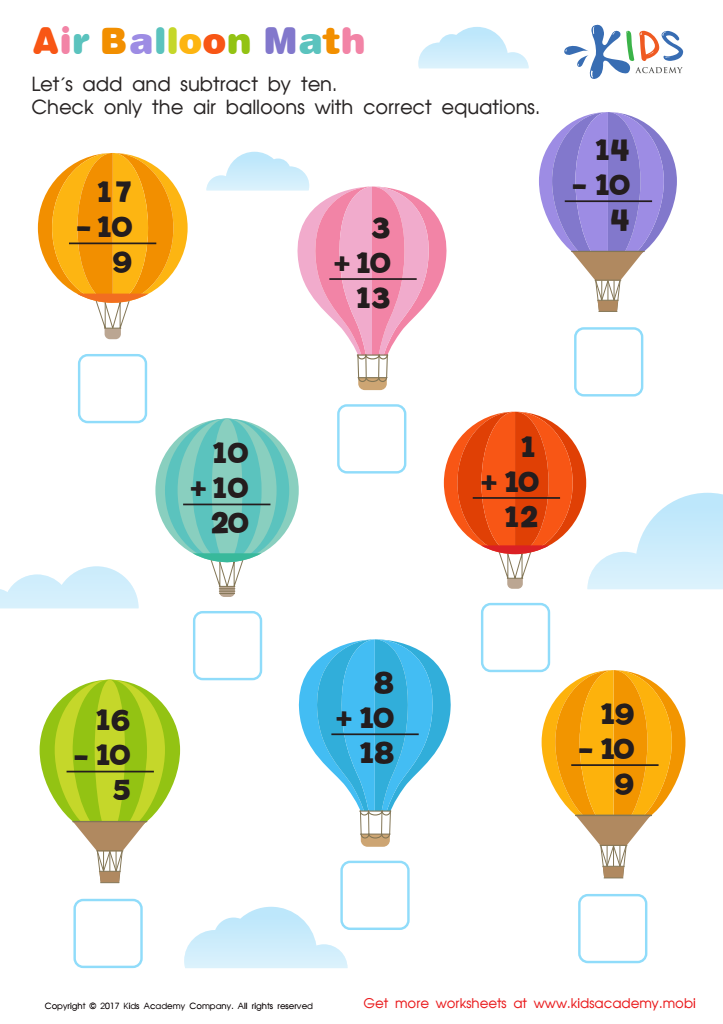
Air Balloon Math Worksheet
 Assign to My Students
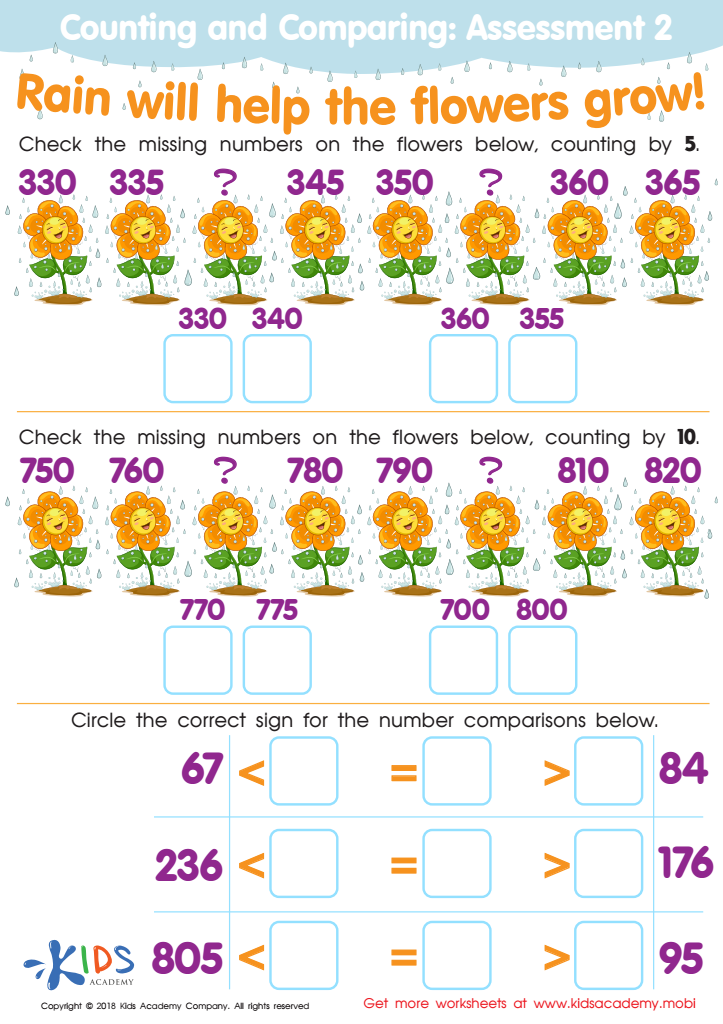
Counting and Comparing: Assessment 2 Worksheet
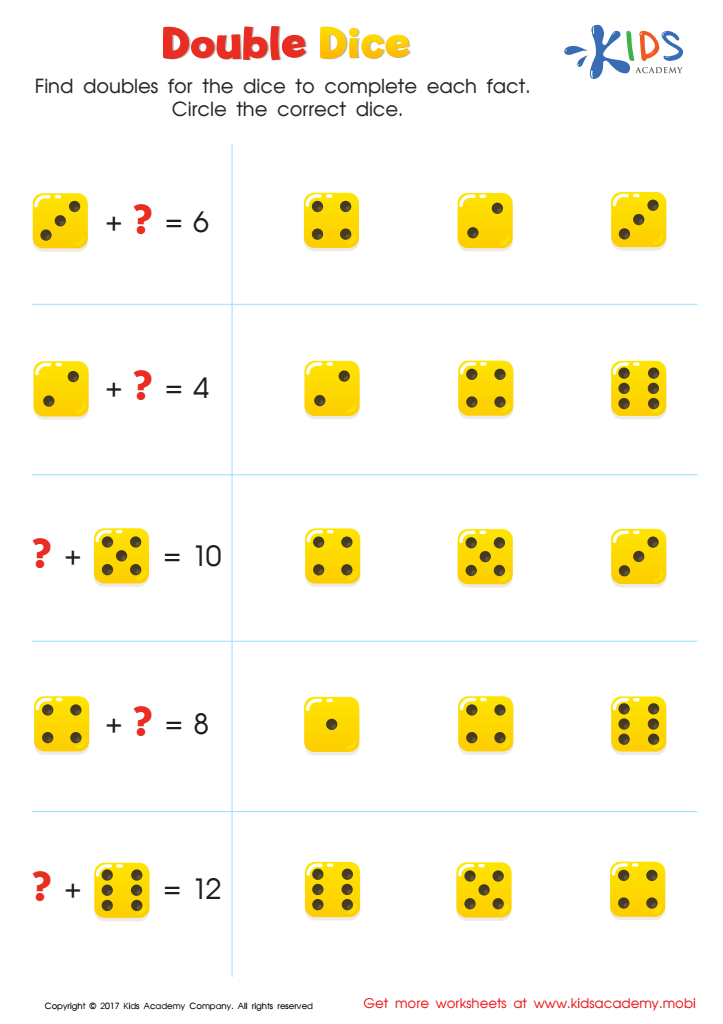
Addition Facts: Double Dice Worksheet
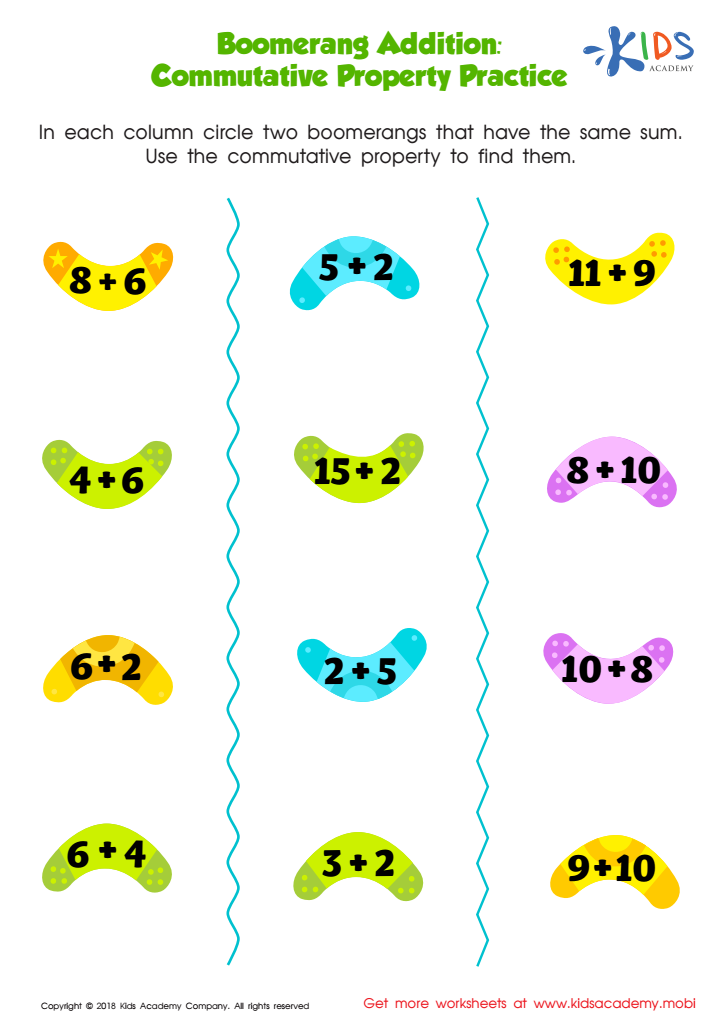
Boomerang Addition Worksheet
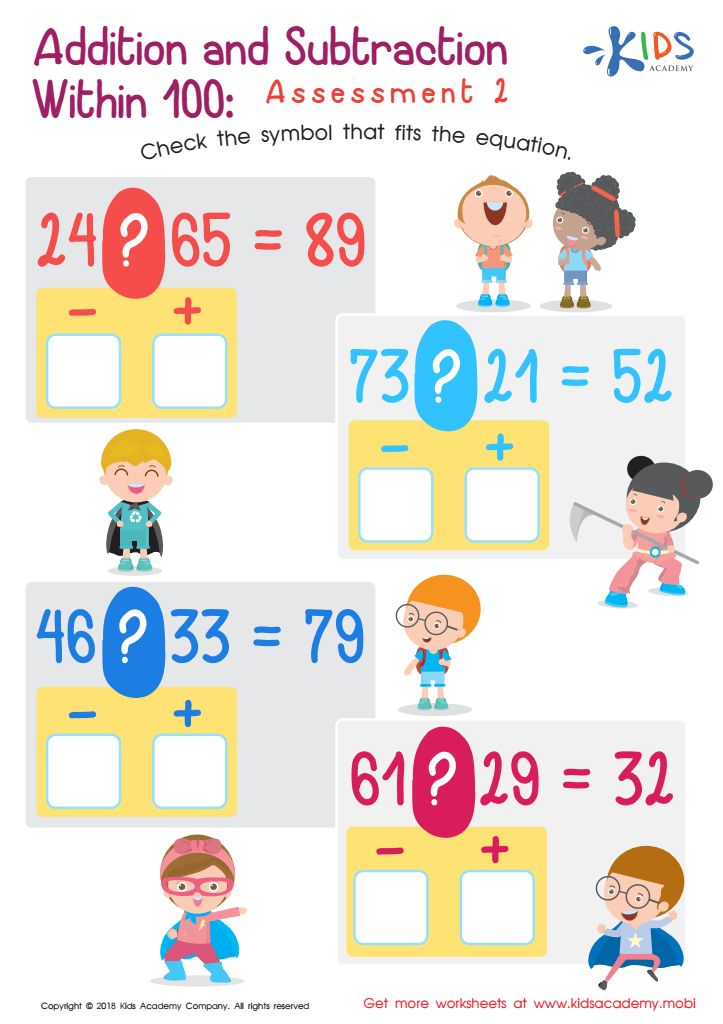
Addition and Subtraction Within 1: Assessment 2 Worksheet








Mental math skills are vital for children aged 4-8, as they lay the foundation for future mathematical understanding. Developing these skills helps young learners perform basic calculations quickly and efficiently without relying on calculators or paper. This ability enhances their confidence in handling math-related tasks and fosters a positive attitude towards the subject, which can alleviate math anxiety later in life.
Furthermore, mental math promotes critical thinking and problem-solving abilities. It encourages children to understand and manipulate numbers conceptually, rather than merely memorizing facts. Engaging in mental math activities also supports cognitive development, as it challenges the brain and fosters important skills such as focus, memory, and analytical thinking.
For parents and teachers, dedicating time to mental math creates opportunities for interactive learning. Simple games and everyday situations can transform routine activities into fun learning experiences, making math relatable and enjoyable. Additionally, children who excel in mental math often perform better in various subjects, ensuring a well-rounded education.
Prioritizing mental math skills not only equips children with the tools necessary for academic success but also prepares them for real-world situations involving budgeting, shopping, or time management, solidifying their mathematical literacy beyond the classroom.








