Basic addition practice Math Worksheets for Ages 4-8 - Page 2
25 filtered results
-
From - To
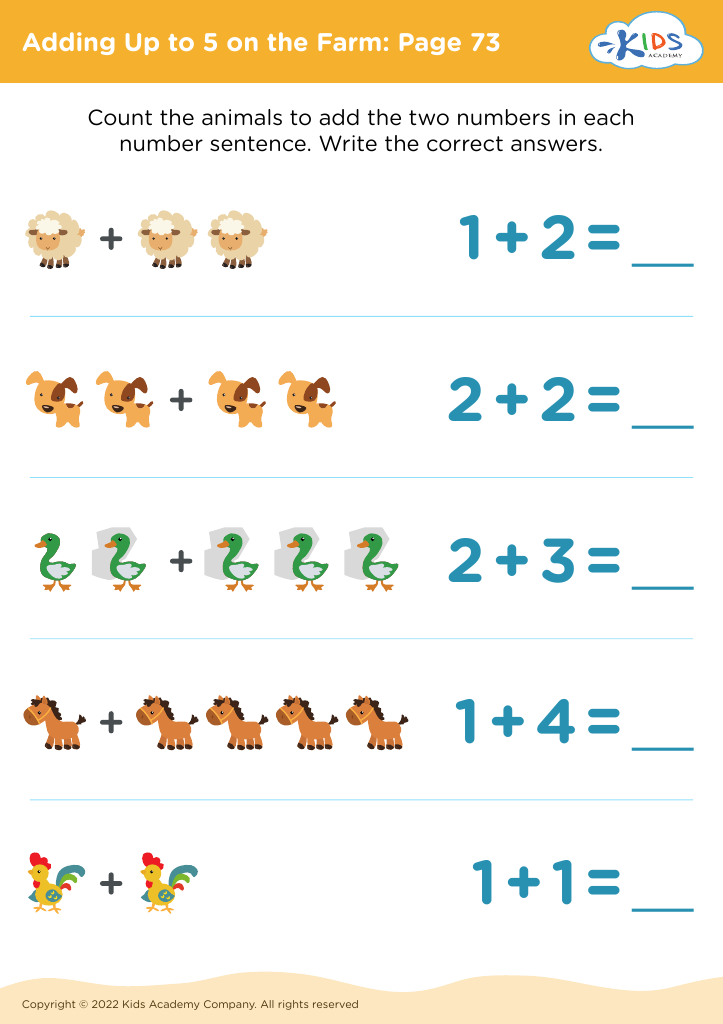







Parents and teachers should prioritize basic addition practice for children aged 4-8 for several compelling reasons. Early math skills form the foundation for later academic success; young learners develop crucial cognitive abilities through simple arithmetic. Basic addition reinforces logical thinking, problem-solving, and critical reasoning.
Practicing addition at this age helps the brain establish neural connections essential for understanding more complex math concepts in the future. Children learn number fluency, which boosts their confidence and reduces math anxiety later in school. When kids master simple addition, they gain a sense of accomplishment that motivates them to explore further math challenges.
Moreover, integrating basic addition into daily life teaches practical skills that children can apply outside of school—like calculating change or sharing items—all while making learning enjoyable. Engaging games, songs, and visual aids turn practice into play, making the learning process fun and memorable. This early exposure to mathematics not only cultivates a positive attitude towards the subject but also prepares children for more advanced topics as they progress in their education. In summary, focusing on basic addition equips young learners with essential skills that contribute to their overall development and prepares them for future academic endeavors.








