Basic Math knowledge Math Worksheets for Ages 4-8
3 filtered results
-
From - To
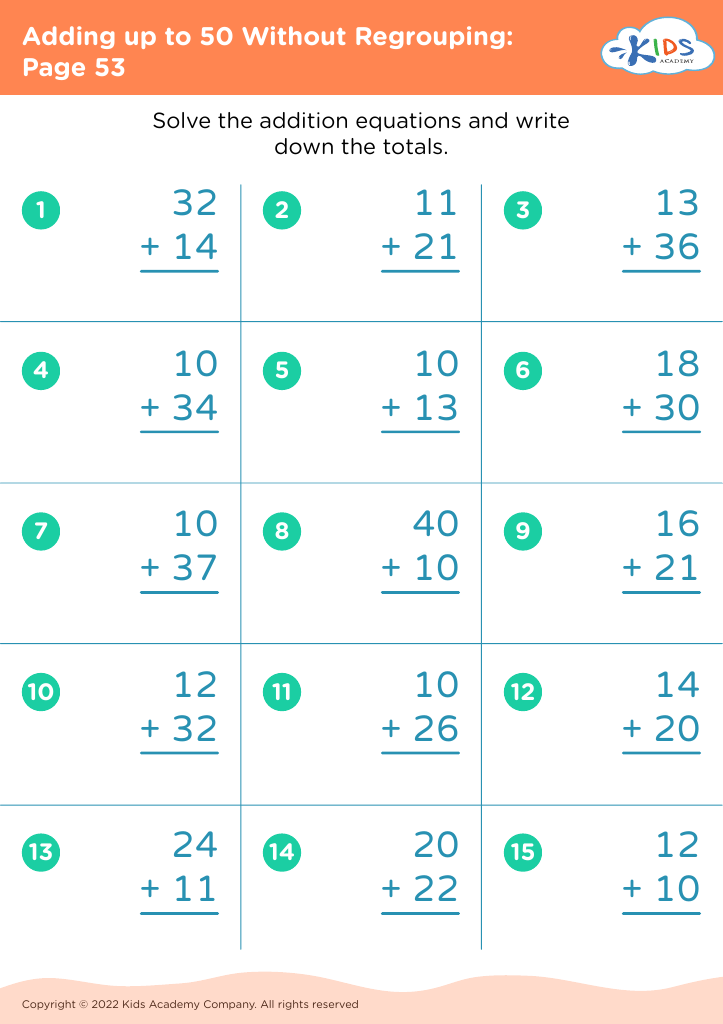
Unlock your child's potential with our Basic Math Knowledge Worksheets for ages 4-8! Tailored to young learners’ needs, these engaging worksheets make math fun and accessible. From number recognition and counting to simple addition and subtraction, each activity is designed to build a solid math foundation. Perfect for classroom use or at-home practice, our worksheets introduce essential math skills through colorful graphics and interactive exercises. Enhance your child’s learning experience with Kids Academy, where education meets excitement. Explore a wealth of resources that support and challenge young minds to grow stronger in mathematics every day!
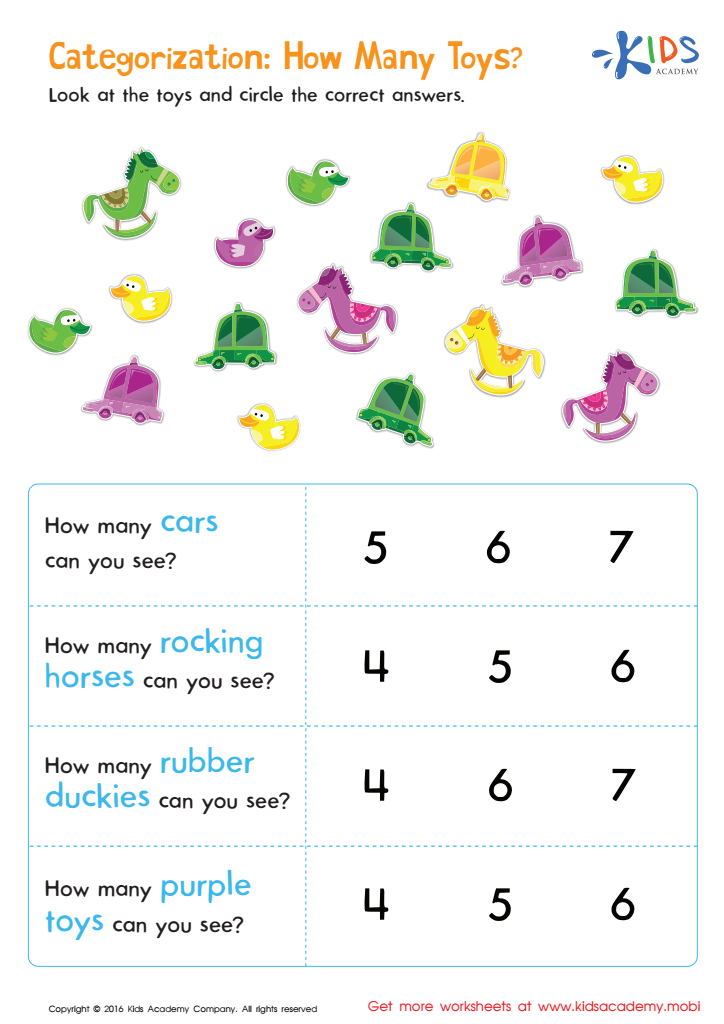
Classifying Toys by Type and Color Sorting Worksheet
 Assign to My Students
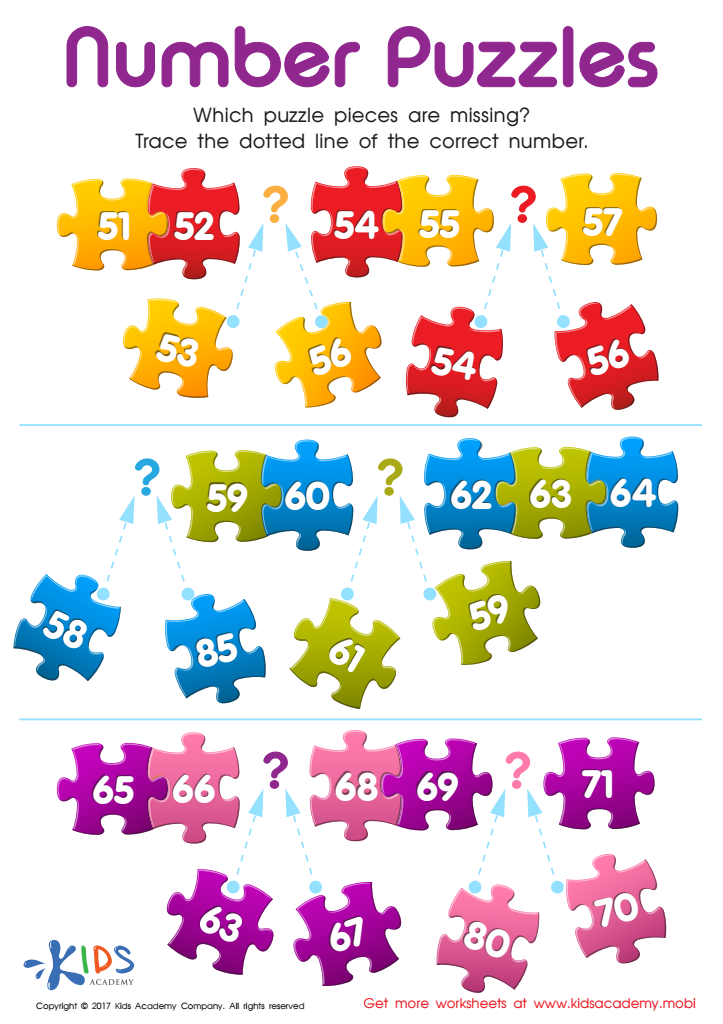
Number Puzzles Worksheet








Basic math knowledge for children aged 4-8 is fundamental for several reasons, making it crucial for both parents and teachers to prioritize this learning. At this developmental stage, children's brains are exceptionally receptive to new concepts. Basic math skills, such as counting, recognizing numbers, understanding simple addition and subtraction, and grasping the concepts of more and less, set the groundwork for later math skills and logical thinking.
First, early math proficiency lays the foundation for future academic success. Research has shown that early math skills are strong predictors of later academic achievement, often more so than early literacy skills. This means that children who develop strong math abilities early on are more likely to perform well in all subjects down the line, not just math.
Second, developing math skills early supports cognitive development. Doing math involves critical thinking, problem-solving, and the ability to recognize patterns and relationships. These skills are crucial for overall intellectual growth and can aid in various non-math-related tasks and decisions.
Third, basic math literacy fosters confidence and a positive attitude towards learning. By mastering initial concepts, children build self-efficacy and an enthusiasm for education. Parents and teachers play vital roles here, as their encouragement and support can make math learning a fun and integral part of a child's world.
Altogether, by investing in basic math knowledge early, we help ensure a sturdy academic foundation and a bright, intellectually curious future for our children.








