
Develop problem-solving skills Math Worksheets for Ages 4-8
10 filtered results
Difficulty Level
Grade
Age
-
From - To
Subject
Activity
Standards
Unlock your child's potential with our "Develop Problem-Solving Skills Math Worksheets" for ages 4-8! These engaging worksheets are designed to enhance critical thinking and analytical skills through fun and interactive math activities. Tailored to children's developmental stages, our worksheets feature a variety of exercises that encourage logical reasoning, pattern recognition, and creative problem-solving. Kids will enjoy working through puzzles, visual challenges, and real-world scenarios, making math an enjoyable experience. Perfect for home or classroom use, these resources foster independence and confidence in young learners, helping them build a strong foundation for future math success. Start your child's problem-solving journey today!
Favorites
With answer key
Interactive
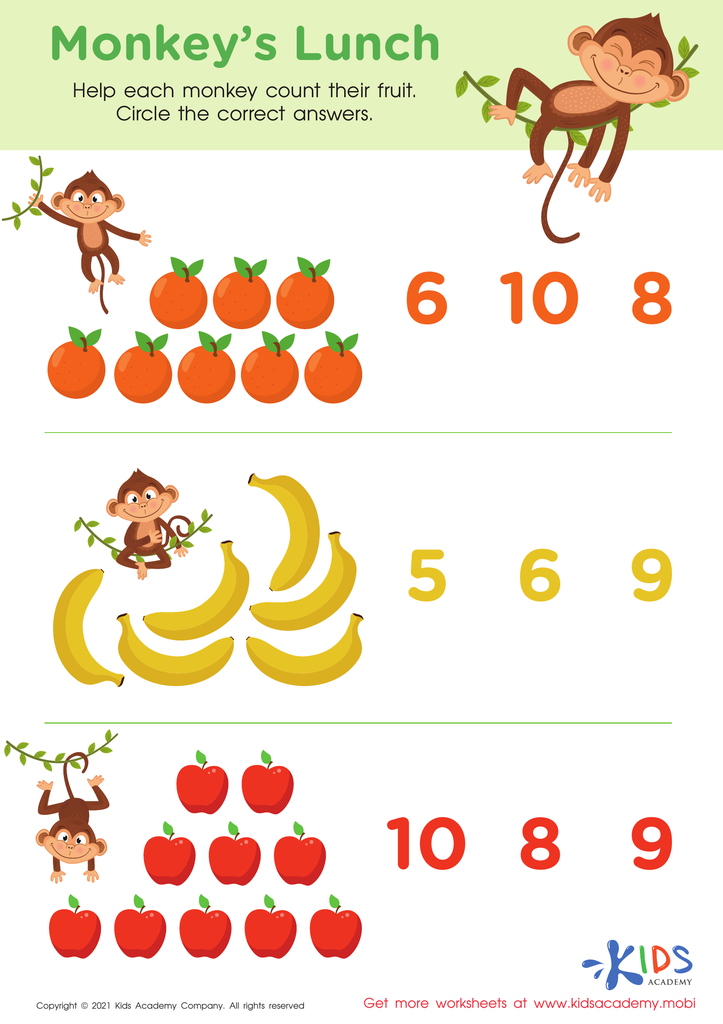
Monkey’s Lunch Worksheet
Download this free worksheet to help your kindergartner perfect their counting skills! Have your child circle the correct answers and count the fruits for the monkeys. It'll seem like fun, but your child is really learning how to count, group objects, and identify numbers.
Monkey’s Lunch Worksheet
Worksheet
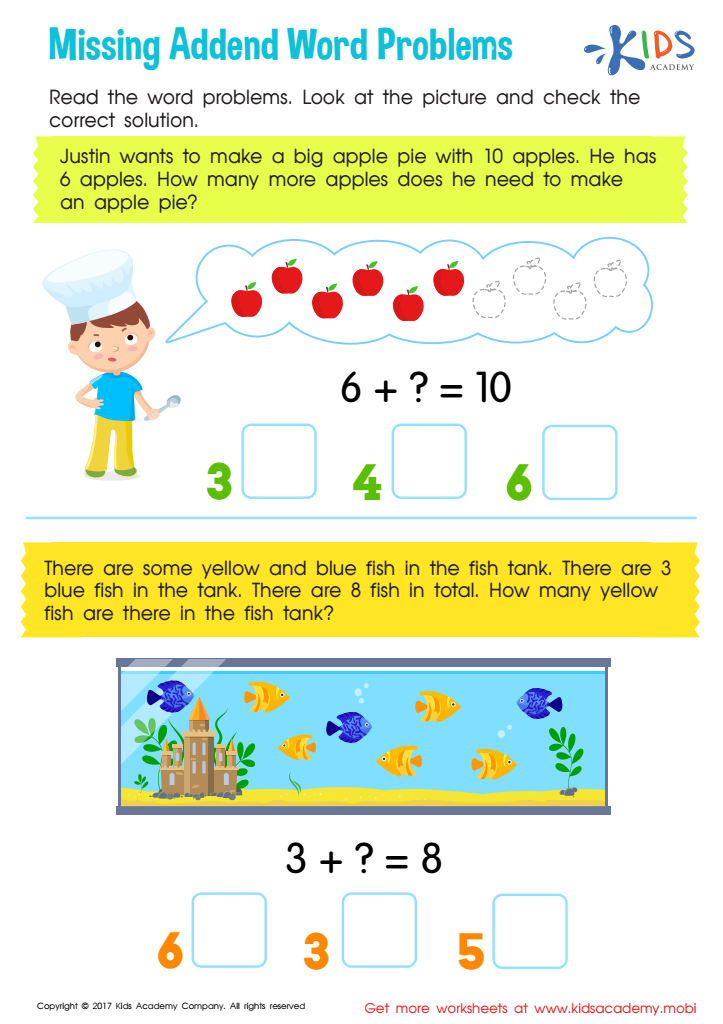
Missing Addend Word Problems Worksheet
Doing many addition and subtraction problems is key for fluency and mastery. Word problems can help kids understand how math works in everyday life. Our math worksheet uses fun scenarios and pictures to teach how to find the missing addend. It's the perfect tool to help kids understand math better!
 Assign to My Students
Missing Addend Word Problems Worksheet
Worksheet
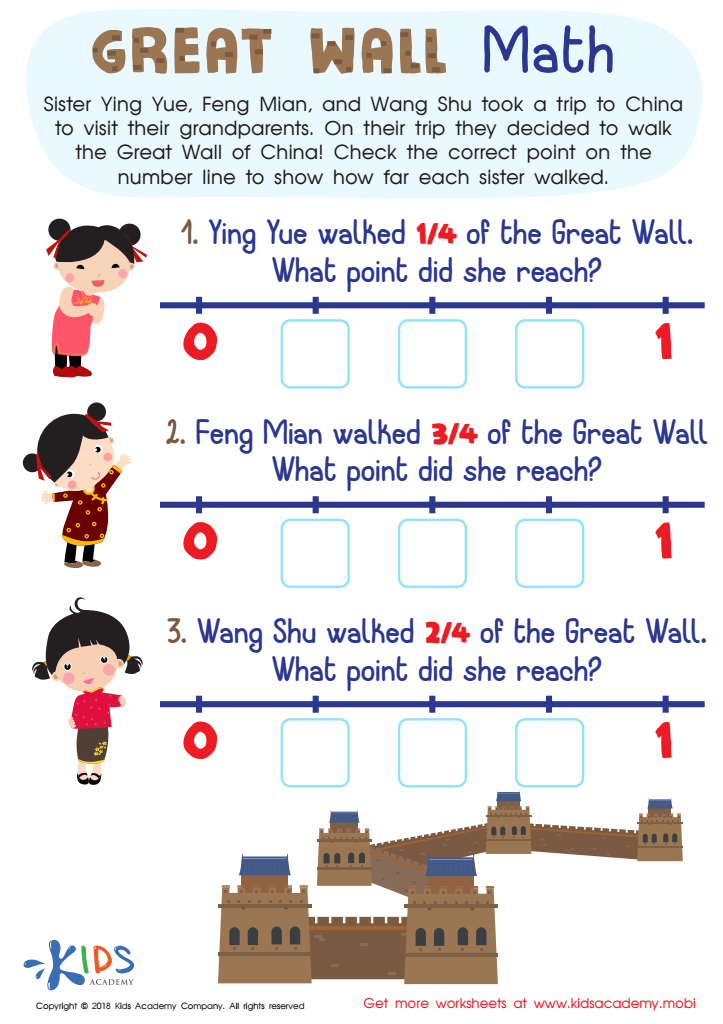
Great Wall Math Worksheet
Let your kids learn about fraction and history with this printout about the Great Wall of China. Three sisters take a trip to China to visit their grandparents and decide to walk the Great Wall. Ask them to study the pictures and pick the correct point on the number line to show how far each sister went. How about you: has your child ever been to China?
Great Wall Math Worksheet
Worksheet
Join Kids Academy for Free
Who is primarily going to use this learning content?








Developing problem-solving skills in mathematics for children aged 4-8 is crucial for several reasons. First, these foundational years are critical for cognitive development, where children learn to think logically and reason through challenges. By encouraging problem-solving in math, educators and parents can support children in making connections between concepts and applying them in real-life situations.
Secondly, problem-solving fosters resilience and perseverance. As children encounter and work through challenges, they learn that effort can lead to success, which instills a growth mindset. This can benefit them not only in math but across all subjects.
Additionally, strong problem-solving skills promote critical thinking. Children begin to analyze situations, make predictions, and explore various solutions, nurturing essential skills for their future. These abilities translate to more effective decision-making, both in academic settings and daily life.
Moreover, incorporating engaging and interactive math activities can enhance a child’s enthusiasm for learning. As they engage in playful problem-solving, they build confidence and a positive attitude towards math. Teachers and parents should prioritize developing these skills early on to ensure that children are well-equipped to tackle challenges throughout their educational journey and in life beyond the classroom.








