Improve problem-solving skills Math Worksheets for Ages 4-8
6 filtered results
-
From - To
Boost your child's problem-solving skills with our expertly designed Math Worksheets for Ages 4-8. At Kids Academy, we offer a variety of fun and educational activities that engage young minds in critical thinking. Our printable worksheets are tailored to help children understand and solve problems creatively and confidently. Covering fundamentals like addition, subtraction, and pattern recognition, each worksheet provides a well-rounded mathematical foundation. Perfect for at-home learning or classroom use, these activities encourage logical reasoning and analytical skills, setting your child on a path to academic success. Download and start improving math skills today!
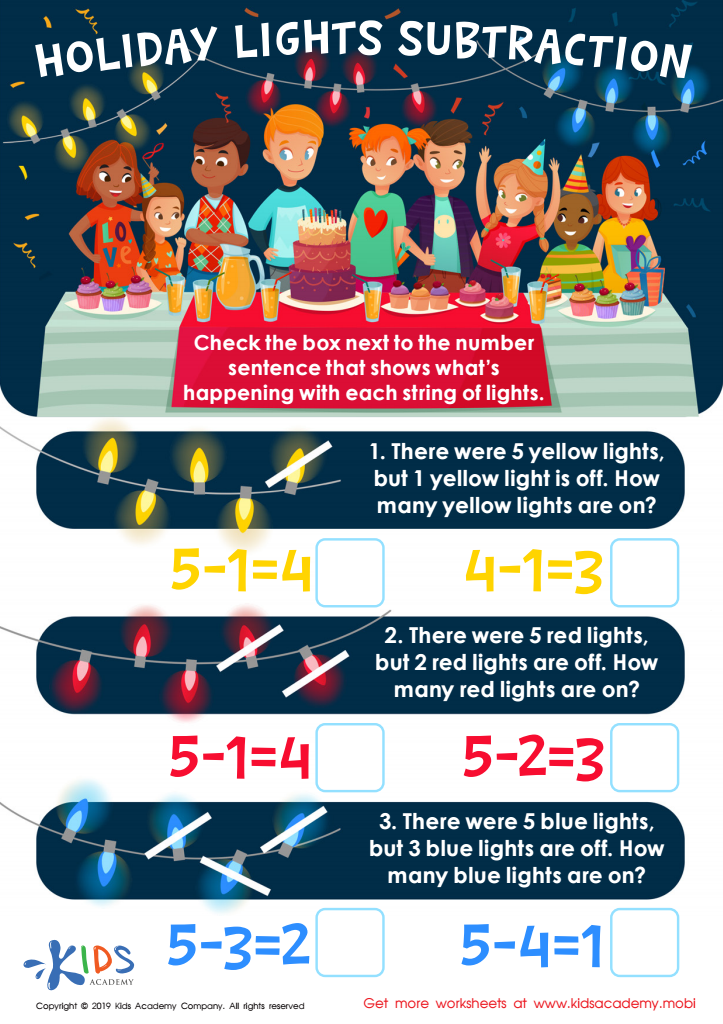
Holiday Lights Subtraction Worksheet
 Assign to My Students
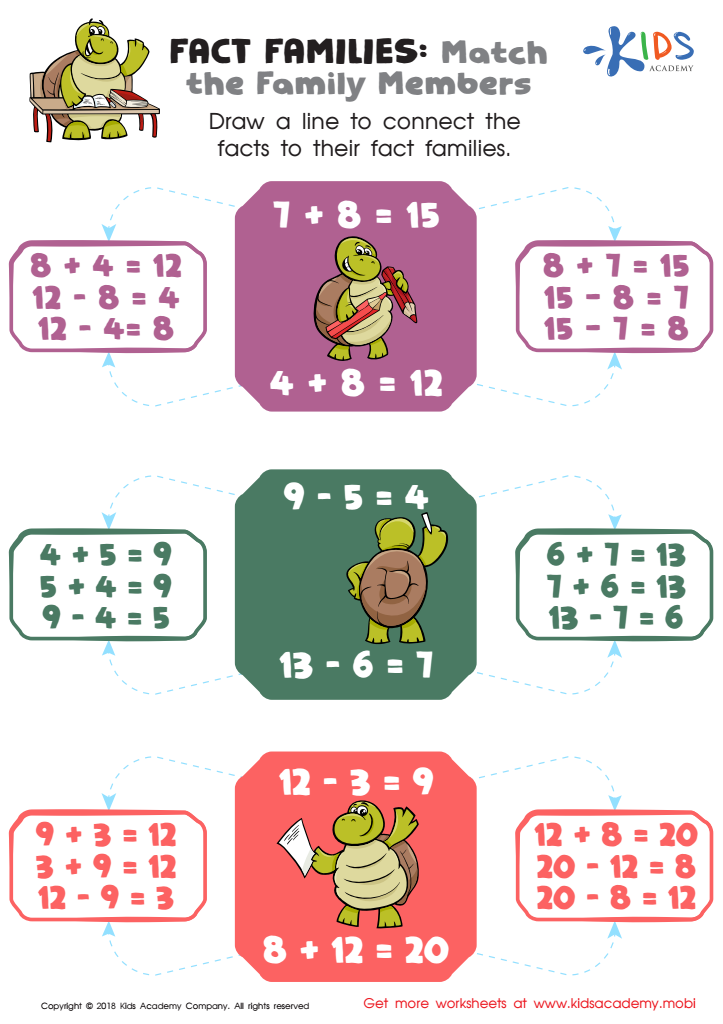
Fact Families: Match Family Members Worksheet
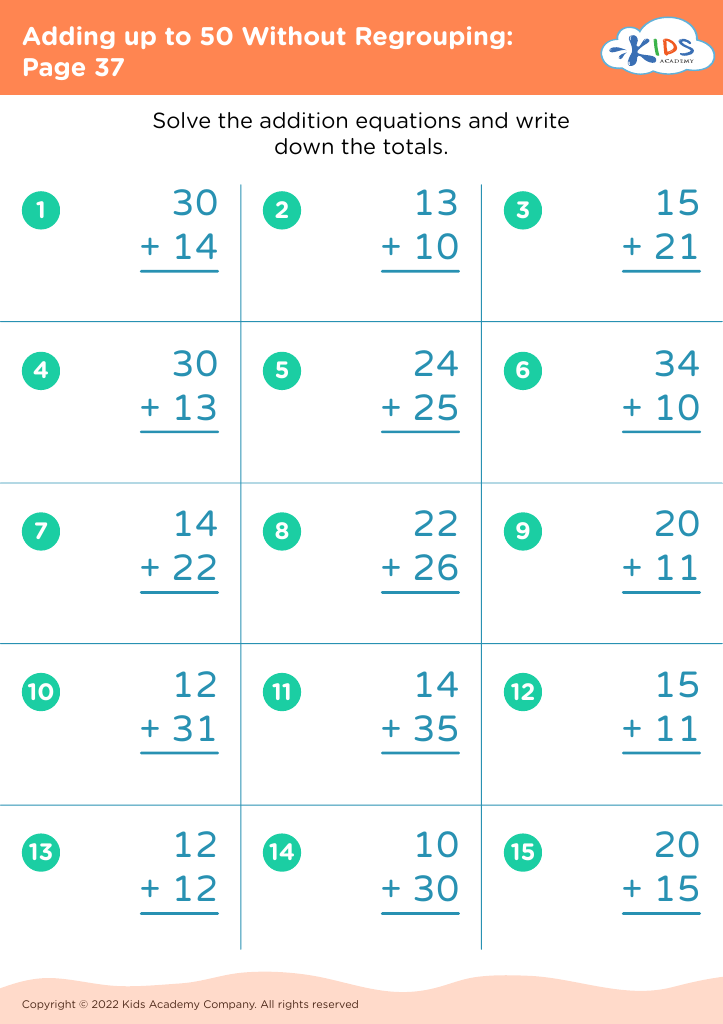
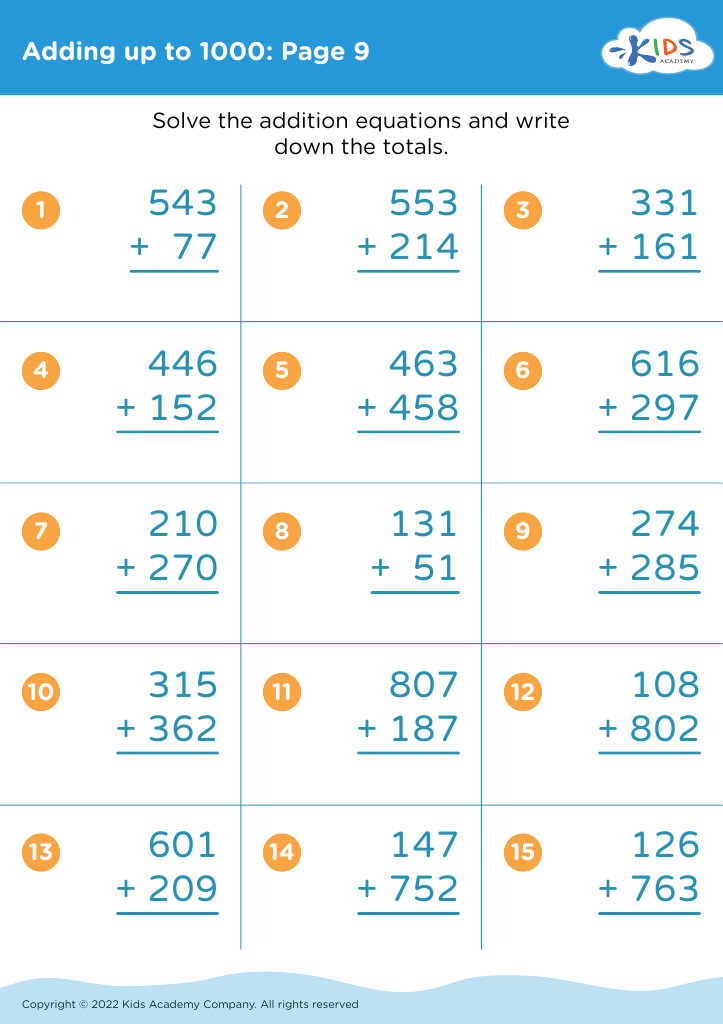








Improving problem-solving skills in math for children ages 4-8 is essential for several pivotal reasons. Firstly, these early years lay the groundwork for future academic success. When young learners enhance their problem-solving abilities, they develop critical thinking skills that extend beyond math, fostering analytical reasoning and creativity across all subjects.
Strong problem-solving skills encourage a growth mindset. By regularly tackling mathematical challenges, children learn perseverance and resilience, understanding that struggle can be a part of the learning process. These habits are invaluable for lifelong learning and personal development.
Moreover, math problem solving enhances cognitive development by improving memory, attention, and executive functions. Early exposure to math stimulates neural pathways and helps children make connections between concepts, promoting a deeper understanding and retention of information.
Socially, sharpening problem-solving skills builds confidence and teamwork. Collaborative math problems teach children to communicate, share, and respect diverse perspectives, equipping them for real-world situations where cooperation is key.
Lastly, fostering these skills early can ignite a passion for STEM (Science, Technology, Engineering, and Mathematics), fields that are increasingly important in our technological world. Engaging young learners in math problem solving nurtures curiosity and sets them on a path to explore ever more complex and exciting challenges in their education and beyond.
This holistic benefits span academic, cognitive, social, and emotional dimensions, making it a vital focus for parents and teachers alike.








