Number pattern recognition Math Worksheets for Ages 4-8
3 filtered results
-
From - To
Discover our engaging number pattern recognition math worksheets designed specifically for children aged 4-8! These age-appropriate resources help young learners develop essential math skills through fun and interactive activities. Our worksheets encourage kids to identify, create, and extend number patterns, building their confidence in mathematics. Each printable worksheet includes colorful illustrations and kid-friendly content to keep students motivated while enhancing their analytical thinking. Perfect for classroom use or at-home learning, these worksheets support early math education and promote critical cognitive skills. Explore our collection today and watch your child excel in number pattern recognition with delight and curiosity!
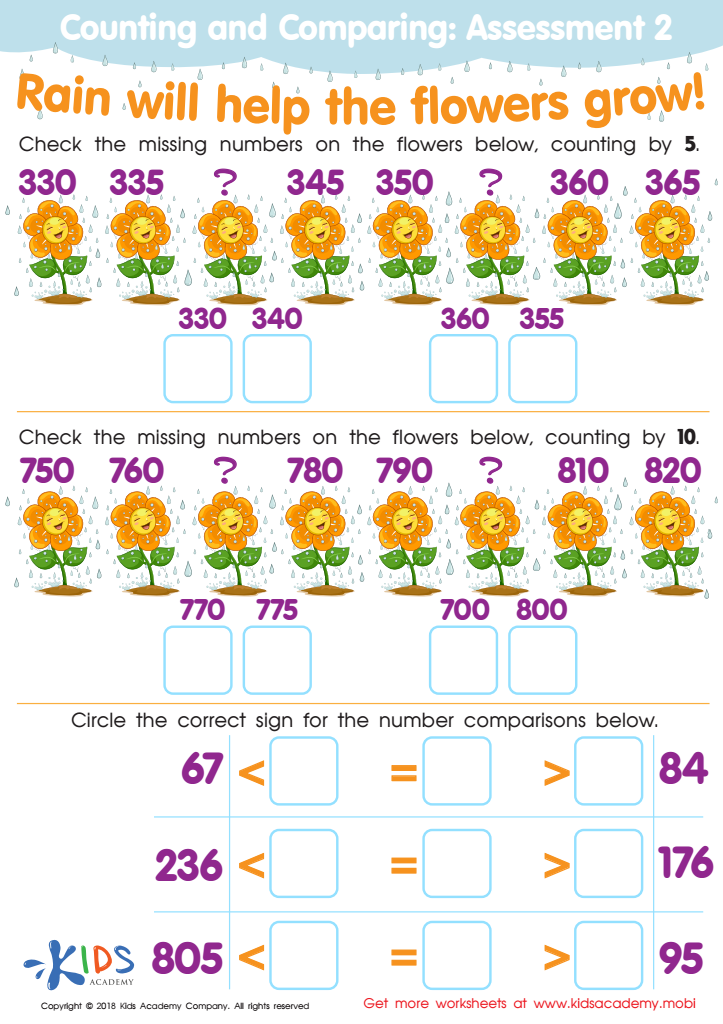
Counting and Comparing: Assessment 2 Worksheet
 Assign to My Students
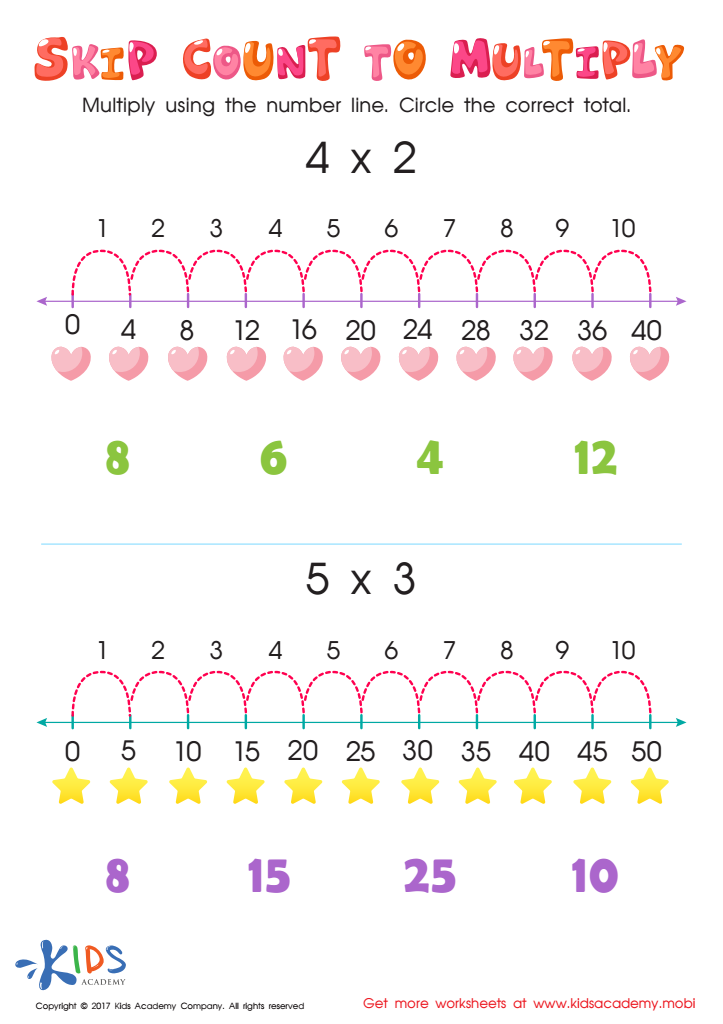
Skip Count Multiplication Worksheet
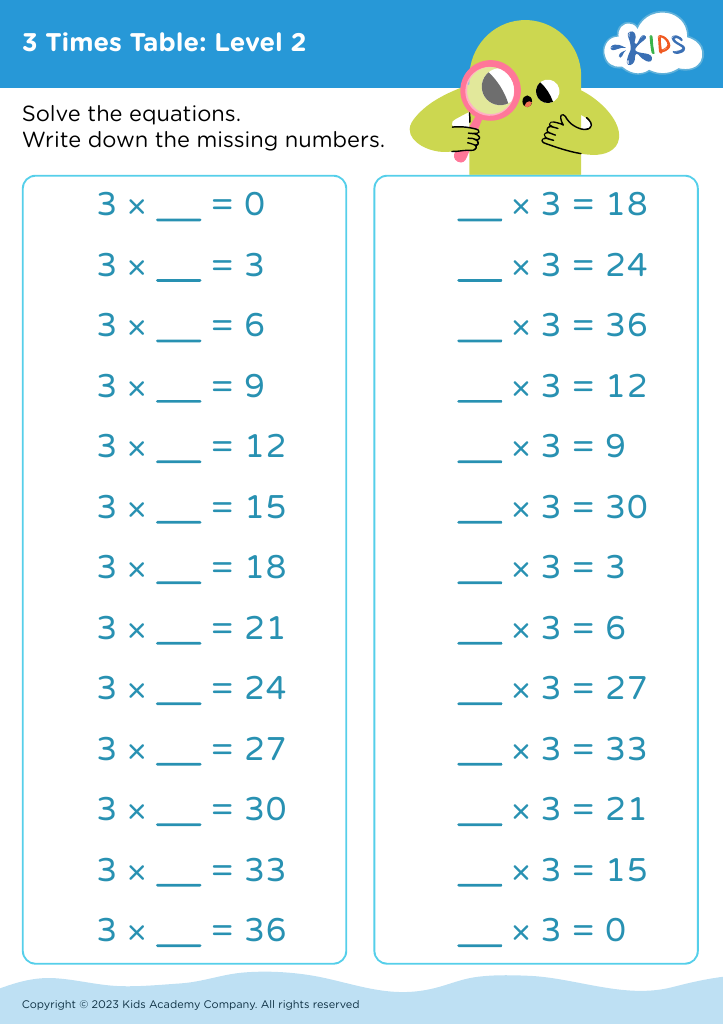







Number pattern recognition is a foundational skill for children aged 4-8, serving as a gateway to more complex mathematical understanding. For parents and teachers, focusing on this skill fosters a deep-seated number sense in young learners. Recognizing patterns helps children identify relationships between numbers, find solutions to problems, and develop critical thinking skills, all of which are essential for future math success.
Moreover, pattern recognition supports cognitive development as it encourages children to engage in reasoning and logical thinking. As they connect mathematical concepts to everyday life, such as in nature or art, students can build a more intuitive grasp of numbers and arithmetic operations.
Additionally, mastering patterns aids in the transition from concrete to abstract thinking. By exploring sequences and relationships, children gain confidence in math, reducing anxiety and building enthusiasm for the subject. This is crucial, as early math experiences can significantly influence children's attitudes toward learning in general.
Thus, when parents and teachers prioritize pattern recognition, they equip students not only with vital mathematical skills but also with the mindset necessary to tackle challenges effectively, laying the groundwork for lifelong learning and success in mathematics.








