Recognizing equivalent fractions Math Worksheets for Ages 4-8
5 filtered results
-
From - To
Unlock the world of fractions for your young learner with our "Recognizing Equivalent Fractions" math worksheets, ideal for ages 4-8. These engaging worksheets simplify the concept of equivalent fractions through visually appealing and interactive exercises. Perfect for early math learners, they build foundational skills with activities designed to capture kids' attention and make learning fun. From coloring fraction models to identifying and matching equivalent fractions, our worksheets provide a hands-on approach to mastering this crucial math skill. Download and print now to support your child's journey to fraction fluency with confidence and enjoyment!
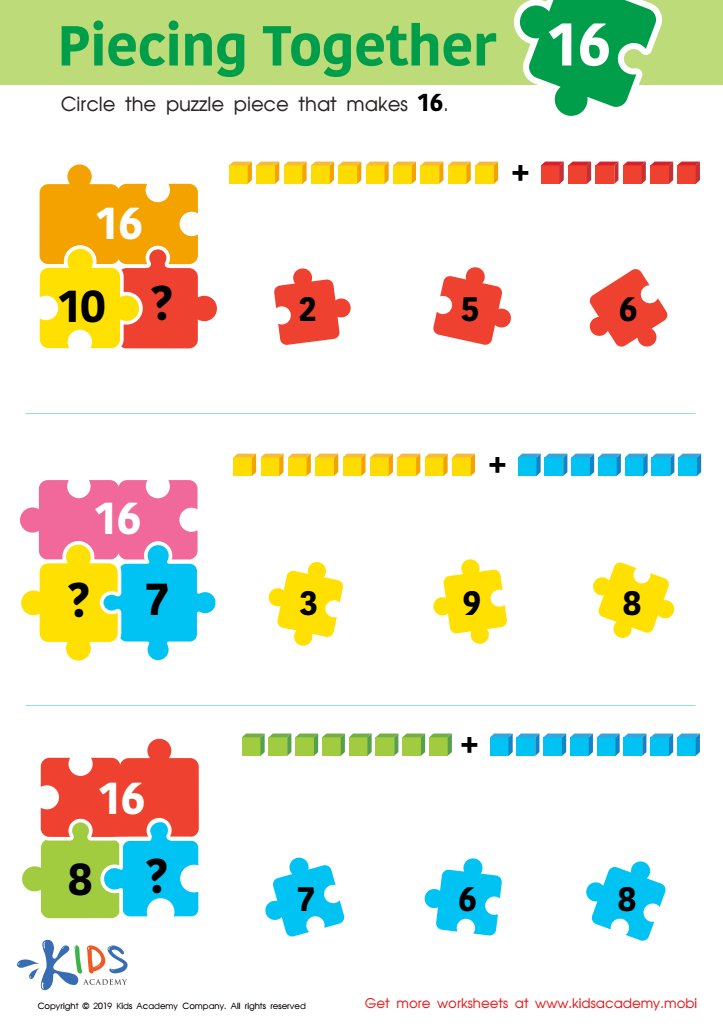
Piecing Together 16 Worksheet
 Assign to My Students




.jpg)



Recognizing equivalent fractions is a foundational mathematical skill that is crucial for young learners, typically ages 4-8. At this early stage, students are beginning to understand the concept of parts and wholes, which underpins fraction knowledge. Teaching children about equivalent fractions helps develop their number sense and proportional reasoning, both essential skills for more advanced mathematics.
When young students learn to recognize that 1/2 is the same as 2/4 or 4/8, they begin to see the consistent patterns in numbers, which aids in their overall problem-solving abilities. This understanding also fosters a sense of confidence in dealing with fractions, a topic that can often be a significant hurdle if not grasped early on.
From a practical standpoint, recognizing equivalent fractions is useful in everyday life, from measuring ingredients while baking to dividing objects, like slices of pizza, fairly among friends. Engaging learners with tactile and visual fraction activities helps solidify these abstract concepts.
Parents and teachers should care about teaching equivalent fractions because it builds a solid mathematical foundation, encourages logical thinking, and prepares children for future math challenges. Early mastery in this area can lead to ongoing success in mathematics, which is essential for academic achievement and analytical thinking across various subjects.








