Understanding more/less concept Math Worksheets for Ages 4-8
3 filtered results
-
From - To
Help your child grasp fundamental math concepts with our "Understanding More/Less Concept Math Worksheets" for ages 4-8! Specially designed to engage young learners, these worksheets allow kids to compare quantities, enhancing their skills in identifying which group has more or fewer objects. Colorful visuals and interactive activities make learning fun and effective, reinforcing critical thinking and numeracy skills. Perfect for preschool and early elementary children, these resources provide a solid foundation in basic math concepts. Foster your child's confidence and enthusiasm for math with our expertly crafted worksheets today!
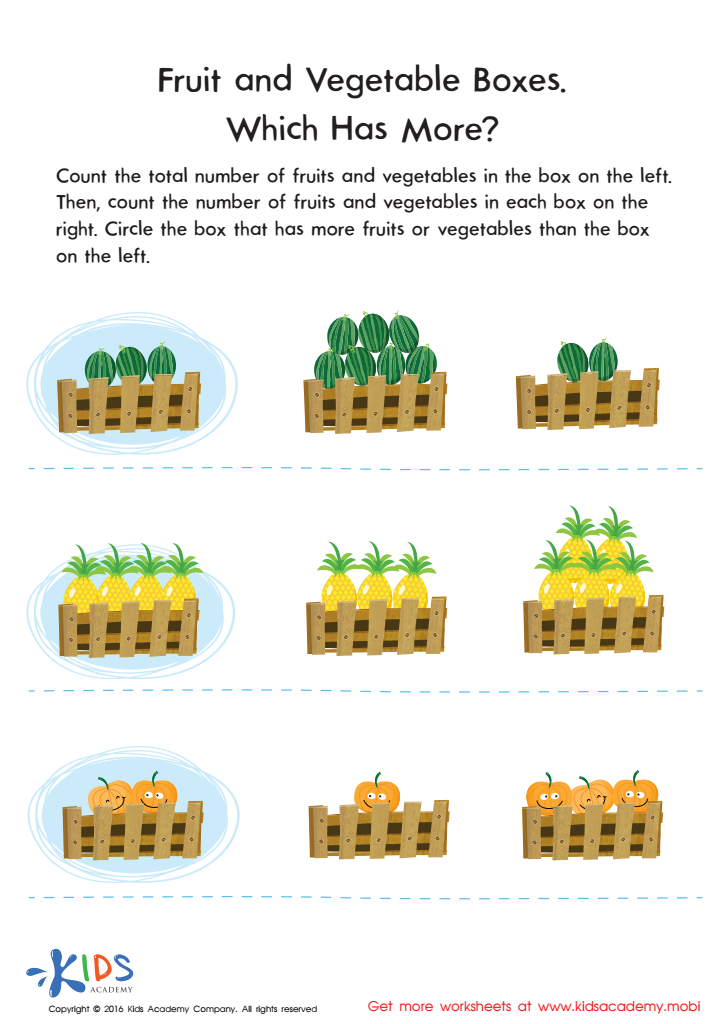
Which Has More? Size Worksheet
 Assign to My Students
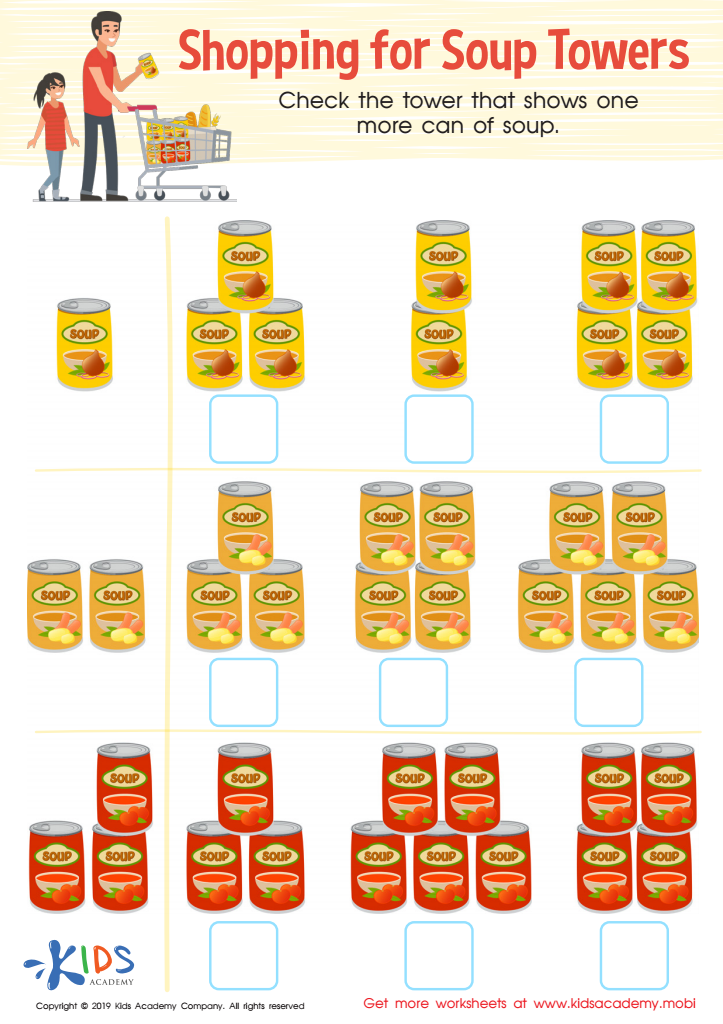
Soup Towers Worksheet
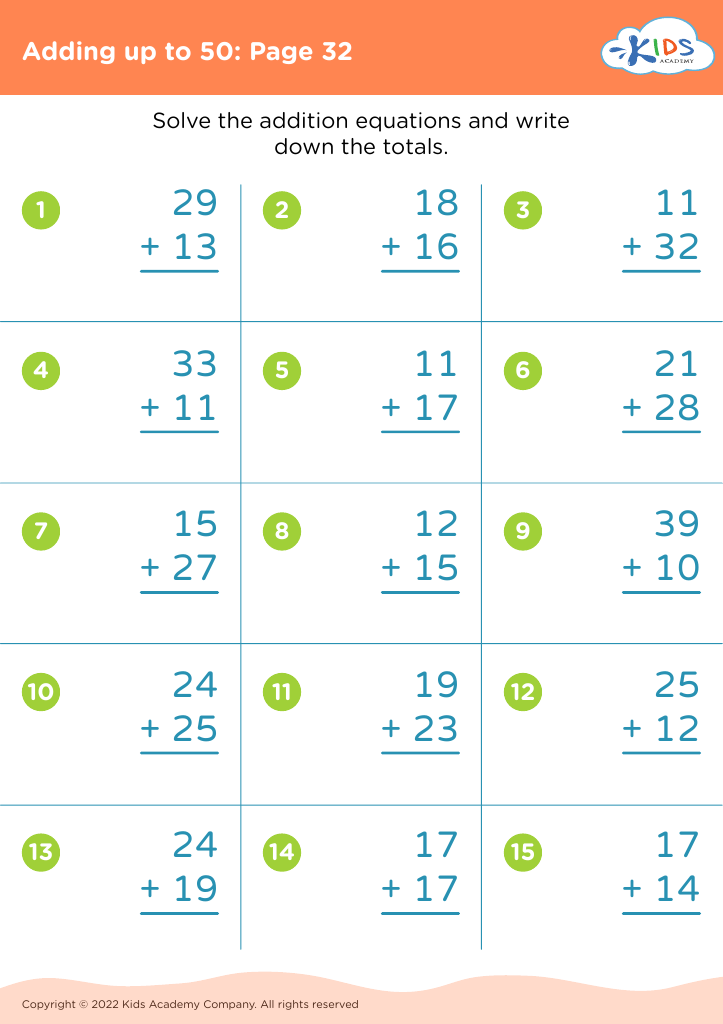








Understanding the concept of "more" and "less" in math is essential for children ages 4-8 as it forms the foundation for later mathematical learning and daily life problem-solving skills. For parents and teachers, fostering this understanding early on can significantly enhance a child's ability to grasp more complex mathematical concepts like addition, subtraction, and even basic algebra in the future.
Development of numerical sense is a key part of cognitive development during these formative years. Understanding more/less helps children make sense of the world around them. It enables them to compare quantities, which is not only fundamental in mathematics but also in making choices and decisions in their daily lives, such as sharing toys or understanding portions of food.
Additionally, reinforcing this concept helps improve children’s reasoning and analytical skills. For instance, when analyzing story problems, comprehending which group has more or fewer items can be crucial in devising a solution. This skill also extends to practical situations like identifying which jar has more cookies, thereby making learning both relevant and engaging.
Furthermore, a solid grasp of more/less aids children in their language development. Phrases like "greater than," "fewer than," and "equal to" enrich their vocabulary and improve their ability to articulate thoughts clearly and effectively.
Therefore, parents and teachers play a crucial role in providing ample opportunities and diverse materials to practice the more/less concept, setting the stage for confident and competent mathematical learners.








