Understanding quantity Math Worksheets for Ages 4-8 - Page 2
30 filtered results
-
From - To
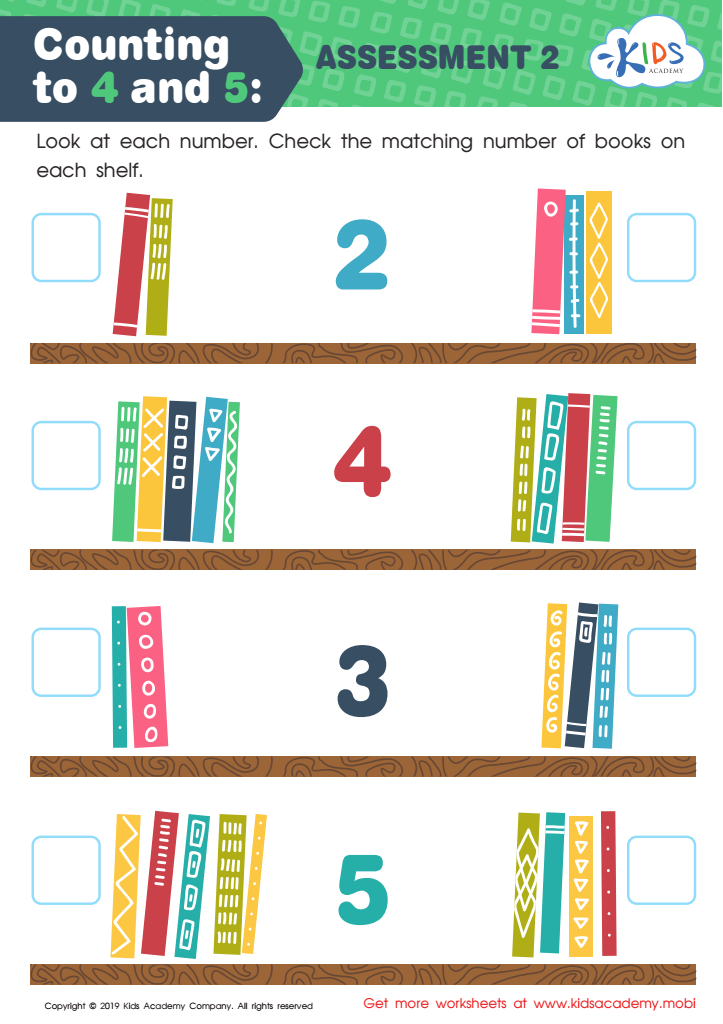
Counting to 4 and 5: Assessment 2 Worksheet
 Assign to My Students
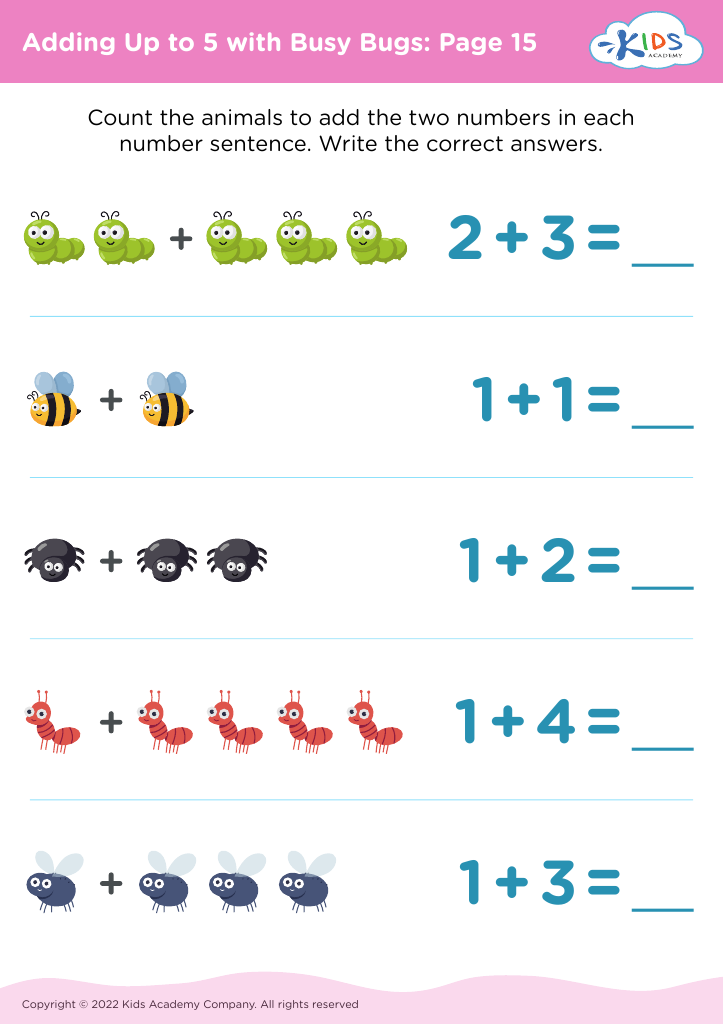








Understanding quantity is a foundational math skill essential for children aged 4-8. Parents and teachers should care about this because it forms the basis for more complex mathematical concepts. Early grasp of quantity helps children develop number sense — an intuitive understanding of numbers and their relationships. For instance, recognizing that 5 is more than 3 supports future learning of addition, subtraction, and other arithmetic operations.
Moreover, understanding quantity fosters cognitive development and problem-solving skills. When children can confidently compare quantities, estimate, and visualize numbers, it enhances their logical thinking. This isn't limited to math; these skills translate to other areas like science and daily decision-making.
Fostering a strong grasp of quantity also boosts children’s confidence. Success in early math creates positive associations that motivate continued learning and curiosity. For educators, recognizing and nurturing these skills ensures a smoother academic trajectory.
Engaging with quantity-related activities — such as counting objects, playing with blocks, or comparing items during everyday tasks — promotes an interactive and enjoyable learning environment. This sets a solid groundwork for academic success and a lifelong appreciation for math. Therefore, parents and teachers should prioritize understanding quantity to build a robust educational foundation for young children.








