
Understanding regrouping Math Worksheets for Ages 4-8
4 filtered results
Difficulty Level
Grade
Age
-
From - To
Subject
Activity
Standards
Discover our "Understanding Regrouping Math Worksheets" designed specifically for children aged 4-8. These engaging worksheets help young learners grasp the concept of regrouping in addition and subtraction, a crucial skill for their mathematical foundation. Explore colorful illustrations, interactive problems, and step-by-step guidance to make learning fun and effective. Our resources aim to build confidence in young mathematicians as they practice regrouping through various fun activities and challenges. Perfect for classrooms or at home, these worksheets support early math development while ensuring kids enjoy the learning process. Start your child's math journey today with our thoughtfully crafted resources!
Favorites
With answer key
Interactive
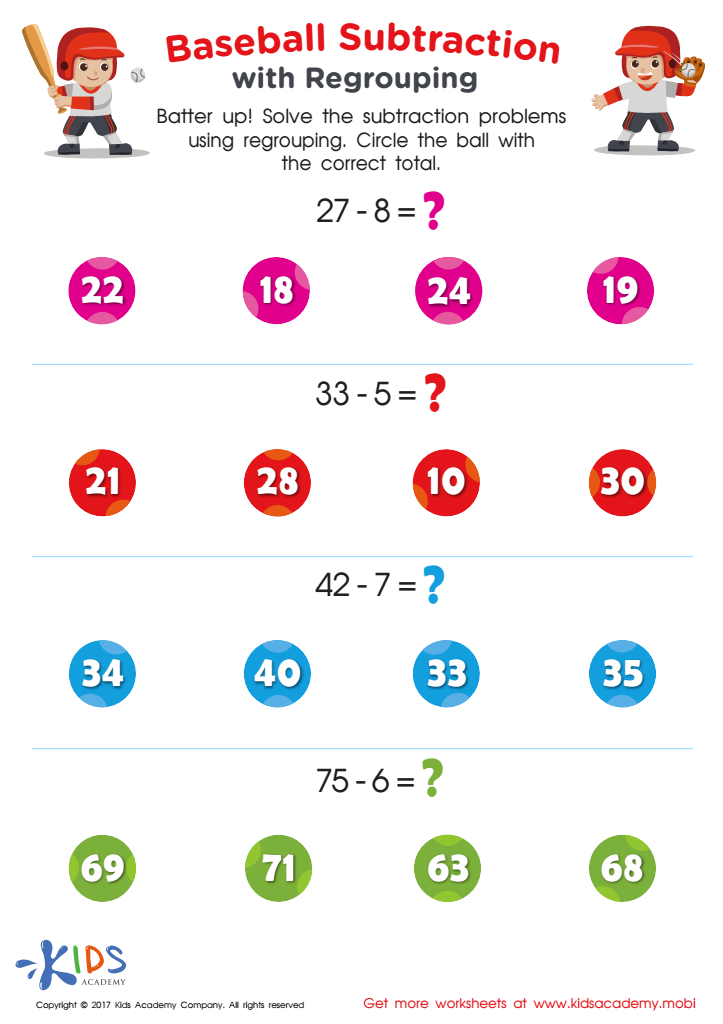
Subtraction With Regrouping for 2nd Grade Worksheet
Kids solve two-digit subtraction problems using regrouping and color in the baseballs.
2nd graders may find regrouping for subtraction tricky, so give them a helping hand with this fun worksheet! They practice two-digit subtraction and regrouping by coloring in baseballs as they solve the problems. Let them practice the skill and enjoy the game at the same time.
 Assign to My Students
Subtraction With Regrouping for 2nd Grade Worksheet
Worksheet
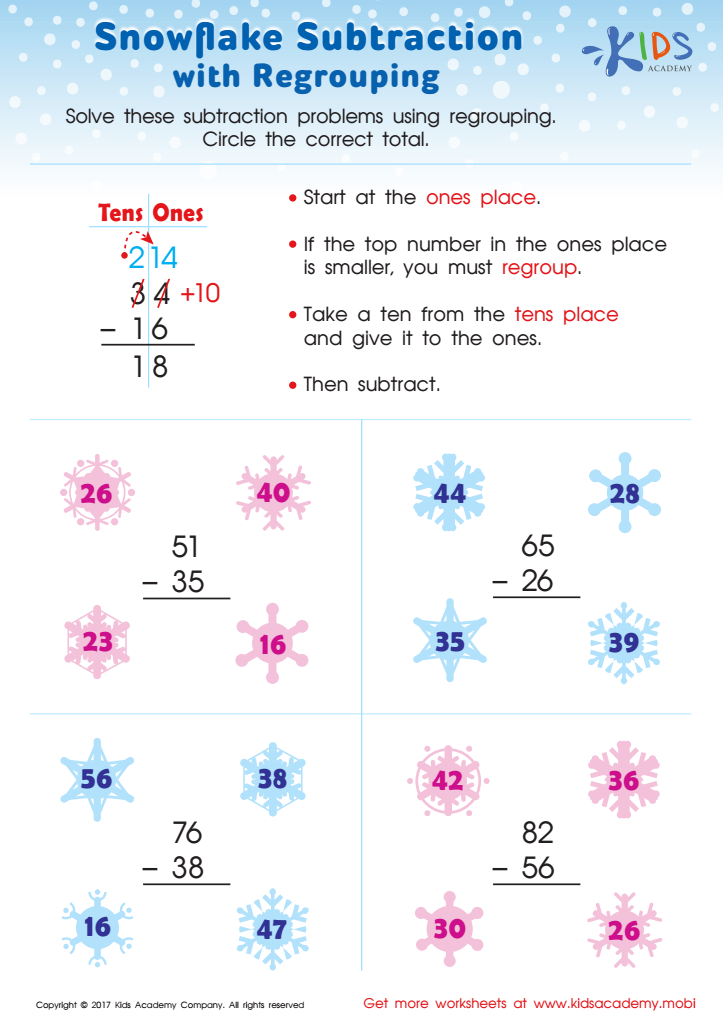
Subtraction With Regrouping Worksheet: Snowflake
It's a great way to learn on a cold winter day.
Teach your child regrouping while subtracting with this winter-themed activity! Have them refer to the instructions at the top and solve each problem using the strategy. Snowflake Subtraction is a great way to learn on a cold winter day - choose the correct answer and have fun!
Subtraction With Regrouping Worksheet: Snowflake
Worksheet
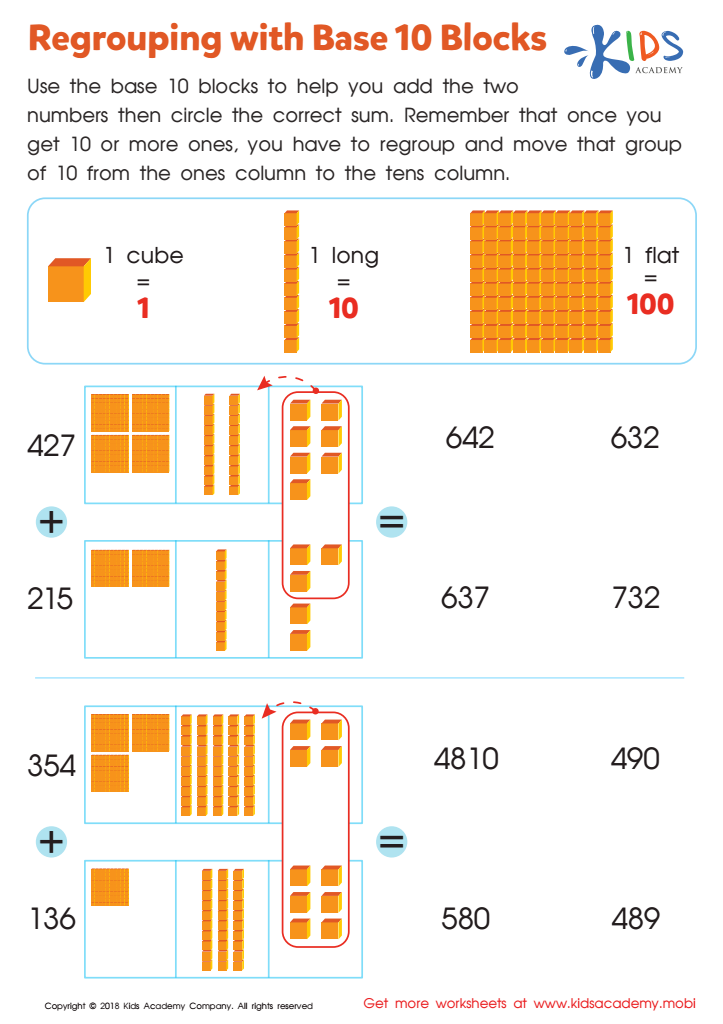
Regrouping with Base 10 Blocks Worksheet
Practice and master 3-digit subtraction with this handy worksheet! It uses base ten blocks to illustrate what's being taken away, helping children understand this tricky skill. Viewing the visual aid will help them get the hang of larger numbers quickly.
Regrouping with Base 10 Blocks Worksheet
Worksheet
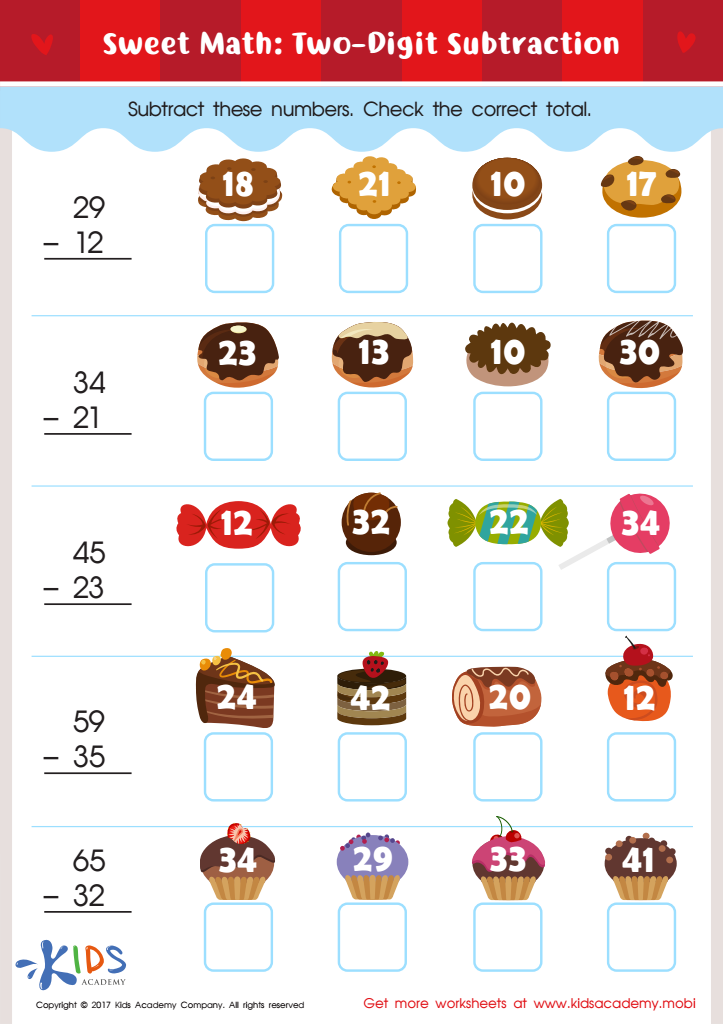
Two Digit Subtraction Worksheet
Make subtraction practice fun and easy with Kids Academy's delightful two digit subtraction worksheet PDF! Your child will love finding the sweet treat containing the correct answer to each 2-digit problem. Offer this quick practice and watch them learn!
Two Digit Subtraction Worksheet
Worksheet
Join Kids Academy for Free
Who is primarily going to use this learning content?



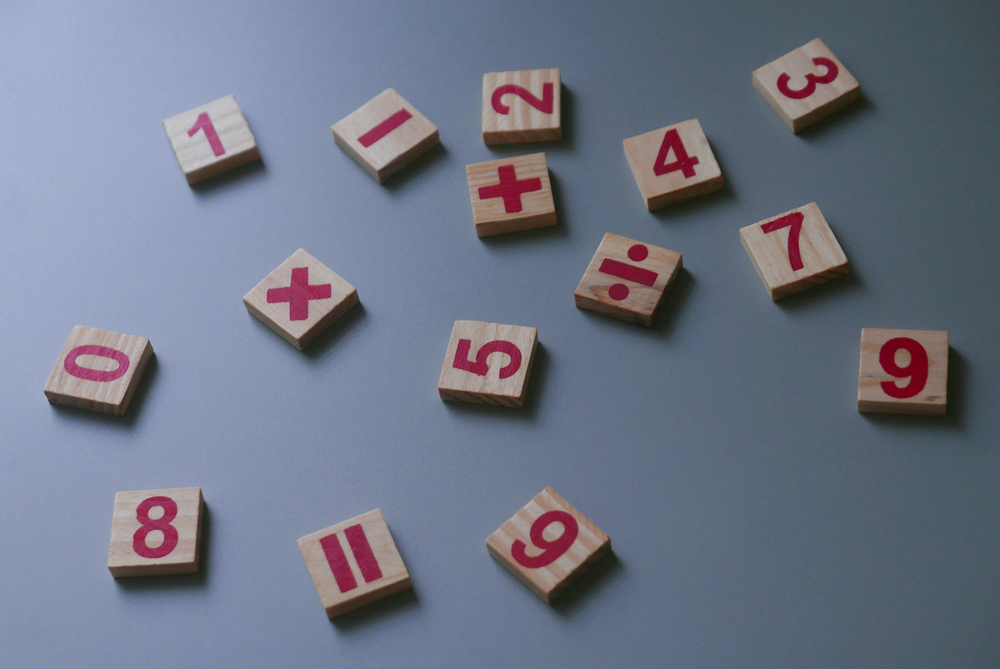




Understanding regrouping in math is crucial for children aged 4-8 because it lays the foundation for their future arithmetic skills. This age group is typically introduced to basic addition and subtraction, and mastering these concepts is essential for their mathematical development. Regrouping, often referred to as carrying and borrowing, helps students manage larger numbers, allowing them to solve problems that may initially seem daunting.
Parents and teachers should care about this concept because it promotes critical thinking and problem-solving abilities. When children learn to regroup, they develop a deeper understanding of place value and the relationships between numbers. This promotes not only number sense but also confidence in tackling more complex math tasks as they progress in their education.
Moreover, early understanding of regrouping can prevent future challenges in math, reducing anxiety and frustration often associated with mathematics in later grades. By supporting children’s mastery of regrouping, adults can foster a positive attitude towards math, encouraging lifelong learning. Additionally, strong foundational skills in mathematics correlate with overall academic success, making it imperative for parents and teachers to prioritize this critical concept in early education.








