
Understanding shapes Math Worksheets for Ages 4-8
5 filtered results
Difficulty Level
Grade
Age
-
From - To
Subject
Activity
Standards
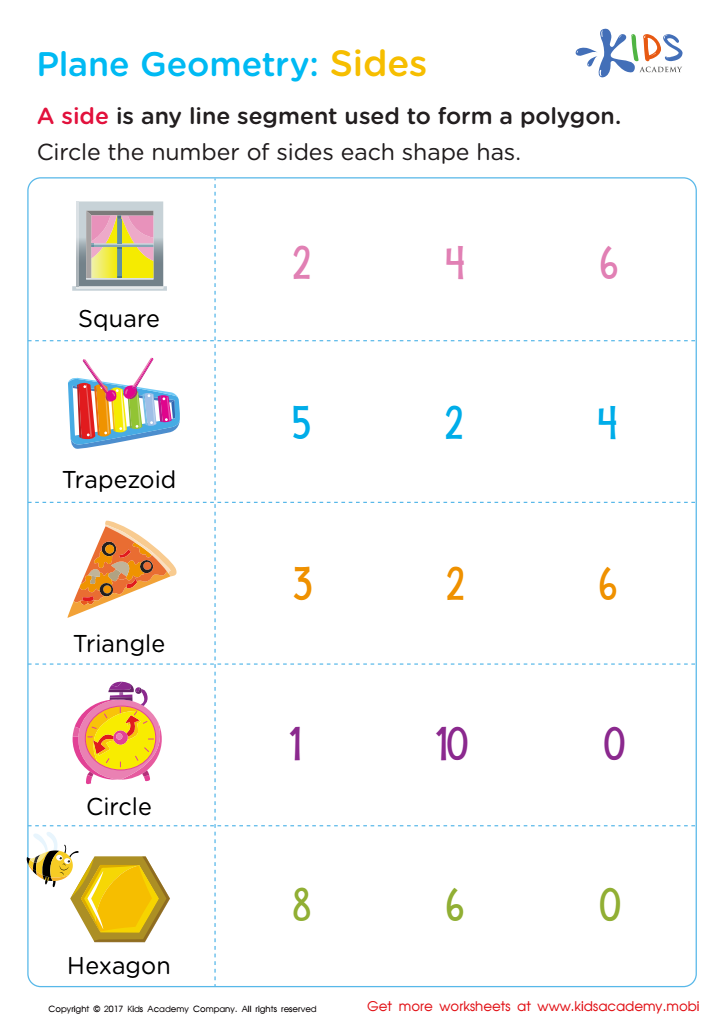
Discover a world of fun and learning with our "Understanding Shapes Math Worksheets" designed specifically for children ages 4-8. These engaging worksheets help young learners identify, explore, and differentiate various shapes in a playful manner. With colorful illustrations and interactive activities, children will develop essential math skills while enhancing their visual perception and critical thinking. Our resources are perfect for both home and classroom use, ensuring that learning about shapes becomes an enjoyable adventure. Foster a strong foundation in geometry and encourage a love for math with our thoughtfully crafted worksheets. Start your child’s journey to shape mastery today!
Favorites
With answer key
Interactive
 Assign to My Students
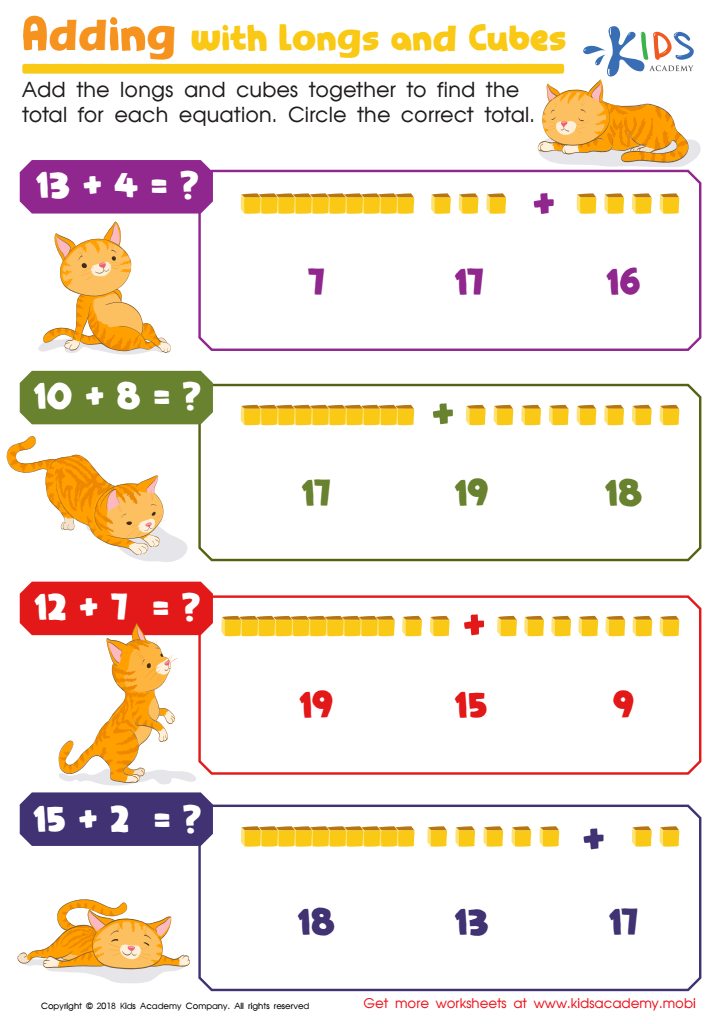
Adding With Longs and Cubes Worksheet
Math might not be your child's favorite, but they must master it to advance. If they're having difficulties or don't like it, use this worksheet to make it easier. Have them add longs and cubes together to find the total for each question, then circle the correct answer. This exercise can help make math experiences better.
Adding With Longs and Cubes Worksheet
Worksheet
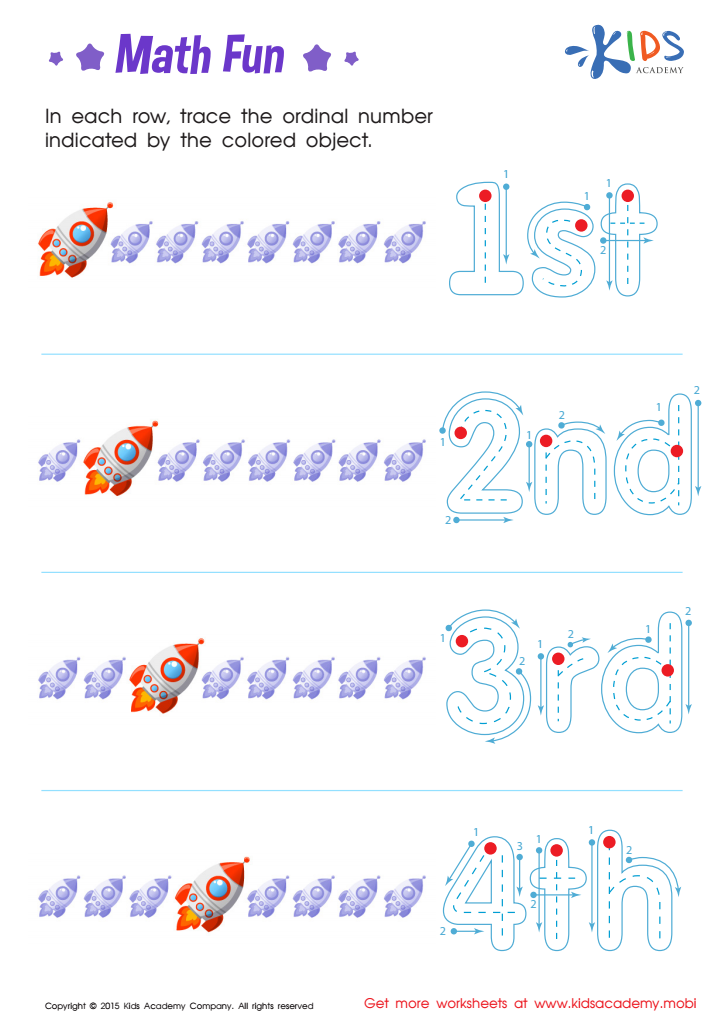
Ordinal Numbers: Math Fun Worksheet
Have fun learning ordinal numbers with our spaceship worksheet! Kids learn best while having fun and with repetition. Featuring vibrant spaceships, your child will understand placement, recognize and write ordinal numbers, and make connections. Understanding ordinal numbers leads to more advanced math concepts. Get your math whiz ready for preschool with our addition/subtraction worksheets! Have fun learning ordinal numbers and master them in no time!
Ordinal Numbers: Math Fun Worksheet
Worksheet
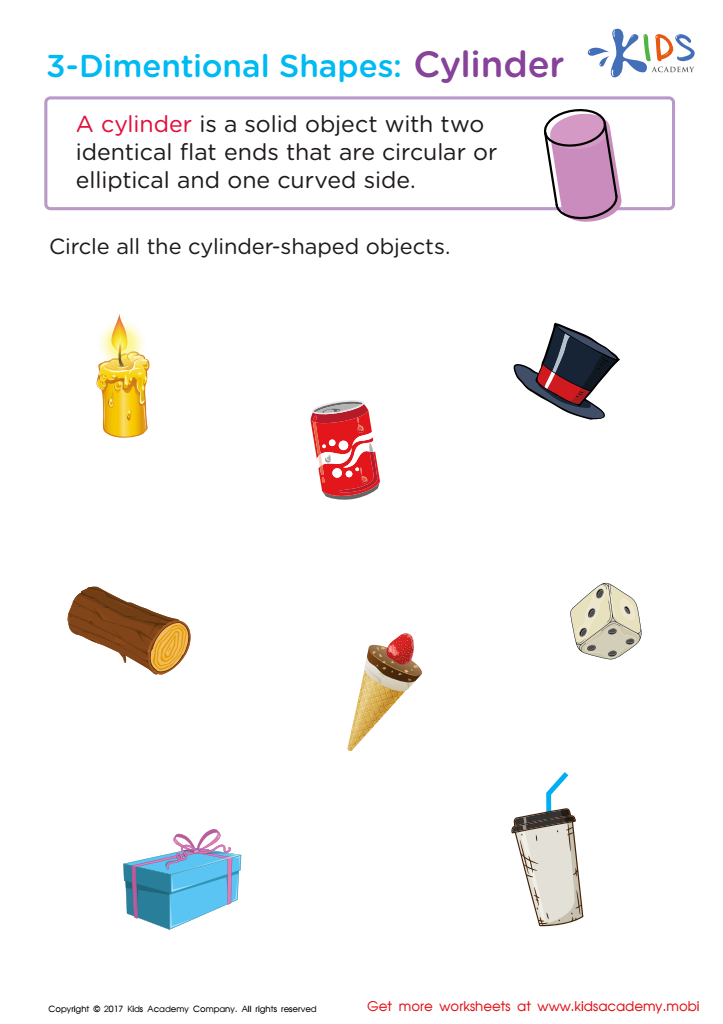
Three–Dimensional Shapes: Cylinder Worksheet
Introduce your toddler to geometry and 3D cylinders with this printable and watch their knowledge grow. It will help them recognize, define, and identify cylinders, as well as differentiate between 3D objects.
Three–Dimensional Shapes: Cylinder Worksheet
Worksheet
Join Kids Academy for Free
Who is primarily going to use this learning content?







Understanding shapes is crucial for children aged 4-8 as it lays the foundation for their overall mathematical development and problem-solving skills. At this age, children are naturally curious and engage with their surroundings through exploration. Teaching them about shapes enhances their spatial awareness, allowing them to recognize, categorize, and relate different objects in their environment.
Shapes are directly linked to various everyday concepts, such as geometry, symmetry, and measurement. By grasping shape concepts, children not only improve their visual perception but also gain essential reasoning skills that aid in later math learning. Furthermore, recognizing shapes encourages critical thinking; for instance, identifying shapes helps with pattern recognition and can lead to early success in algebraic thinking.
Additionally, understanding shapes fosters creativity and innovation through art and design. Engaging in activities like drawing, building with blocks, or completing puzzles promotes fine motor skills and cognitive development, all while being enjoyable!
Parents and teachers play an essential role in this early learning stage. By incorporating shape recognition into daily activities—through play, storytelling, or real-world examples—they support a well-rounded, foundational education, ultimately contributing to a child's confidence and enjoyment of mathematics as they advance academically.








