Understanding opposites Measurement Worksheets for Ages 4-8
3 filtered results
-
From - To
Discover our "Understanding Opposites Measurement Worksheets for Ages 4-8" — a delightful and engaging resource to help young learners grasp the concept of opposites through measurement activities. These worksheets are expertly designed to enhance mathematical skills like comparing length, height, weight, size, and volume. Perfect for early grade children, these activities incorporate playful themes and colorful illustrations to keep kids interested and motivated. Whether at home or in the classroom, our worksheets provide a strong foundation in understanding and applying measurement concepts, nurturing both critical thinking and problem-solving abilities in an interactive and enjoyable way.
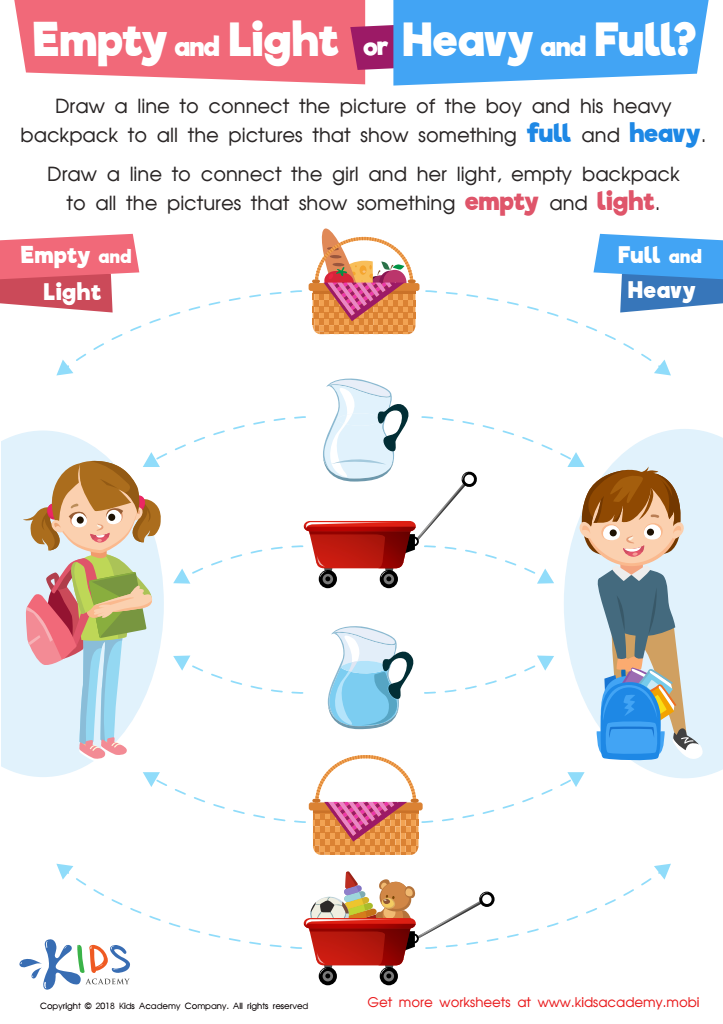
Empty and Light or Heavy and Full? Worksheet
 Assign to My Students
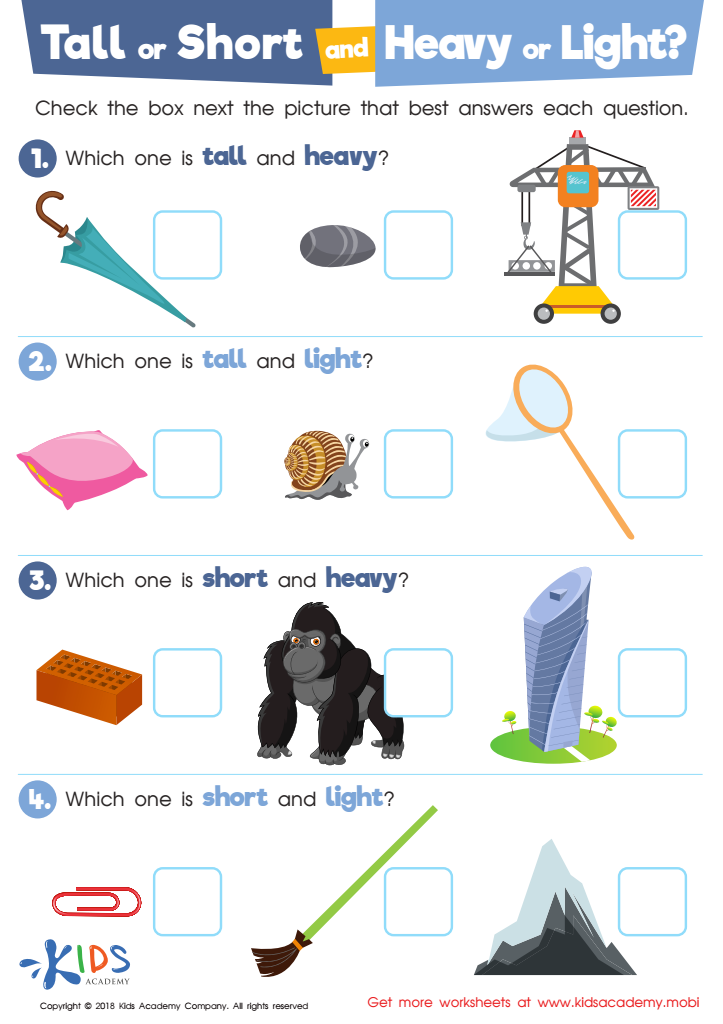
Tall or Short and Heavy or Light? Worksheet
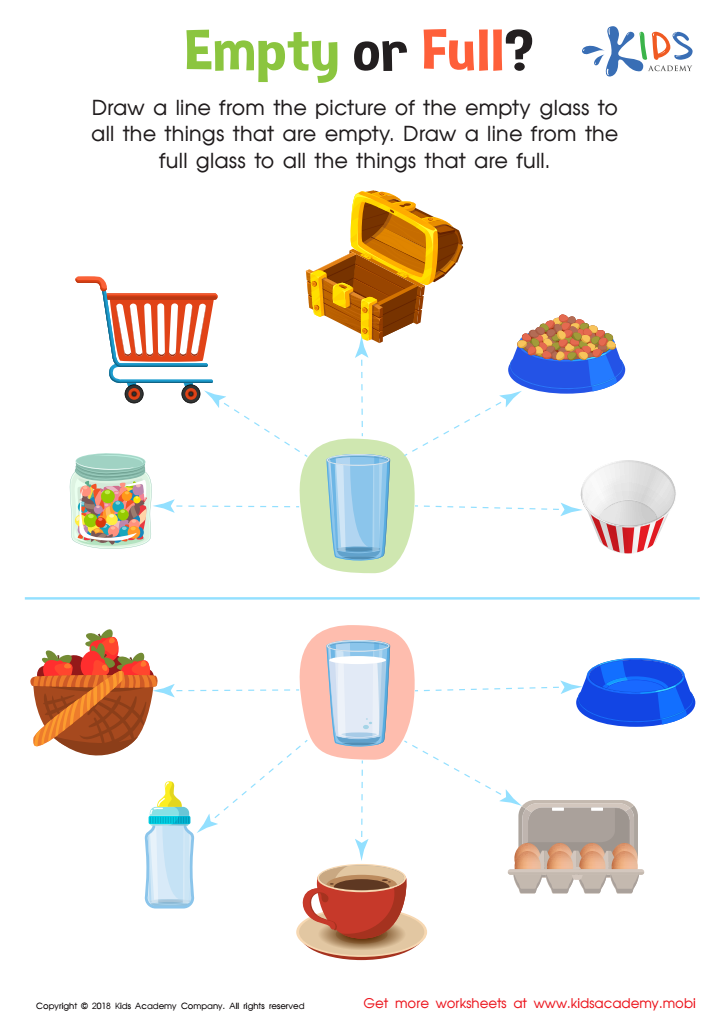
Empty or Full? Worksheet








Understanding opposites and basic measurements is crucial for children ages 4-8 as it forms a foundation for cognitive development, comprehension of the world around them, and future academic skills. These concepts bolster logical thinking and problem-solving abilities, necessary for a variety of life situations.
Learning about opposites improves vocabulary, communication, and reasoning. Children explore contrasting ideas, enhancing their descriptive skills. For instance, knowing "big" versus "small" or "hot" versus "cold" helps them describe experiences accurately, ask relevant questions, and follow instructions.
Measurement understanding introduces children to quantitative thinking. Children learn to compare sizes, weights, lengths, and volumes, which helps them interact more effectively with their environment. Activities like measuring with rulers or comparing weights of objects reinforce comprehension of numbers, patterns, and relationships.
Encouraging these concepts at an early age promotes confidence in using math-related skills, setting a sturdy base for more complex education in the future. It also quickens everyday learning processes, teaching practical life skills. Therefore, engaging children in activities that involve opposites and measurement not only enriches their intellectual growth but also supports their overall development, making it essential for parents and teachers to focus on these areas.








