Mathematical reasoning Multiplication and Division Word Problems Worksheets for Ages 4-8
3 filtered results
-
From - To
Discover our engaging "Mathematical Reasoning: Multiplication and Division Word Problems Worksheets" designed for children aged 4-8. These interactive worksheets inspire young learners to explore and understand the fundamentals of multiplication and division through relatable scenarios. Perfect for building critical thinking skills, these problems encourage kids to apply mathematical concepts in everyday situations. Our resources are tailored to foster curiosity and boost confidence in mathematical reasoning, making learning fun and effective. Ideal for classroom settings or home study, these worksheets provide the perfect blend of challenge and support to help your child develop essential problem-solving abilities. Start your child's math journey today!
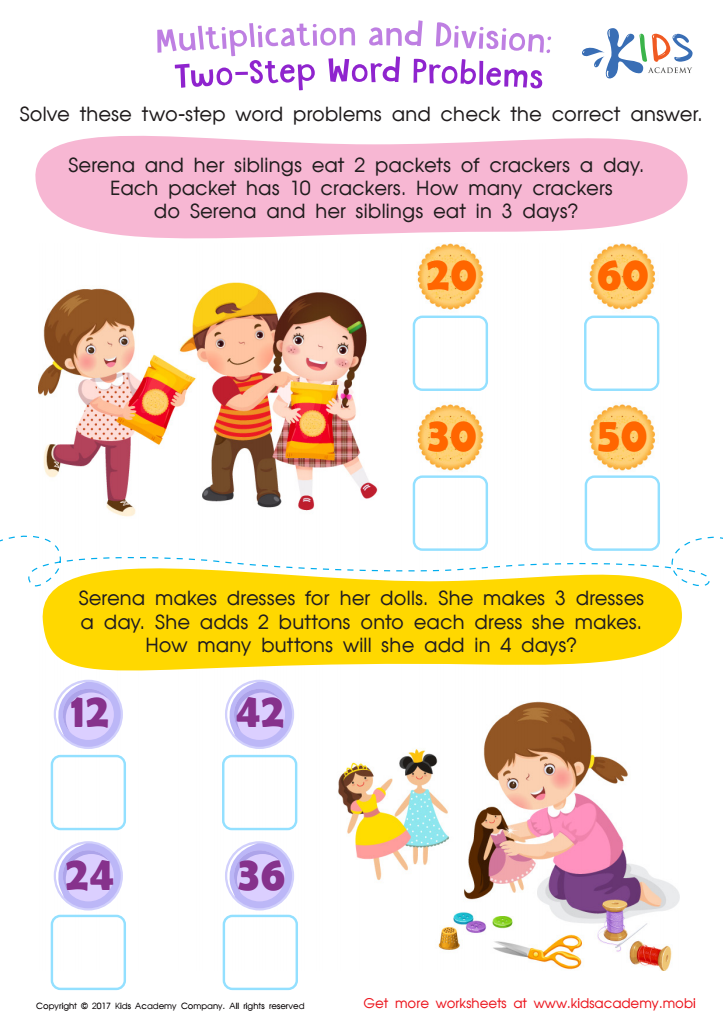
Two Step Word Problems Worksheet
 Assign to My Students
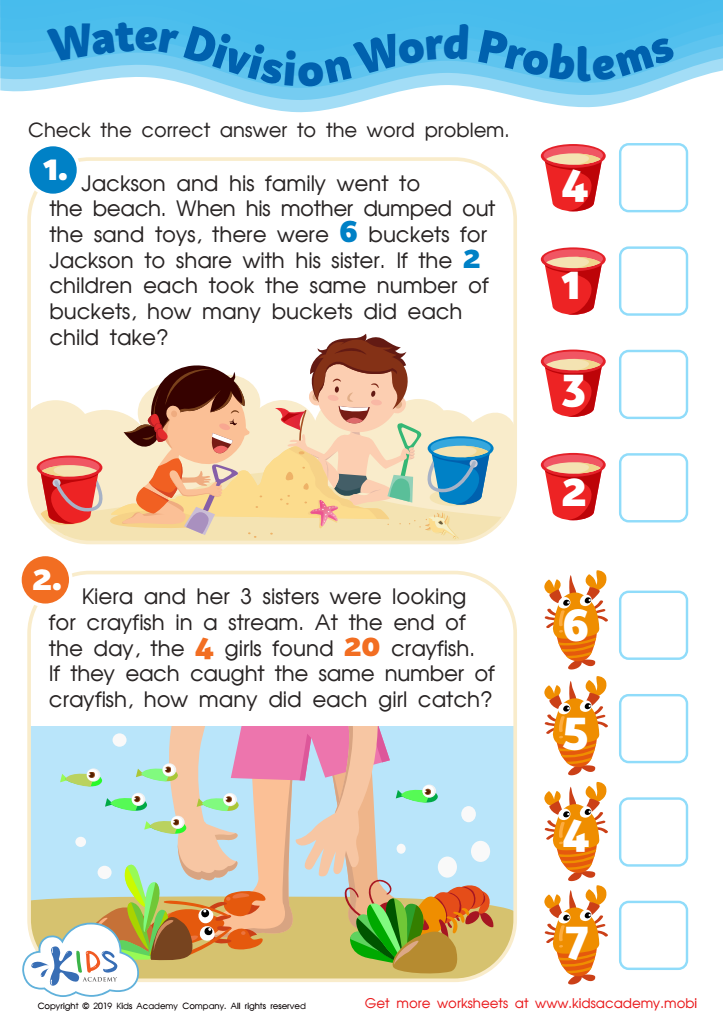
Water Division Word Problems Worksheet
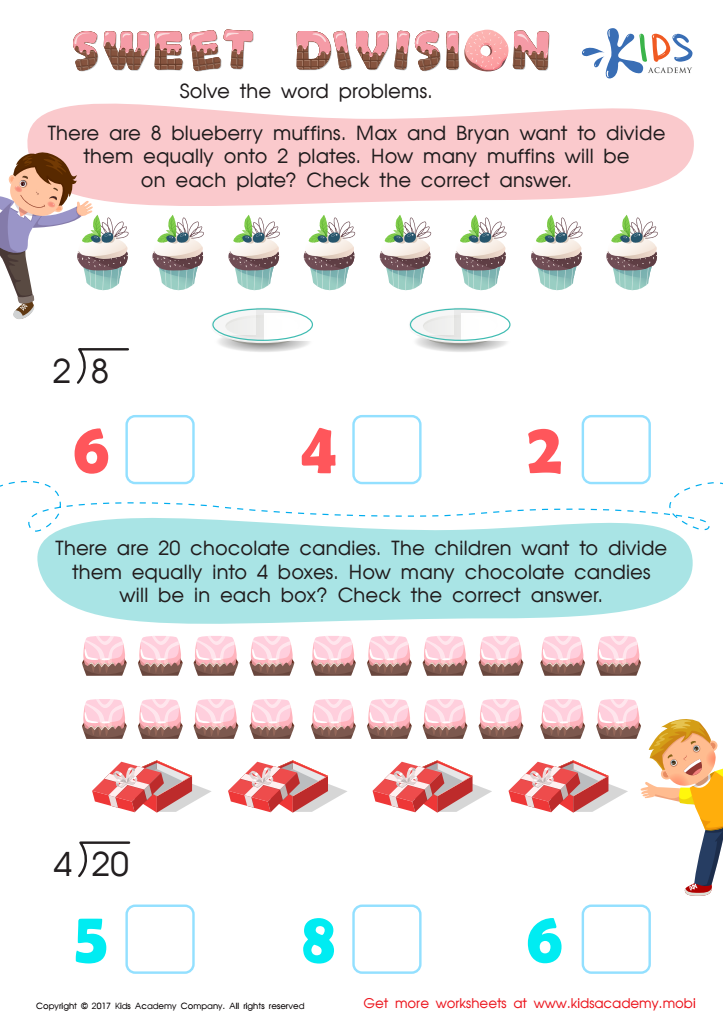
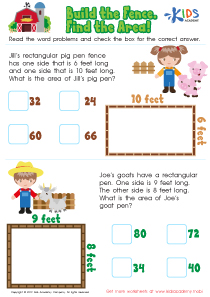
Division Word Problems Worksheet







Mathematical reasoning in multiplication and division word problems is essential for children ages 4-8, as it lays the foundation for critical thinking and problem-solving skills. At this developmental stage, children are beginning to grasp the concepts of numbers and operations, making it a prime time to encourage logical reasoning.
Understanding word problems fosters comprehension skills, allowing children to interpret and analyze real-life scenarios. When children learn to extract numerical information from a story context, they connect math with everyday situations, enhancing their motivation and making learning more meaningful. This skill also promotes communication, as children learn to express their thinking and reasoning processes, which boosts their confidence in mathematics.
Furthermore, early exposure to these problems helps build mental models that children will rely on in more complex mathematical concepts later on. It assists in developing resilience, as they learn to tackle challenges and persist when problems become difficult.
By emphasizing mathematical reasoning in multiplication and division word problems, parents and teachers equip children with essential skills that extend beyond the classroom, nurturing their overall cognitive development and preparing them for future academic success. Prioritizing this learning will lead to a stronger mathematical foundation, setting children on a path toward lifelong learning and problem-solving.